


What Enterprises Actually Expect From AI Skilled Employees
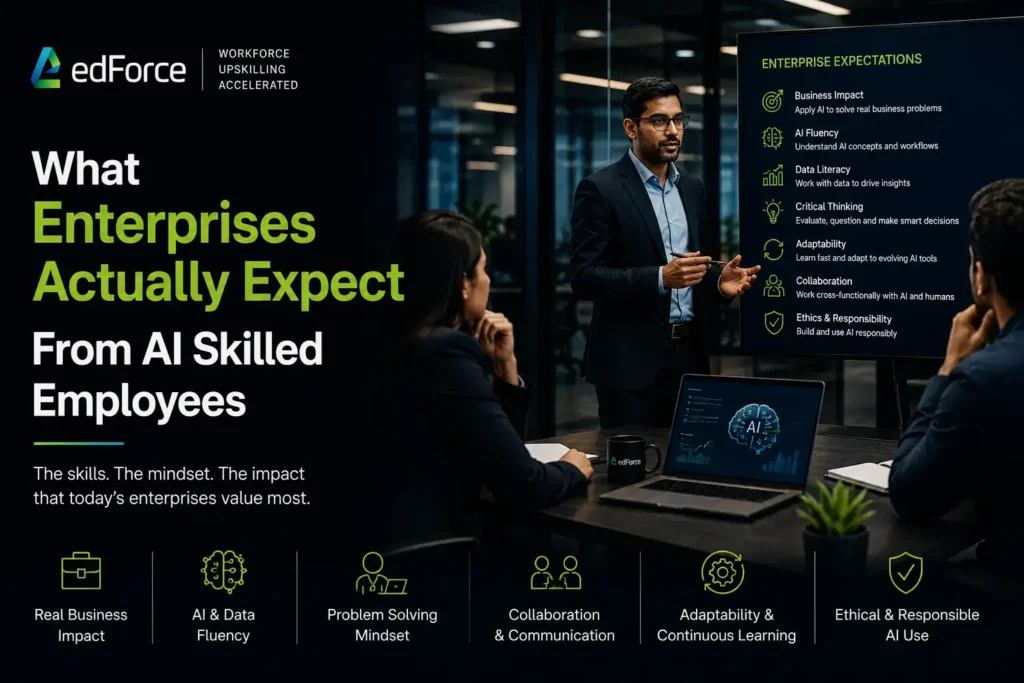
Many professionals believe that “AI skills” simply means knowing how to use AI software. But workplace expectations are changing. Companies are no longer impressed just because employees can create content with AI or write prompts. Businesses now want professionals who can use AI in real operational environments in a responsible and workflow-focused way. This shift is becoming much bigger in 2026. The conversation around AI skills is moving beyond: “Can employees use AI?” toward: “Can employees improve business performance using AI?” This difference is important. Enterprises Do Not Want Random AI Usage One major problem companies face after adopting AI is inconsistency. Some employees use AI in ways that improve productivity. Others use AI in ways that create confusion, poor results, or workflow disruptions. This creates uneven work quality across teams. Without structure, AI can create operational problems instead of efficiency. That is why employers increasingly expect employees to understand: These skills are far more valuable than basic AI experiments. Practical Thinking Is the Most Valuable AI Skill Many online discussions still focus heavily on prompts and AI tools. But in enterprises, the most valuable employees are the ones who think strategically. Professionals who understand business operations are in high demand. This includes understanding: AI becomes useful only when employees can apply it effectively in these areas. For example, employers value employees who can: This is very different from using AI casually. Businesses Expect Employees to Work With AI, Not Depend on It Enterprise environments are moving away from blind dependence on AI. Many organizations are becoming more careful about how employees rely on AI-generated outputs. Companies increasingly expect AI-skilled professionals to: This is especially important in: Businesses are not looking for uncontrolled automation. They want balanced and responsible AI usage. AI Skills Are Becoming Important Across Every Department Earlier, AI skills were mostly associated with technical teams. That is changing rapidly. Today, AI is becoming important across departments such as: Why? Because modern work has become highly information-driven. Employees now spend large amounts of time: AI can simplify many of these tasks, but only when employees know how to use it properly. That is why businesses now see AI skills as more than just technical knowledge. Businesses Value Adaptability More Than Tool Expertise Hiring priorities are changing. Companies are becoming less focused on mastery of a single AI tool and more focused on adaptability. Businesses understand that AI platforms will continue evolving quickly. New systems, models, and workflows will keep appearing. Because of this, employers increasingly prefer professionals who can: Developing the right mindset is becoming more important than memorizing AI features. The strongest AI-skilled employees are usually the ones who can adapt their work style as technology changes. Workflow Understanding Matters More Than Prompt Writing Many professionals still think AI expertise is mainly about writing prompts. But enterprises are increasingly focused on workflow integration. Anyone can use AI tools to generate output. The bigger challenge is understanding: Many businesses still struggle in these areas. Employees may know AI tools, but team workflows often remain inconsistent. This is one reason businesses are investing more in workforce AI training instead of only providing access to tools. Why AI Communication Skills Matter Clear communication has become an increasingly valuable skill. AI-assisted work requires: The way employees communicate with AI systems directly affects output quality. Businesses increasingly value professionals who can: Interestingly, AI is making strong communication skills even more valuable. Businesses Expect Employees to Improve Productivity Responsibly Many companies adopted AI expecting instant productivity improvements. Now businesses realize productivity improvements are not automatic. Employees need to understand: This requires more than technical curiosity. It requires operational maturity. That is why enterprises increasingly value practical AI literacy over surface-level AI awareness. Why Workforce AI Training Is Becoming More Important Businesses now understand that successful AI adoption depends heavily on workforce capability. Without proper training: That is why enterprises are investing more in structured AI workforce development programs. At edForce, enterprise AI training focuses not only on AI tools, but also on responsible usage, workflow understanding, and operational learning. This helps teams apply AI effectively in real business environments instead of treating AI as a separate tool. Real Skill Is What Enterprises Actually Need In the end, employers are not simply looking for employees who “know AI.” They want professionals who can: This combination of AI knowledge and practical thinking is far more valuable. Final Thoughts Employer expectations for AI-skilled professionals are changing quickly. Businesses are no longer interested in isolated AI knowledge or random AI experimentation. They want professionals who can integrate AI into real workflows and improve operational efficiency. In 2026, strong AI capability will be less about casually using tools and more about helping organizations work faster, smarter, and more consistently.
Red Hat Training and Certification Guide for 2026
Linux skills will be more valuable in 2026 for a different reason. Red Hat certifications used to be primarily associated with infrastructure teams and system administrators. Linux knowledge today is associated with much larger fields like cloud computing and DevOps. It also includes automation, cybersecurity, enterprise infrastructure management, and containerization. Companies are actively seeking professionals with experience in enterprise Linux systems to help them move towards hybrid cloud environments. Red Hat’s training and certification program is in high demand among enterprises and technology teams. Many professionals continue to ask the same question. Does Red Hat certification really matter in 2026? Yes, but only if the learning is relevant and aligned to real job roles. Red Hat Skills Still Matter Technology changes quickly, but enterprise infrastructure does not change overnight. Many businesses still heavily rely on Linux-based platforms for: Red Hat Enterprise Linux is one of the most popular enterprise Linux platforms, because it offers stability, security and long-term support. It is for this reason that companies value professionals who are familiar with Linux environments rather than those who only learn cloud platforms on a superficial level. What is the biggest problem with IT certifications today? Many professionals today are faced with certification overload. Many people have multiple certifications, but struggle with real-life implementation tasks. The employers are becoming more cautious when evaluating the candidates, as many certifications do not guarantee practical ability. It is particularly true for roles in cloud and infrastructure. Although many students understand theory and commands, they often struggle with the practical application. Practical Red Hat training is more important than just passing an exam. Red Hat Certification: What it Really Means Red Hat certifications are more than just credentials for a resume. This shows that the professional has a good understanding of how Linux systems operate in enterprise environments. Included in this is: Red Hat certifications have a reputation for being performance-oriented, unlike many certifications that are heavy on theory. This is why employers still value them when it comes to technical hiring. What Red Hat certifications are important in 2026? Different certifications can be useful for different career paths. It depends on what type of cloud or infrastructure role you want to pursue. Red Hat Certified System Administration (RHCSA). RHCSA is one of the most popular Linux certifications among professionals who are entering roles in enterprise infrastructure and Linux administration. The focus is on: This certification is often regarded as the basis for further Red Hat learning. Red Hat Certified Engineer (RHCE) RHCE is a more advanced version of RHCE and places a greater emphasis on: RHCE is a valuable certification for professionals in DevOps or enterprise operations as well as infrastructure management. Red Hat OpenShift and Automation certifications OpenShift skills are growing rapidly as enterprises adopt Kubernetes and containers. Professionals who can understand the needs of companies are in high demand. It is for this reason that advanced Red Hat training goes beyond Linux administration. Why enterprises still invest in Red Hat Training Today, many businesses face major infrastructure challenges. The adoption of cloud computing is growing rapidly, yet many teams lack a deep understanding of Linux and infrastructure. This leads to a dependency on external teams for support and slows operational execution. Enterprise Red Hat training has become important once again. Organisations invest in Linux training because a strong infrastructure helps: Companies that focus on skill development over certifications are more likely to see positive results. Red Hat Training for Modern Infrastructure Roles In 2026, Linux skills will no longer be limited to the system administrator role. Red Hat Training supports professionals in the following areas: Red Hat certifications are more flexible than most people think. Experts with a combination of Linux and cloud knowledge, as well as automation skills, are highly valued in enterprise environments. What is the Difference between Learning Linux and Working with Linux? Many online courses are very good at explaining Linux concepts, but the reality of enterprise environments is different. Teams are involved in the actual business operation of: Hands-on Red Hat Training is more effective than passive video training alone. Red Hat’s training programs at edforce.co are based on a practical approach, guided learning and the development of enterprise-focused skills, rather than a theoretical preparation. This allows professionals to gain confidence when working in Linux environments. What professionals should focus on in 2026 Many learners are guilty of chasing certifications, without gaining operational understanding. Employers will increasingly look for professionals with the following skills in 2026: It is more important to have a practical understanding of the material than memorize it. When a certification reflects real skill readiness, it becomes valuable. Does Red Hat certification still make sense in 2026? Yes, if you are a professional in the infrastructure, cloud, DevOps or enterprise operations. The certificate is not the only thing that adds value. Real value is found in: Businesses still need professionals to understand the modern systems that run on cloud and AI platforms. Red Hat certification and training will still be relevant in 2026. Final Thoughts Enterprise systems are still heavily dependent on a strong infrastructure, despite the fact that technology is constantly changing. Red Hat certifications are still valuable because they emphasize practical Linux knowledge instead of just theoretical knowledge. Linux knowledge is a valuable long-term asset for professionals who want to advance their careers in DevOps and cloud computing, enterprise operations, infrastructure, or DevOps. In 2026, the professionals who will stand out are not the ones with the most certifications. The professionals who will stand out in 2026 are not the ones with the most certifications.
Best Corporate Training Company for Enterprise Upskilling
The majority of companies are not struggling today because employees don’t want to learn. The real issue is that corporate training is still disconnected from actual job roles and workplace requirements. Employees may attend training sessions, earn certifications, and complete learning modules, but when it comes to applying those skills in real projects, many still feel limited. Managers notice low adoption rates. Teams often return to old workflows, and productivity improvements remain smaller than expected. This is why enterprises are becoming more selective when choosing a corporate training company. Businesses are no longer interested in training that only looks good in reports. They want programs that improve daily operations, help employees adapt faster, and build long-term workforce capability. This shift is changing how enterprises approach upskilling in 2026. edForce is not just another course provider. The focus is on helping organizations build practical workforce skills that employees can confidently apply in real business environments. Why Upskilling Enterprises Has Become a Business Priority A few years ago, corporate training was often treated as a supporting function. Today, it directly impacts business growth, productivity, and technology adoption. The reason is simple: Technology is evolving much faster than traditional education systems. Companies are rapidly adopting AI, cloud technologies, automation platforms, cybersecurity systems, and new digital workflows. However, many employees still rely on outdated processes because organizational learning systems struggle to keep pace. This creates a growing gap between: Enterprise upskilling is no longer optional. It has become part of a long-term business strategy. What Makes a Good Corporate Training Company? Most training providers focus heavily on certifications and course catalogs. But today, enterprises need much more than access to content. A strong corporate training company should help organizations: The difference becomes visible when learning improves real workflows instead of staying limited to training dashboards. One major mistake companies make is selecting training vendors only based on brand recognition or the number of available courses. The best enterprise training partners understand how employees learn and apply skills in the workplace. Why Traditional Corporate Training Often Fails Many businesses face a common but overlooked problem: employees complete training programs but rarely change their work habits afterward. There are several reasons for this: Sometimes the learning is too theoretical. In other cases, the training becomes outdated before employees finish it. Often, the content has little connection to actual job responsibilities. The result is predictable: Employees do not need more random information. They need training designed around real workflows and real workplace challenges. Modern enterprise upskilling is becoming more practical and role-focused. Enterprise Training Needs Practical Learning, Not Just Content Online training is useful for explaining concepts, but it often fails to prepare employees for real-world situations. This is becoming a major challenge in areas such as: Employees may understand the terminology but still struggle with implementation. edForce training programs focus on real-world business use cases instead of disconnected theory. Learning is designed to help professionals apply skills in real enterprise environments through guided sessions, hands-on learning, and workflow-based models. This improves team confidence, increases retention, and speeds up skill adoption. The Biggest Workforce Shift Is Happening Now In 2026, companies will no longer hire only for current skills. Businesses are increasingly hiring and training employees for adaptability. Why? Because technology changes too quickly. Employees who can adapt to new workflows and learn emerging systems are becoming far more valuable. Organizations are changing the way they approach workforce development. Modern enterprise training now focuses on: This represents a major shift in corporate learning programs. Why Enterprises Are Looking for Long-Term Training Partners Many organizations are moving away from one-time training models. The reason is practicality. Upskilling has become an ongoing process and is now part of continuous workforce development. Today, businesses need partners who can support: That is why companies increasingly prefer corporate training firms that understand enterprise challenges instead of relying on generic learning modules. The strongest partnerships are formed when learning aligns with operational goals. How Enterprise Upskilling Impacts Business Performance Many businesses underestimate how strongly workforce capability affects overall performance. Skill gaps often lead to: Strong upskilling programs help organizations: Enterprise learning is now becoming a core part of business growth strategy, not just HR planning. What Businesses Should Consider Before Selecting a Training Partner The largest course library does not always mean the best corporate training provider. Businesses should focus on: Training providers should understand not only the technology itself, but also the operational challenges businesses face while adopting new systems. That difference matters more than marketing claims. Why Companies Choose edForce Enterprise Training edForce enterprise training primarily focuses on developing practical skills that match modern workforce challenges. The programs are designed to improve real team capabilities rather than provide generic learning experiences. The training focuses on: This helps employees adapt more effectively in a rapidly changing business environment. Final Thoughts Corporate learning is no longer just about completing courses. It is about helping employees apply skills effectively in real workplace situations. That is the biggest difference modern businesses are looking for today. Companies want training that improves execution, supports transformation, and helps teams adapt faster to new technologies and workflows. The best corporate trainer is not the one offering the most courses. It is the company that helps organizations build practical, long-term workplace capability while creating measurable business impact. FAQ‘s
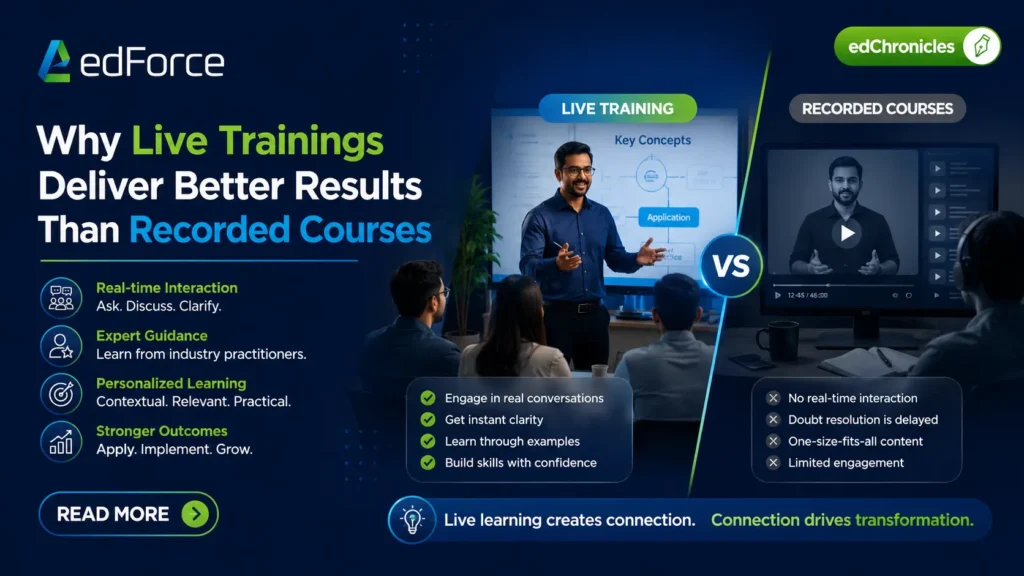
Why Live Trainings Deliver Better Results Than Recorded Courses
In every firm I’ve worked in or observed closely I have observed the same pattern. A select group of employees is consistently moving ahead in the same direction, while other employees who have similar qualifications remain at the same level. It’s tempting to label”talent” this “talent,” but after many years of watching the way teams function this explanation doesn’t work. The distinction is more practical. It is all about the way people conduct themselves at work everyday, and especially when there is no one looking closely. It is not about who has more knowledge. It’s about who makes use of their knowledge in the correct way in the right way, at the right moment. Growth Is Driven by Application, Not Learning Volume A lot of employees today are continuously learning. They take classes, complete courses, and are constantly up to date. In writing, they appear robust. However, there’s a noticeable gap that I’ve repeatedly observed. The lack of application in learning creates confidence, not capabilities. People who progress faster in their careers have a different approach to one thing. They integrate the knowledge they have gained into their work right away. Even if they’re unsure about something, they will try. They experiment with concepts, refine them and then improve them through actions. The habit will grow with time. It’s not about how much you’ve learned. It’s how fast you transform your learning to output. Ownership Is the First Real Signal of Growth Managers do not promote talent. They encourage reliability. In many teams, the employees with the highest growth aren’t the ones who wait for clarity. The ones that are fastest-growing ahead. There are certain behaviors that are consistent: This builds trust. When trust is established the growth will naturally follow. Feedback Is Used, Not Defended Feedback is among the least understood aspects of growth. Some employees take note of feedback, but don’t take action based on the information. Others are resistant to it completely. Both types slow down progress. The employees who increase their productivity take feedback in a different way. They view it as an feedback for improvement and not as a form of judgment. Practically speaking: This leads to a loop of constant improvements, and that’s what businesses value. They Focus on Solving, Not Just Doing It is an unnoticeable, but significant distinction between employees who finish their work and those who are growing. Focused on task, employees try to complete the work given to them.Growth-focused employees seek to understand the reason of the task. In time, this leads to drastically different results. There are many fast-growing employees: It is also where they begin being noticed without trying too to be too. Skill Building Is Intentional, Not Random One of the most common mistakes I have seen is a lack of focus on learning. Employees tend to spend their time learning techniques that are intriguing but do not serve their job. People who are growing faster are more discerning. They pay their attention to: They then work on the specific areas. The same is true for organizations that are transforming. Many are now constructing system of learning that is structured and based on roles typically with partners such as edforce.co for employees to are focused on specific competencies that directly impact their performance. Consistency Beats Intensity Every Time Growth is not a thing that happens in a flash. It is a pattern that occurs. Certain employees are extremely hard-working for brief periods, only to they slow down. Some employees maintain a steady rate of progress. Second group goes ahead. There are three things you will be able to see: After an entire year, the change is evident. My Perspective After Working With Teams If I needed to simplify the situation by experience, growth can be described as a set of actions that are practical: None of these requires extraordinary skills. Together, they can create remarkable advancement. Final Thoughts The notion that success is dependent mostly on talent is a common however it can be is a bit misleading. It lets people explain stagnation and not question their strategy. In reality, the biggest changes in growth are caused by everyday choices. What someone does and how they react, and how they grow. It is also the reason that some employees progress faster. It is not because they are more skilled or skilled, but because they are more focused on how they progress.
NVIDIA AI Certification: Is It Worth It for Enterprises in 2026?
Artificial Intelligence is no longer an experimental initiative within enterprises. In 2026, AI is becoming an important part of daily operations across different industries. Businesses are integrating AI to support customer service, analytics, automation, security, product development, and internal operations. However, there is one challenge many organizations are facing. They are investing heavily in AI tools and systems, but their employees are not fully equipped with the skills needed to use these systems effectively. This gap between technology adoption and workforce capability is one reason why certifications and formal AI training are getting so much attention. One name that often comes up in these discussions is NVIDIA. The main question for companies is not whether NVIDIA AI certifications are popular. The real question is whether they deliver actual business value. Why Enterprises Are Taking AI Certifications More Seriously Just a few years ago, AI skills were limited to specialized technical teams. Today, the situation is very different. Companies are building AI-focused teams across: However, business leaders are under pressure to make sure AI investments deliver real results. Buying AI tools is only one part of the process. Building teams that can use AI effectively is another. This is where structured certification programs become useful. They help companies move from scattered learning to focused skill development. What Makes NVIDIA AI Certification Different One reason NVIDIA certifications are receiving strong attention is because they are closely connected to real enterprise AI environments. NVIDIA is no longer seen only as a hardware company. Its ecosystem now includes: This makes the certification more practical than programs that stay mostly theoretical. Employees are not only learning concepts. They are also learning how AI systems actually work in business environments. For businesses trying to build internal AI capabilities, this practical exposure is extremely important. The Real Value Is Not the Certificate Itself This is something many companies misunderstand. The most valuable part is not the certification badge itself.It is the skills teams develop during the learning process. Many organizations are dealing with challenges such as: Structured AI training can help reduce these problems by building stronger internal understanding. That is where the real business value comes from. Why Team-Based AI Learning Works Better One common mistake enterprises make is training only a few selected individuals while expecting company-wide AI transformation. This approach rarely works well. AI adoption affects multiple teams. Cloud engineers, developers, analysts, and operations teams often need shared understanding and alignment. If only a small group understands the systems properly, execution becomes dependent on a few people. This slows adoption and creates bottlenecks. That is why many businesses are now adopting team-based AI learning models instead of only individual certification programs. Businesses are increasingly working with corporate learning partners such as edforce.co, which also offers NVIDIA-focused AI training programs that help teams build practical AI skills aligned with real business use cases. Where NVIDIA AI Training Helps Enterprises Most From a business perspective, NVIDIA AI certification programs can be highly useful in areas such as: For technical teams working directly with AI systems, these skills are becoming more valuable. They also help businesses strengthen internal capabilities instead of depending completely on external support. The Bigger Challenge Is Still Skill Application Even the best training programs have limited value if learning is disconnected from real business work. This is where many organizations still struggle. Employees may successfully complete certification programs, but if those skills are not applied in real projects, the impact remains limited. Businesses seeing the strongest results are the ones connecting training directly with implementation. Many companies are now using structured learning ecosystems with partners like edforce.co to ensure AI learning supports real execution instead of just course completion. That shift creates a major difference. Is It Worth the Investment in 2026? For businesses seriously planning to invest in AI, NVIDIA certification can definitely be worth the investment. However, it depends on how companies approach it. If the goal is only certification, the value remains limited.If the goal is to build long term AI capability across teams, the value becomes much higher. This can lead to: This is where companies begin to see meaningful business impact. My Practical View In today’s corporate environment, the companies moving fastest with AI are not simply the ones buying the latest technology. They are the ones building teams that can confidently use the tools they already have. That is why structured AI learning is now becoming a business investment strategy rather than just a learning activity. Certifications connected to real enterprise ecosystems, such as NVIDIA’s, are becoming more important because they help bridge the gap between AI goals and real execution. Final Thoughts NVIDIA AI certification can be highly valuable for enterprises in 2026, especially for businesses building serious AI capabilities across teams. However, the real value is not in the certificate itself. It depends on how employees apply those skills in real business environments. Enterprises that treat AI learning as a long term capability strategy instead of a one time certification activity are likely to gain the greatest benefit. In the end, AI success is not only about technology.It is about whether teams are prepared to use it effectively.
Why Companies Are Investing in Agentic AI Training
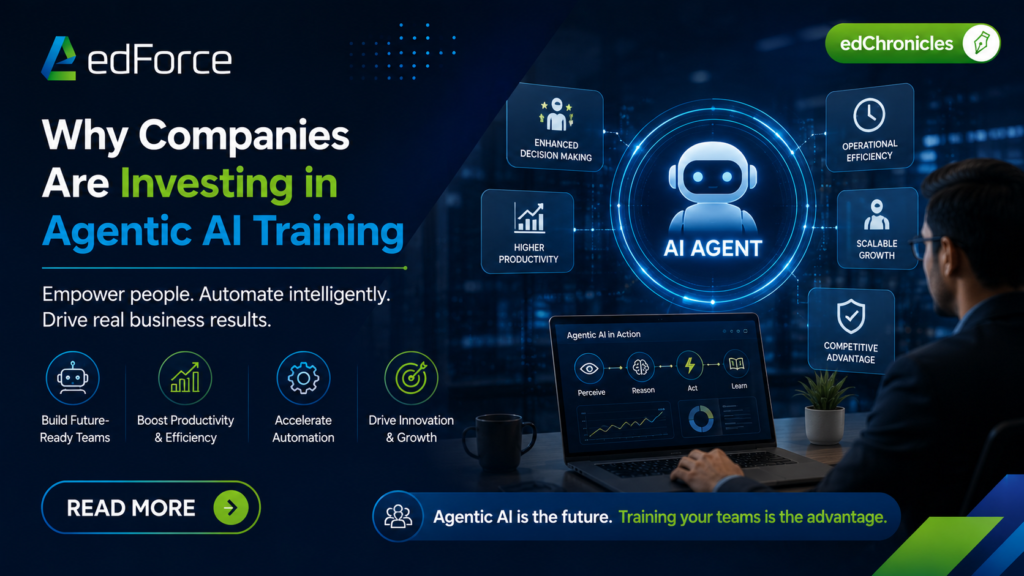
In the past few years, most companies have been using AI mainly as a support tool. Employees used AI to ask questions, create documents, generate content, or automate small tasks. Now, the conversation is changing. In 2026, businesses are moving toward something bigger. AI systems are becoming capable of making decisions, managing workflows, handling tasks within limits, and completing actions with less human involvement. This is why Agentic AI is becoming one of the most talked about technologies in enterprises. While businesses are investing heavily in AI systems, they are also realizing something important. Technology alone is not enough. Employees also need to understand how to use these systems properly. This is exactly why Agentic AI training is growing rapidly across companies. What Is Agentic AI in Simple Terms? Agentic AI refers to AI systems that can complete tasks on their own instead of only responding to instructions. Unlike traditional AI tools that wait for commands, Agentic AI systems can: In simple terms, the AI behaves more like an active digital assistant rather than just a chatbot. This is changing how businesses use AI completely. Why Businesses Are Taking It Seriously Many companies are already seeing the limitations of basic AI usage. Employees may save time using content generation or automation, but businesses still face challenges such as: Agentic AI is attracting attention because it can help reduce these operational bottlenecks. For example, businesses are exploring AI systems that can: This moves AI from support toward execution. The Real Reason Training Matters Many businesses are becoming more practical in their approach. Companies understand that advanced AI systems can create confusion if employees do not understand: Without proper training, AI adoption often becomes inconsistent. Some teams become too dependent on AI, while others avoid using it completely. Neither approach works well in business environments. Training helps create balance. Employees Need a Different Mindset for Agentic AI One major change happening today is that employees are no longer expected to only use software tools. They are increasingly expected to: This requires a very different skill set compared to traditional software usage. Employees need to understand how AI decisions affect: This is one reason businesses are investing heavily in structured AI capability building instead of casual experimentation. Why Enterprises Cannot Treat Agentic AI Casually From what many organizations are experiencing, Agentic AI creates both opportunities and risks. The benefits are clear: However, businesses also worry about: That is why companies are becoming more careful about workforce readiness. Organizations successfully implementing Agentic AI are not only using tools. They are also preparing employees to work with these systems effectively. Team Training Is Becoming More Important Than Individual Learning Another major shift is happening inside enterprises. AI adoption is no longer limited to small technical teams. Agentic AI affects operations teams, support staff, managers, analysts, and business workflows across departments. Because of this, companies are investing more in team based AI learning instead of focusing only on individual training. Many organizations are now working with enterprise learning partners like edforce.co to help teams build practical understanding of AI workflows, automation systems, and responsible AI usage in real business environments. The goal is not only AI awareness.It is operational readiness. What Companies Actually Want From Employees A clear trend is now visible in hiring and workforce development. Businesses are not expecting every employee to become an AI engineer. However, they do need employees who can: These are quickly becoming valuable workplace skills. My Practical View The companies gaining the most value from AI today are not the ones rushing to automate everything immediately. They are the ones preparing their teams properly before scaling AI adoption. Preparation matters because Agentic AI changes how employees work inside organizations. Employees who understand these systems will become far more valuable in the coming years. Businesses already understand this. Final Thoughts Companies are investing in Agentic AI training because the future of work is moving from basic AI assistance toward AI supported execution. As AI systems become more autonomous, businesses need employees who can guide, monitor, and work with these systems responsibly.The real challenge is no longer getting access to AI tools.It is building teams that understand how to use them effectively in real business environments
Top Claude AI Skills Employees Need in 2026
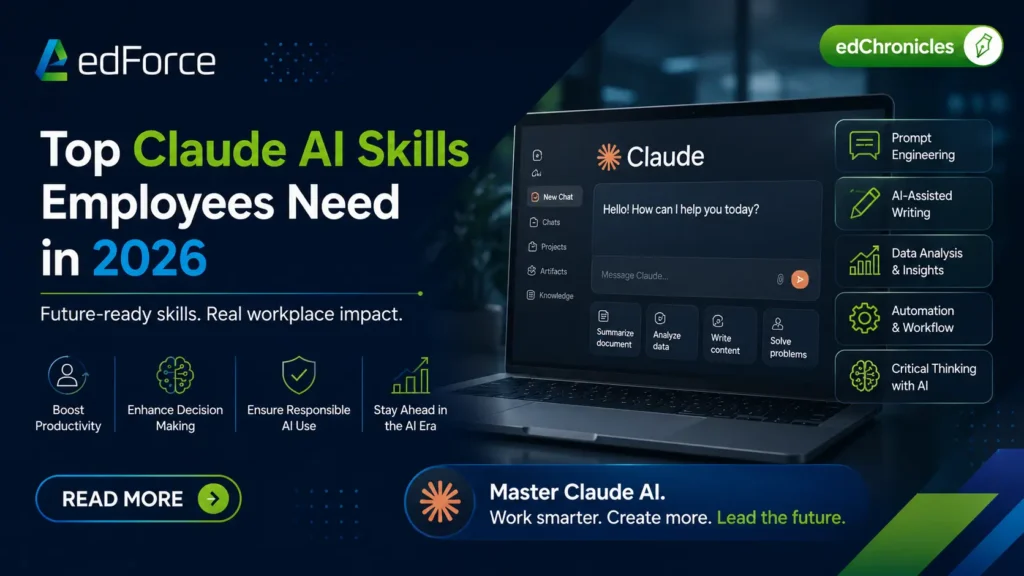
In the year prior, many employees were still asking if AI could affect their work. In 2026, the conversation has completely changed. The focus now shifts to a different area. The companies are no longer asking whether employees should use AI. They are now asking whether employees are aware of how to use it effectively. Tools such as Claude AI are becoming part of the daily work of departments. The teams are using these tools to research and content production, workflow support document analysis, report-writing, and internal communications. However, being able to access AI tools does not suffice. The workers who add the most worth are those who are able to use AI successfully, not in a casual way. Writing Better Prompts Is Becoming a Real Workplace Skill One of the most commonly held misconceptions regarding AI instruments is that they function perfectly by themselves. They aren’t. Quality of the output is heavily dependent on how employees interact in a system. This is the reason prompt writing is fast growing to be one of the essential useful AI abilities. Employees who have the ability to: generally, you will get more effective results using tools such as Claude. It is no longer a technical ability. It’s now a business capability across all the different roles. Employees Need to Learn How to Verify AI Output Another problem that businesses are experiencing is the overreliance on AI-generated response. Claude AI can save time however, employees will still require judgement. Employees with a strong work ethic are able to: This balance is becoming increasingly crucial in professional settings. The firms that reap the most benefits from AI aren’t replacing human thinking by AI. They combine AI efficiency with the human capacity to make decisions. Context Handling Is Becoming More Valuable One reason why many businesses are moving to Claude AI is because it handles large conversations and longer-form context better than previous AI tools. However, employees must be aware of managing this context effectively. In terms of practicality it refers to: People who are aware of this can perform better using AI systems. AI-Assisted Communication Is Growing Fast One area that is rapidly changing within businesses is communication. Employees are currently making use of AI instruments to But businesses do not require automated communications. They are still looking for clarity precision, accuracy, and professional judgement. This is the reason employees who are able to utilize Claude AI, while maintaining the human touch and understanding of business are increasing in value. Critical Thinking Matters More Than Ever In a way, AI is accelerating the importance of human brains. Many employees believe that AI eliminates the necessity to think critically. However, the reverse is taking place. As AI-generated content becomes more and more popular companies are increasingly looking to hire employees who are able to: AI can generate answers quickly. Whether those answers are logical is the domain of a human. Workflow Understanding Is More Important Than Tool Knowledge One thing that many professionals do wrong is not focusing on acquiring the tool itself. The companies are more concerned with how employees can enhance their workflows with the help of AI. This includes: The workers who comprehend workflow improvement typically create greater value than those who only know AI features. Why Enterprises Are Investing in Claude AI Training As AI adoption increases, a lot of organisations are beginning to realize that unstructured AI use can cause inconsistencies. Some employees use AI effectively. Other employees do not use it at all or apply it improperly. Many companies are spending money on structured AI capacity development and tools like claude Training via Learning partners such as edforce.co specifically for teams who work using AI-based generative AI tools such as enterprise workflows, corporate workflows, as well as AI-based productivity tools. The aim isn’t just AI access. The aim is to be practical AI ability. The Biggest Shift Happening in Workplaces The main shift isn’t the fact that AI instruments are replacing workers. The result is that workers who are able to effectively use AI are far more productive than employees who don’t. The gap in productivity is growing rapidly. In many organizations this is already happening: This is the reason AI abilities are no longer considered to be optional job-related abilities. Final Thoughts By 2026 Claude AI abilities aren’t only about learning to understand the functions of a machine. They’re about learning to be more efficient in AI-powered environments. People who can manage AI effectively, check outputs, consider the implications, and improve workflows will be in an edge in the modern workplaces. The future of work isn’t just human as well as AI jobs.It is humans and AI working in tandem to achieve success.
What Actually Makes Someone “Job-Ready” in 2026
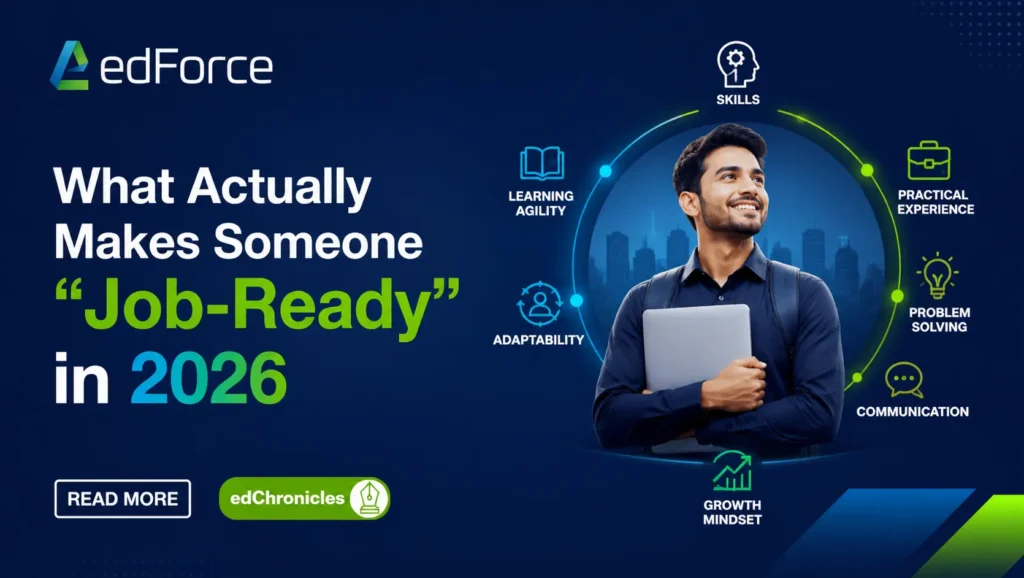
The concept that one should be “job-ready” has changed more in the last couple of years than during the previous decade. In the past, an education, a basic understanding of technology and the desire to learn were usually enough to be able to work. In 2026, the expectation has changed dramatically. Employers aren’t employing only for the future potential. They are now hiring for immediate contributions, which means an employee who is job-ready who can take on an existing job and begin generating value in a short amount of time. This isn’t an accident. It’s a result of the speed at which companies are operating in the present. Teams are not able to afford lengthy training curves and executives are unable to be able to spend months bridging the gap between their knowledge and the execution. In the end, job-readiness has evolved from a concept based on qualifications to becoming an actuality based on capabilities. Job-Ready Is About Application, Not Just Knowledge One of the biggest problems that organizations find is the distinction between knowing and implementing. Many applicants have solid knowledge of the theory. They are able to explain concepts clearly as well as discuss frameworks, and even excel in tests that are structured. However, when they are put in real-world situations, their capability to apply the knowledge can be inconsistent. In 2026, the only thing that truly defines job-readiness is to use knowledge and apply it in real-world situations. This means solving real-world problems, taking decisions using limited information, and adjusting knowledge to meet the needs of business. Businesses value people who apply their knowledge to action without needing constant supervision. Understanding Context Is What Makes Skills Useful The skills alone will not suffice If they’re not used in the proper context. Modern jobs are based on complex systems that include teams and tools, timelines, and business goals. A professional who is job-ready understands the way their work is connected to bigger outcomes. These professionals are cognizant of their priorities as well as constraints and expectations and are able to make more informed choices. Without this understanding of context Even technically proficient individuals may be unable to comprehend the context. They might know what they should do, but they don’t know how or why they should perform it. This is the reason why companies increasingly seek out professionals who are able to combine technical skills with a business-minded perspective. Adaptability Has Become a Core Requirement The rapid pace of modernization in the workplace has made it essential to be flexible. Technology evolves, processes shift and roles grow more quickly than they ever have before. An employee-ready professional in 2026 is not someone who has all the answers but rather someone who is able to adapt quickly and learn without a hitch. The ability to adapt shows in how people respond to new problems. Instead of being resistant to changes or waiting for certainty, they are engaged with the change. They try new things, gain feedback, and continue to improve. This is a way to ensure long-term relevance in an ever-changing setting. Communication Directly Impacts Performance Another important aspect of job-readiness is the ability to communicate. In modern workplaces, work rarely happens in isolation. Collaboration among teams is commonplace and the clarity of communication directly impacts outcomes. Professionals who communicate their thoughts clearly and ask the right questions and collaborate with stakeholders, perform better. On the other hand even the most skilled people may have difficulty when they are unable to communicate their ideas or contribute to discussion in a constructive manner. This is the reason why communication is now considered a skill that can be used to perform instead of a mere soft capability. Problem-Solving in Real Work Conditions Problem-solving in real-world situations is quite different from formal learning environments. In real-world situations there is often a lack of information and timelines are a bit rushed and the decisions are based on trade-offs. Professions that are job-ready are able to operate under these conditions. They don’t wait for perfection in their instructions. Instead, they evaluate the situation, make educated decisions and are accountable for results. The ability to manage uncertain waters is highly valued since it shows the ability to take on real-world obligations. The Role of Structured Skill Development One reason that many aren’t job-ready is how learning is organized. A majority of traditional education focuses on the delivery of content rather than capacity building. This results in a gap between the knowledge people have and the skills they are able to accomplish. The organizations are tackling this by implementing skill-based learning methods. Instead of focusing solely on specific topics, they create training programs based on real-world work requirements and quantifiable outcomes. Many companies collaborate with partners such as edforce.co to develop learning environments that replicate real-world scenarios, which ensures that employees acquire useful, practical capabilities. Final Thoughts The year 2026 is when being ready for work is not just about achieving basic requirements. It’s about showing the capability to contribute effectively right from the beginning. This involves using the knowledge gained, analyzing the context, adapting to change by communicating clearly and tackling real-world issues under real-life situations. Professionals need to be not focusing as much on gathering data and more on building capacity. For businesses, it’s about changing how talent is evaluated and created. Because in a highly competitive business environment, the real value of an individual who is job-ready is not in what they know, but rather in how well they utilize it.
Best Online Automotive Courses to Build Job-Ready Skills in 2026
The auto industry is not like before. It is no longer only about repairs and engines. In 2026, cars are getting smarter, more electric, and more computer-based. This change has also changed what “job-ready” means. Companies today are not looking for people who only know basic theory. They want professionals who can handle diagnostics, electronic systems, design tools, and real problems. That is why choosing the right online automotive course is more important than ever. What Makes an Automotive Course Worth It Before looking at options, it is important to know what matters. A good course is not just one that teaches concepts. It should help you: Understand how real car systems workUse tools like simulation, CAD, or diagnosticsLearn new technologies like electric vehiclesBuild skills you can use in real jobs Courses that only focus on theory and not practice will not help much. Best Online Automotive Course Platforms Instead of random courses, here are some useful and relevant options based on how the industry is changing. 1. Coursera Automotive Courses Platforms like Coursera offer structured courses from universities that focus on automotive basics, design, and industry concepts. You learn topics like mechanics, vehicle systems, and engineering. Best for: Engineering students and beginnersLearning basic automotive conceptsStrong base with certification 2. edX Automotive and EV Courses edX offers courses focused on modern trends like electric vehicles, engine systems, and system design. This is where you move from basic learning to future-ready skills. Best for: Learning EV and hybrid vehiclesEngineers moving to advanced rolesUnderstanding system-level design 3. Udemy Practical Automotive Courses Udemy is more practical and beginner-friendly. Courses like repair, diagnostics, and electrical systems help you understand how cars work. These are not heavy theory courses. They focus on real use. Best for: Beginners with no experienceHands-on repair and maintenance skillsQuick learning 4. Alison Free Automotive Courses If budget is a concern, Alison offers free courses on automotive systems, engines, and basics. These are short but useful for starting. Best for: Free learningBasic understandingQuick certification 5. Autodata and Technician Training Platforms Platforms like Autodata offer industry-focused training with many modules for repair, diagnostics, and advanced systems. This type of learning matches real workshop work. Best for: Working professionalsMechanics improving skillsReal-world repair and diagnostics 6. EV and Automotive Design Courses Courses focused on EV, CAD tools, and simulation are becoming important. Learning tools like MATLAB or SolidWorks helps in future roles. Best for: Advanced learners and engineersEV industry jobsDesign and development roles How to Choose the Right Course After seeing many learners, one mistake is common. People choose courses based on popularity, not need. A simple way to decide: If you want to be a mechanic, focus on repair and diagnosticsIf you want engineering or design roles, choose CAD, EV, or system coursesIf you are starting, begin with basics and then move to advanced Do not try to learn everything at once. It wastes time. Where Most Learners Go Wrong This is important. Many students complete many courses but still do not get jobs. The reason is simple. They do not practice. Just completing a course does not make you job-ready. What matters is: Practice what you learnWork on real problemsUnderstand how systems work, not just theory Even the best course will not help without practice. Practical Advice If you want to build a career in the automotive field in 2026, focus on two things: First, learn the basics properlySecond, move fast into practical and future skills like diagnostics and EV systems The industry is changing fast. People who adapt early will grow faster. edForce.co is the best company who provides best training for automotive firld and its cetification is valid in many companies. Final Thoughts The best online automotive course is not the one with the most content. It is the one that helps you do real work with confidence. In 2026, job-ready means: You understand systemsYou can find problemsYou can use modern toolsYou can adapt to new technology Choose courses that build these skills, and your career will move in the right direction.
Is Red Hat Linux Certification Worth It in 2026? A Practical Guide
If you ask this question today, you are asking the right thing. Because in 2026, not every certification is worth your time or money.Some certificates look good on paper but do not change your career. Others actually build skills that companies pay for.Red Hat Linux certification falls into the second category — but only if you understand where it fits. What Makes Red Hat Certification Different After working with hiring teams and tech professionals, one thing is clear. Not all certifications are trusted equally. Red Hat stands out for a simple reason. It is hands-on, not theory-based. You do not pass by remembering answers. You pass by solving real problems on a live system.That is why companies trust it more and edforce.co is a trusted partner partner who provides best training. It shows you can actually work, not just study. Is There Real Demand in 2026? Yes, and it is not slowing down.Linux is still the base of: Cloud systemsDevOps setupsServers and enterprise systems Most cloud platforms like AWS and Azure depend heavily on Linux systems, which keeps demand strong for professionals with real Linux skills.Red Hat Enterprise Linux is widely used in companies, which increases demand for certified professionals. This is not a short trend. It is a long-term need. Salary and Career Impact Let’s talk practical value. In India, RHCSA-certified professionals can earn around ₹4 LPA to ₹10 LPA based on experienceMid-level roles can go up to ₹8–12 LPA or moreGlobally, salaries often cross $100K for experienced professionals It also opens roles like: Linux System AdministratorDevOps EngineerCloud EngineerSite Reliability Engineer These are not basic roles. These are core system roles. Where It Helps and Where It Does Not This is where most people get confused.Red Hat certification is strong, but only in the right situation. It is worth it if: You want a career in Linux, DevOps, or CloudYou are targeting backend or system rolesYou are serious about hands-on work It is NOT worth it if: You want quick job placement without skillsYou are in non-technical roles like marketingYou think certification alone will get you hired Even in developer communities, this is clear. Certification helps, but without real practice, it does not guarantee a job. The Real Advantage Most People Miss From experience, the biggest value is not the certificate itself.It is how you learn while preparing. You gain: Strong command-line skillsBetter system understandingProblem-solving skills under pressure These are the skills companies look for but often do not find.That is why Red Hat certifications are called a gold standard in Linux. Cost vs Return Let’s be clear. It is not cheap. Exam cost is around $400–$500Training can cost more based on how you prepare But the return is clear.Many professionals recover the cost through better salary or new opportunities. So the real question is not cost.It is whether you will use the skill. Practical Opinion Based on Hiring Trends If you are serious about a tech career, especially in cloud or DevOps, Red Hat certification is still one of the best choices in 2026. But here is the truth: The certificate alone will not change your careerThe skills you build while preparing will That is the real difference. Final Words Red Hat Linux certification is worth it in 2026, but not for everyone. It is useful for people who: Want strong technical skillsAre ready to practice regularlyAre aiming for cloud or system roles It is not useful for those looking for shortcuts. In simple words, this certification does not give you a job.It gives you the ability to do the job well.And in today’s market, that is what really matters.