


Certification Voucher vs Paying Full Price: Is It Worth the Switch?

It’s easy to pay full price for an exam. You select the exam, enter your card information, and then move on. Professionals who have taken several certifications soon discover that it is not a question of how to pay for an exam. The question is whether paying the full price is worth it. Certification vouchers can help reduce the cost of exams, and certain programmes may offer additional benefits such as retakes or bundled learning. A voucher does not always represent a great deal. The value of a voucher depends on its discount, the expiry date, the exam rules, and whether or not you’re actually going to use it. When is it worth switching from a full-priced payment to a certification voucher? What Is a Certification Voucher? A certification voucher is a code or benefit that can be used to pay for a certification exam. It may be a full-price voucher or a percentage discount, depending on the program. AWS supports vouchers with a 50% discount and full value. A full-value voucher covers the cost of the exam, whereas a 50% discount voucher reduces what is payable at the time of purchase. It may seem simple, but it is not. A voucher’s value only matters if its terms are compatible with your certification plan. Some vouchers expire. Some vouchers are only valid for certain exams, exam versions, or regions. Some promotional vouchers can’t be combined with other offers. The best voucher does not always mean the cheapest. The Numbers Make the Difference Consider AWS Skill Builder Certification for India. AWS lists the price of Associate-level exams at Rs 12,829.50, and Professional and Specialty exams at Rs 25,659 before taxes. A 50% discount would be a significant saving when compared to paying the full price for an exam that costs Rs 25,659. This difference is even more significant when you plan to obtain multiple certifications. Saving a few thousand rupees on one exam may be useful. The same percentage can provide a significant training budget advantage for three or four exams. Vouchers are the best option for this. As Your Certification Plan Expands, a Voucher Becomes More Valuable If you only take one certification every few months, it is unlikely that you will spend much time looking for discounts. Anyone building a certification path in cloud, AI, cybersecurity, data, or data analytics should think differently. Imagine a professional who plans to obtain three certifications in the next twelve months. If you pay full price for each exam, then you accept the standard cost every time. The voucher strategy raises another question. Can you purchase any of these exams through an official discount or employer programme? AWS offers discounts on vouchers as part of its certification challenges. Certified individuals can receive a discount of 50% for recertification exams or other exams. Savings are not the only benefit. Plan ahead to avoid last-minute shopping when an exam deadline approaches. But Do Not Buy a Voucher Just Because It Is Discounted Candidates can sometimes be caught in this trap. They buy it because they feel like they have an opportunity. The clock will start. If the voucher expires before the candidate is prepared, then the discount created a problem rather than solving one. AWS explicitly states that voucher expiration dates are not extendable. Check these four things before buying: What exam is it? When does it expire? Can it be transferred, or is it restricted to a single candidate? Can this promotion be combined with other promotions? This is important because many certifications come with conditions. The voucher is there to support, not to dictate your plan of study. Some Voucher Offers Go Beyond the Exam Fee The added benefit can make the biggest difference between a simple discount and a promotion with a strong certification. AWS has, for instance, run 2026 promotions in which a voucher eligible to cover a Professional or Specialty Exam could be used to pay for the initial exam, and if it was not passed, the candidate could retake the exam at no cost. This changes the calculation. Imagine that an advanced exam costs Rs 25,659. You can only take the exam once if you pay full price. An offer that includes the first attempt and a free retake reduces the financial risk. Candidates should not assume that all vouchers include a second attempt. Be sure to read the terms and conditions of any promotion. Benefits are only available if you purchased the actual offer. Use of Vouchers Is a Great Option for Enterprise Teams When an organization certifies multiple employees, the economics are more interesting. Individuals may find it beneficial to purchase one exam at a time. It can be inefficient for a company that is training dozens of employees. Some providers offer bulk purchases, learning credits, or training packages with certification exams. NVIDIA, for example, is a good example. Its Learning Credits can be used to redeem certification exams, self-paced courses, workshops, and other training services. NVIDIA offers packages in which credits can be exchanged for multiple certification exams at Associate and Professional levels. This is a key distinction between individual savings and enterprise-wide learning economics. It is not enough to ask if one employee can save money for a business. The question is whether or not the organisation can plan its entire skill programme more efficiently. The Full-Price Option Is Still the Best Choice In some cases, paying the full price is the best option. You may be able to avoid unnecessary complications if you buy a voucher that is valid until next week. The voucher is of no value if it applies to the wrong certification. A promotional offer that requires you to meet certain conditions is of no value. If your employer pays the entire cost of certification, a voucher might not affect your personal expenses at all. The situation is important when deciding what to do. It Is Smart to Check Before You Schedule Check the current prices and vouchers offered by
Why Giving Employees AI Tools Doesn’t Guarantee Better Productivity
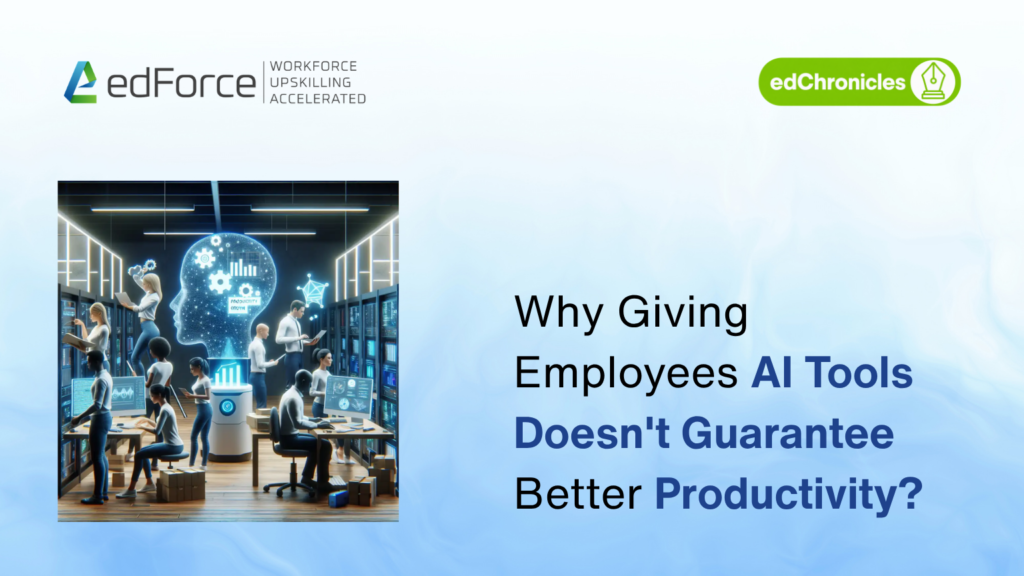
Even If a Company Gives Every Employee Access to AI Tools, Productivity Won’t Change Much This may seem strange at first. Why not give people the ability to use AI? It can automate research, write code, analyse and summarise reports, generate content, and handle repetitive tasks. Not quite that simple. It’s not about access. The real challenge is understanding how AI fits into the work, what employees should actually do with it, and what happens once AI provides an answer. In 2026, this has become a major issue for businesses. Many organisations have stopped asking whether AI is a good idea. The more important question now is whether the teams using these tools are getting real results. The Two Are Not the Same Imagine a company gives 500 employees access to an AI assistant. Some start using it immediately. Others try it once and give up. Some use it daily but only to rewrite emails. One group uses it to draft reports but never checks the output. The company has adopted AI on a technical level. It is not, however, an AI-capable organisation. Productivity doesn’t come from tools alone — it comes from the combination of technology, human judgment, and skill. In the hands of someone unfamiliar with how to use it well, even a powerful AI system can end up worthless. Employees Need to Know What AI Should Actually Do The first mistake companies make is telling employees to “use AI more” without showing them how it can meaningfully improve their work. Left without direction, employees end up experimenting with random tasks. A marketing team might use AI to create social media posts. Finance might use it to summarise documents. A software team might use it to assist with code. Customer service might use it to draft responses. The real value comes from understanding the entire workflow. Instead of simply asking AI to write a reply to a customer, a team can use it to classify the incoming request, extract the key information, generate a response using approved company materials, and escalate the case to a human expert when judgment is required. It’s not enough to bolt an AI tool onto a process — the process itself needs to improve. AI Can Make Poor Processes Faster – Not Better This trips up many organisations. AI won’t fix problems that already exist in a business process — excessive approval chains, repetitive data entry, unclear ownership, or outdated information. Sometimes it just makes those problems happen faster. Imagine an employee who spends hours building a report because the data comes from five different sources. An AI assistant might help them produce the document more quickly — but the underlying problem, fragmented data, is still there. Connecting the right information sources is often a better starting point for an AI strategy than deploying a chatbot. This is why AI adoption should start with a review of processes. The more useful question isn’t “Where can we use AI?” It’s “Where is our process actually broken?” That question tends to surface far better opportunities. Training Changes How Employees Use AI There’s a real difference between showing someone how an AI tool works and showing them how to apply it to their specific job. A basic introduction or team training can teach employees to write prompts, summarise text, or generate ideas. That’s useful — but not sufficient. A cloud engineer needs different AI skills than a sales professional. A developer needs a different foundation than an HR manager. A data professional may need familiarity with APIs, models, pipelines, and evaluation methods. Enterprise AI training should be role-based. The goal isn’t to turn every employee into an AI engineer – it’s to help each person understand how AI can genuinely enhance the work they already do. Better Prompts Aren’t the Whole Answer The quality of someone’s prompting skill does affect outcomes – that’s still true. But enterprise productivity is about more than a clever instruction. Employees also need to understand context, data verification, privacy, and workflow design. Imagine an employee asking AI to generate a business summary. Even a polished, confident-sounding response can contain inaccurate numbers if the source information was incomplete. Employees need to know how to check results – and what information they need to supply in the first place. In practice, good judgment is often more valuable than a clever prompt. Productivity Isn’t the Same as Activity This is another area where companies commonly misjudge AI adoption. If AI lets an employee produce 20 documents instead of 5, that can look like a productivity win. But did those 20 documents actually help the business? Output doesn’t automatically translate into value. AI makes it easy to generate emails, presentations, reports, images, and code — but without clear goals, employees may simply end up producing more, not better. A more useful measure is whether AI is improving something that actually matters: Has response time gone down? Are engineers spending less time on repetitive work? Are analysts reaching valuable insights faster? Are customer complaints resolved more quickly? Are employees spending more time on complex, high-value work? These metrics tell a far better story than counting AI-generated outputs. Human Review Still Matters AI-driven productivity doesn’t mean removing people from workflows. Human review remains essential in many situations. Employees need to be able to recognise when an AI response is incomplete, uncertain, or inconsistent with the available information — and they need to know what information should never be fed into an AI system without proper safeguards. This is a genuinely new kind of workplace skill. Employees are increasingly responsible for directing, evaluating, and improving machine-generated work — not just producing it themselves. That requires training. It also requires clear organisational policy. The Next Productivity Gap May Form Between Teams This is a trend worth watching closely. The biggest AI productivity gaps may not appear between companies that use AI and those that don’t — they may appear within the same company. One team might build repeatable
The Difference Between Using AI and Actually Working With AI
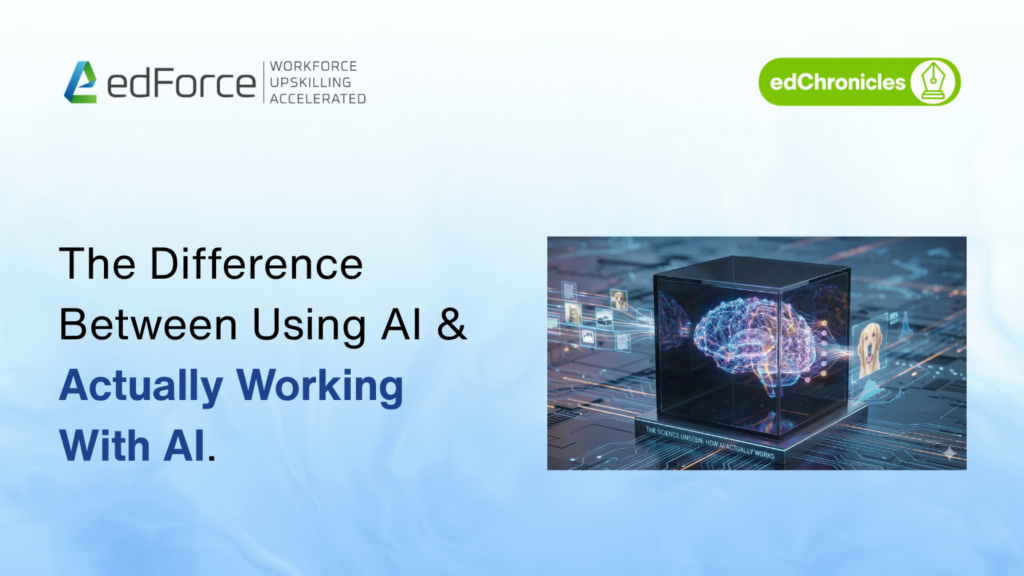
There’s a Big Difference Between Using an AI Tool and Actually Knowing How to Use AI AI can be used to create presentations, write emails, summarise reports, or even explain difficult topics. This is a useful first layer — but there’s more to it than that. AI is more than just a tool. Knowing what AI is and what it does, knowing how to use its output to improve business processes, and knowing how to verify that output are all part of genuinely working with AI. In 2026, this distinction matters more than ever, because AI has evolved from a personal productivity tool into a system woven into everyday business operations. The Easy Part of AI Is Using It Most professionals can learn the basics of AI assistants quite quickly: Ask a question Re-read the answer Change a few things Apply the result This may be enough for simple tasks. Imagine an employee who uses AI to create a report for a client. The tool produces a polished response, but some of the figures are outdated. The employee accepts it anyway because it sounds convincing. The AI wasn’t at fault. It was a lack of process. This is where the difference between using AI and working with AI becomes clear. What Does It Actually Mean to Work With AI? AI is best used as part of a broader workflow, not as a standalone application. Professionals working seriously with AI tend to ask questions like: What information does the system actually need? What tasks should AI perform? Where is human approval still required? How should the output be checked for accuracy? Can the process be safely repeated? What happens if AI gets it wrong? These questions go well beyond writing a good prompt. They require data awareness, process design, evaluation skills, and domain knowledge. AI skills, in other words, have become more than knowing how to operate a chatbot. AI Literacy Is Becoming a Core Workplace Skill In the past, many office roles depended on knowing how to use spreadsheets. Basic AI literacy today is similar. Employees are increasingly expected to understand what AI is capable of, where it excels, and where human judgment is still necessary. HR professionals might use AI to organise candidate information. Finance teams might use it to spot patterns across large documents. A software team might use it to explain or generate code. The tool itself changes depending on the department. But the underlying skill stays the same: using AI effectively and responsibly. Prompting Is Useful – But It’s Not the Whole Skill Prompt engineering was the first AI skill to gain widespread attention, because better instructions tend to produce better results. Enterprise AI training use, however, is moving beyond simple prompting. A good AI user knows how to provide context. A strong AI practitioner also knows where that context should come from, what shape it should take, and how to evaluate the results it produces. Take a customer service team as an example. The common approach is asking AI to “write a reply to this client.” A stronger approach gives AI access to relevant information – approved product data, customer history, company policy, and response guidelines. The second approach is far closer to how AI will actually be used across businesses going forward. Knowing What Not to Automate through AI This may become one of the most important AI skills in the coming years. It’s tempting to automate everything that can be automated. But AI isn’t the right answer for every problem. Even when AI can produce a quick answer, decisions involving legal responsibility, sensitive employee information, financial risk, or customer safety may still require human review. The strongest AI professionals understand these boundaries clearly. They don’t ask, “Can AI do this?” They ask, “Should AI do this — and under what conditions?” That’s a far more useful question for any enterprise to be asking. Working With AI Requires Verification AI can produce a response in seconds. That doesn’t mean the response is correct. Professionals who work well with AI develop the habit of checking important outputs against reliable sources, and learning to recognise when something looks off — rather than assuming fluent writing means accurate reasoning. This shifts workplace behaviour in a meaningful way. Employees are no longer just producing and reviewing their own work. In many workflows, they’re now reviewing machine-generated work before it reaches another employee, a customer, or a business system. That takes judgment. And judgment isn’t something you can automate with another prompt. From AI Tools to AI Workflows The next wave of enterprise AI adoption will likely involve fewer isolated experiments and more integrated workflows. Picture a process where AI summarises customer conversations, identifies next steps, drafts a proposal, updates internal records, and flags where human approval is needed. The salesperson is still involved. But their role has shifted. Instead of manually completing each step, they now supervise an automated workflow — letting AI handle repetitive tasks while they focus on relationships, decisions, and exceptions. Agentic AI is likely to expand this shift significantly. Rather than simply responding to individual requests, AI will increasingly complete sequences of tasks within defined parameters. Why Businesses Need a Different Kind of AI Training A short introduction is enough to teach employees how to use an AI tool. But enterprise training needs to answer a different question: Can this technology genuinely help our teams work better? That requires training built around real business scenarios. A software engineer may need AI-assisted development skills. A cloud engineer may need familiarity with AI infrastructure. A data team may need to work directly with AI models and pipelines. Business teams may need skills in AI-assisted analysis and workflow automation. The right training path depends on the employee’s role. A generic AI course simply can’t close every skill gap. The Future AI Employee May Not Look Like an “AI Specialist” This shift is worth paying attention to. AI skills won’t be limited to people with “AI” in
Looking for a Nvidia Certification Voucher? Here’s What to Know First
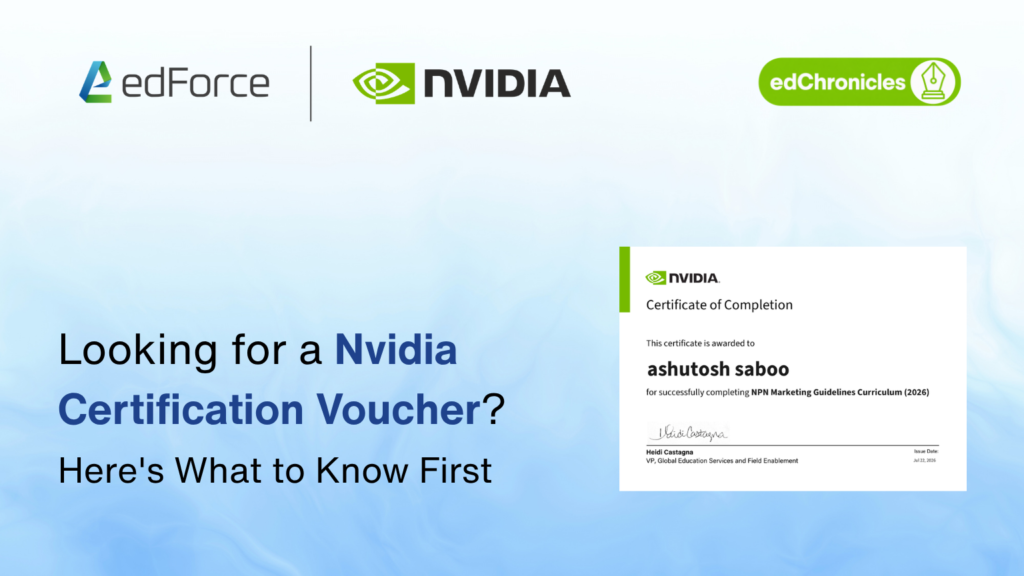
NVIDIA certifications can be an effective way to demonstrate technical expertise in fields such as AI infrastructure, generative AI, data science, and accelerated computing. Before booking an exam, learners often come across a confusing term: the NVIDIA certification voucher. Does it work the same way as a coupon code? Does it cover the entire exam fee? Where does it come from? Can you buy it online? It depends on what type of voucher you have and how it’s issued. Understanding how exam vouchers work can help you avoid overpaying for the wrong exam, missing the redemption window, or assuming a voucher comes with benefits it doesn’t actually offer. What Is an NVIDIA Certification Voucher? An NVIDIA certification voucher can be used to register for an NVIDIA exam. Think of it as a way to cover or reduce the cost of the exam — not as a certification in itself. edForce.co currently offers Associate and Professional-level exams in areas like AI infrastructure, data science, generative AI, and simulation. Exam prices differ by certification, so the value and conditions attached to a voucher matter. Where Can You Get an NVIDIA Certification Voucher? There are a few different ways to receive one. Enterprise Learning Credits. Organisations can convert NVIDIA Learning Credits into vouchers or codes for their learners. NVIDIA states that Learning Credits are valid for certification exams. Training packages. An exam voucher can be bundled into a training package. NVIDIA, for example, offers training-and-certification packages that combine learning resources with a voucher for an Associate-level exam. Promotional offers. These may exist too — NVIDIA’s 2026 Certification webinar, for instance, offered attendees a 50% discount code on the exam. Promotional offers are usually tied to specific conditions, dates, or audiences, and shouldn’t be confused with general-use vouchers. This distinction matters when someone searches online for a “cheap NVIDIA certification voucher” — a discount code and an actual exam voucher are not the same thing. Does the Voucher Cover the Full Exam Fee? Not always. Some vouchers cover the full cost of an exam; others only offer a discount. Exam pricing varies by certification – NVIDIA lists Associate exams at a different price point than Professional exams, and some Professional certifications are significantly more expensive. NVIDIA recommends checking each exam page for current pricing. Before assuming your voucher gets you a free exam, confirm three things: Which exam does it cover? What is the voucher’s value? Does it cover a single attempt only, or are there other conditions? These three details can save you from unpleasant surprises during registration. Don’t Buy a Voucher Before Choosing Your Certification This sounds obvious, but it’s one of the most common mistakes. Someone may purchase a voucher toward an NVIDIA certification before deciding on their technical path — only to later discover the voucher covers an exam that doesn’t match their role. Choose the certification first. An infrastructure professional may be better suited to the NVIDIA Certified Associate: AI Infrastructure and Operations certification, while an AI professional working with large language models might need a generative AI certification instead. NVIDIA’s current certification portfolio includes role-based paths across several technical areas. The voucher should follow your learning plan — not the other way around. What Should You Check Before Using a Voucher? Read the voucher’s conditions carefully. Check which exam it’s eligible for, its expiration date or redemption conditions, and any geographic restrictions. Also confirm whether it covers a discount or the full exam cost. Check whether the voucher is transferable – don’t assume a code issued to one person can automatically be passed to someone else. This matters especially for enterprise programmes, where companies purchase Learning Credits or training packages for multiple employees. NVIDIA Learning Credits can fund team training and can also be redeemed against certification exams or other training services. Voucher or Training? Both Matter, but They Solve Different Problems A voucher helps with exam registration. Training helps you build the skills needed to pass the exam — and to actually apply the certification afterward. This distinction is important. A voucher won’t prepare you to take an NVIDIA certification exam, and it won’t fill knowledge gaps if you’re new to GPU computing or AI infrastructure. NVIDIA recommends preparing through relevant learning and training resources beforehand. This matters most for working professionals — a certification should confirm skills usable on real projects, not just serve as a credential. Can Enterprises Use NVIDIA Vouchers for Teams? Yes – this is exactly where vouchers add value. Imagine an organisation has 30 engineers moving into AI infrastructure roles. Instead of having employees purchase exams individually, the organisation can plan its learning requirements, provide appropriate training, and use NVIDIA Learning Credits or eligible training packages to support certification. This approach also makes budgeting easier. It lets learning teams tie certifications to real business needs — the goal being a team that can actually apply the technology, not just accumulate certifications on an internal dashboard. What If You Fail the NVIDIA Certification Exam? A voucher doesn’t guarantee unlimited attempts. NVIDIA’s certification FAQ states that candidates who fail can retake the exam after a 14-day waiting period, with a limit of five attempts per exam within a 12-month period. That’s another reason not to rush into an exam just because you have a voucher. Use the voucher once you’re actually prepared — cost is only one part of the equation. How to Prepare Before Redeeming Your Voucher Start with the official certification exam page. Review the recommended resources and exam blueprint to identify your weak areas, and add hands-on practice wherever possible. Someone preparing for an AI infrastructure certification may need a deeper understanding of infrastructure operations, deployment, configuration, and validation. A generative AI learner might need a mix of LLM knowledge, application development, and deployment experience. Preparation should be built around the specific certification — not a generic AI course. NVIDIA Certification Vouchers: A Simple Way to Think About It Picture the journey in four phases: Select the right certification Build
What Is a Certification Voucher and How Does It Work?

It is not always easy to pay for a certification test by booking the exam and then showing up at the scheduled time. Vouchers are used by many professional certification providers to simplify the registration process for individuals, businesses, and training partners. You may already be familiar with the term voucher if you plan to take an IT certification. What is a voucher, what are its uses, and how should it be purchased? A certification voucher is a code, digital credential, or other form of payment that can be used to reduce or pay the full cost of a certification exam. The candidate can enter the voucher code instead of paying the entire exam fee during registration. It is important to note that vouchers are usually linked to specific rules for exams. A voucher may be tied to a particular exam, have a set expiry date, or include conditions for redemption. Why Do Certification Vouchers Exist? Vouchers simplify the certification process, especially when several employees are required to obtain the same certification. Imagine an organisation wants 50 cloud engineers certified. It can be inefficient to ask each employee to pay and submit their expenses separately. Instead, a company can purchase vouchers and distribute them among eligible employees. As part of their learning programmes, training providers can also include an exam voucher. The learner receives a voucher after completing the course. This allows for a better connection between training, preparation, and certification. There is another benefit for businesses. Before employees start booking exams, the organisation can plan its certification budget. How Does a Certification Voucher Work? It is very simple to use. A candidate must first receive a valid voucher, either from their employer, trainer, certification organisation, or other authorised source. The candidate registers on the official platform for the certification exam. There is often an option to enter the voucher code during checkout or payment. If the voucher is valid, the applicable amount will be deducted from the exam fee. The voucher may cover all or part of the examination fee, depending on its terms. Once the registration process is complete, the candidate will receive an appointment or confirmation of the exam date. It is important to note that the exact process varies between providers. Candidates should always read the instructions on their voucher before redeeming it. What Can a Certification Voucher Include? Not all vouchers work the same way. Some vouchers cover the entire cost of a certification exam, while others offer a fixed discount. Depending on the certification provider, certain programmes may also include additional benefits. A voucher may specify: Voucher Detail What Does It Mean? Exam The specific certification or exam it can be used for Value The discount or amount covered Expiration The voucher’s expiry date Attempts Whether it covers one attempt only, or includes additional conditions Region Test regions or countries where it is valid Delivery Online or authorised in-person testing options, depending on the provider Restrictions Rules regarding refunds, replacements, and transfers This is important because a voucher cannot usually be used for any certification offered by the same organisation — only specific ones. Do Certification Vouchers Expire? Yes, in many cases. It is important to verify this before purchasing or accepting a voucher. The validity of a voucher depends on the certificate provider and the particular programme. The expiry date is usually based on the redemption date, not the date you start preparing. This distinction is crucial. If you receive a voucher expiring in September, you may not have enough time to complete your training. It may be necessary to redeem or book the exam before the deadline. Plan in reverse: confirm the voucher’s validity against the exam date you intend to choose. Can You Transfer a Certification Voucher to Another Person? This depends on the terms of the voucher. Some vouchers are allocated to a specific candidate. Others may be distributed internally by an organisation. Some carry restrictions on resale and transfer. Candidates should not assume a voucher is automatically transferable to someone else. Before redistributing vouchers, an organisation should verify the terms if a worker leaves the company or changes their certification plans. What Happens If You Fail the Exam? It is a common misconception that all certification vouchers include a free retake. This is not always true. A standard voucher might only cover one attempt at an exam. Whether retakes are available depends on the certification provider and the specific voucher package. As part of their terms, some training programmes offer extra exam attempts or retake support. Understanding what your voucher covers before booking an exam can help you avoid unexpected costs later. Certification Voucher vs. Certification Training These terms are often used interchangeably, but they aren’t the same thing. Training helps you prepare for certification. A voucher lets you pay for or access the exam itself. You can purchase them separately or combine them into one programme. An enterprise learning programme may include instructor-led training, practice materials, hands-on exercises, and an exam voucher — giving the learner a single path to both preparation and certification. This is especially useful for employers who want employees to build practical skills, not just collect certificates. Are Certification Vouchers Worth It? A voucher is useful for someone who has already decided to take the exam – it reduces the cost or simplifies payment. For organisations, the value can be even greater. Companies can better align certification goals with actual workforce needs when vouchers are combined with structured training. Instead of leaving employees to choose certifications on their own, businesses can build learning pathways around priority skills. This distinction matters more as technology continues to change rapidly. A certificate proves someone passed an exam. Training demonstrates whether that person can apply the knowledge in a real working environment. How Businesses Can Make Better Use of Certification Vouchers It’s best to avoid distributing vouchers simply because they’re available. Start by identifying your business need. Cloud certifications can help a company move workloads to the
Top Industries Using NVIDIA AI Training in 2026
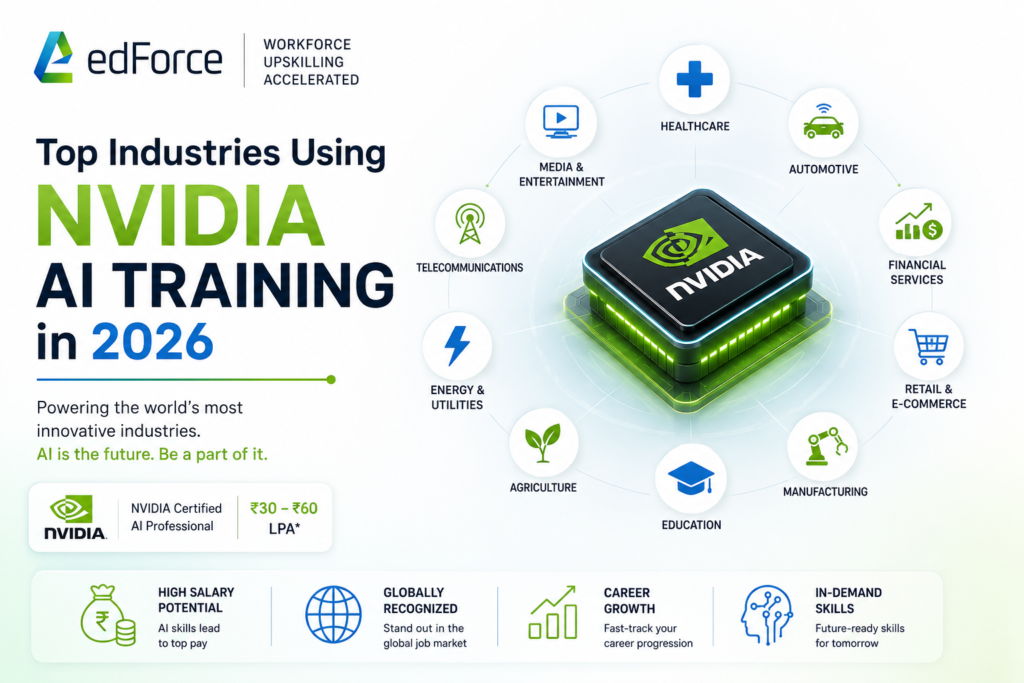
Every Company claims to be “doing AI”. But ask a different one. Which departments actually receive AI training budgets? Answers are surprising consistent. AI is not the first place companies invest. Companies invest where bad decisions can be costly, when downtime can cost millions of dollars, when regulations are strict or when every second saved is measurable. This shift is why NVIDIA AI Training has evolved from a technical conversation to a boardroom discussion. Few years ago, AI researchers were largely responsible for learning CUDA or GPU optimization. By 2026, this audience will be much larger. AI is a topic that affects everyone. Manufacturing engineers, cloud architect, software developers and medical imaging specialists are among those who work on AI projects. Demand is not driven by hype. Business transformation is driving the demand. Manufacturing Doesn’t Buy AI. It’s about buying predictability. The failure of machines in most factories does not cause a loss of money. Unexpected failures can cost them money. Unplanned shutdowns can affect production schedules and supplier commitments. They also impact inventory planning, timelines for delivery, customer confidence, and the ability to plan deliveries. AI can help you save more money than preventing a few hours downtime. This is why manufacturers invest heavily in digital twins powered by NVIDIA, predictive maintenance, robotics, industrial vision systems and NVIDIA. The technology isn’t what makes the change interesting. The training of production engineers is increasing in tandem with the software development teams, as the people who know the machines must also understand the AI models that monitor them. Future manufacturing engineers will not only troubleshoot machinery. Before making decisions, they’ll analyze AI recommendations. Healthcare wants faster answers, not automated doctors The biggest myth about AI in healthcare is that hospitals want to replace clinicians. They’re not. The majority of healthcare organizations focus on something simpler. Reduce the time it takes to collect medical information before making confident clinical choices. Data volumes are huge in medical imaging, pathology, genomics and clinical documentation. AI can help specialists review information faster but only if the infrastructure is optimized to handle enterprise-scale workloads. This is why hospitals, healthcare technology providers, and research institutions invest in professionals who are knowledgeable about accelerated computing, as well as responsible AI deployment. Even a small improvement in accuracy can have a significant impact on patient outcomes. Banks measure success in milliseconds Waiting two seconds is not a big deal for most businesses. These seconds can be a source of operational risk for financial institutions that process millions of transactions each day. NVIDIA’s AI infrastructure is used by banks to improve fraud detection, anti-money laundering, customer verification and optimize algorithmic trading environments. It’s interesting to see how the hiring process has evolved. Five years ago, the banks were primarily looking for data scientists. They’re looking for software developers, cloud engineers and infrastructure specialists that understand enterprise AI workloads in production environments. Demand is now multidisciplinary and less role-specific. Automotive Companies Are Becoming Software Companies You’ll notice that there are far fewer discussions about engines in a modern engineering center. Teams instead discuss simulation environments, autonomous decision systems, perception models, and edge computing. AI is now heavily used by vehicle manufacturers during design, testing and manufacturing operations, as well as post-sale. Before they ever hit the public roads, autonomous driving systems complete millions of driving simulations. For these simulations to be run efficiently, engineers and powerful infrastructure are required. NVIDIA AI training has become increasingly important for automotive organizations even if they do not have dedicated AI departments. Retail has quietly become an AI Industry AI is a hidden technology that most shoppers don’t even notice. Customers can easily find the products they need, get relevant suggestions, and enjoy faster delivery. Retailers are solving complex problems behind these experiences. Demand forecasting. Automated warehouses are a great way to save time and money. Supply chain optimization. Computer vision. Pricing intelligence. These AI experiments are no longer isolated. These capabilities are becoming essential to business. Retail organizations need more professionals who can integrate AI with operations, logistics, and the customer experience, rather than treating AI as an isolated technology project. The Telecommunications Industry is Training AI before Customers Notice Network failures are rarely the result of catastrophic events. They often start out as small performance anomalies which gradually affect the customer experience. AI is used by telecom providers to detect signals before they are detected by traditional monitoring systems. Network operations teams become more proactive, rather than reacting to service quality issues. This transformation requires engineers with a solid understanding of both the networking fundamentals as well as accelerated AI infrastructure. This is another example of traditional roles in technology evolving, rather than disappearing. The Energy Industry Solves Different AI Problems Energy organizations, unlike consumer technology companies often manage infrastructure that spans thousands of kilometers. Pipelines. Wind farms. Solar plants. Power grids. It is impossible for inspection teams to physically inspect every asset each day. AI is made possible by drones, computer vision and predictive analytics. NVIDIA’s computing power supports infrastructure monitoring and large-scale analysis of images. This allows engineers to concentrate their attention on the areas with the highest risk. The goal is not to replace field workers. This helps them make the best decisions. The Challenges Technology Companies Facing are Different The question of whether AI should be adopted by technology companies is not asked. The question is how soon they can integrate AI into all their products. Intelligent assistants are embedded in software. Cloud providers are expanding AI-based services. Enterprise AI is being developed by consulting firms. SaaS firms are redesigning their products around intelligent automation. Many technology companies have found that it is easier to buy GPUs than find engineers who can use them properly. This growing skills gap is why technical upskilling became a strategic initiative instead of a HR initiative. The real competition is no longer between industries This is a trend that’s often overlooked. Healthcare and manufacturing are not in competition. Retail doesn’t compete with
Cloud vs AI Certifications: Which Has Better Career Growth?
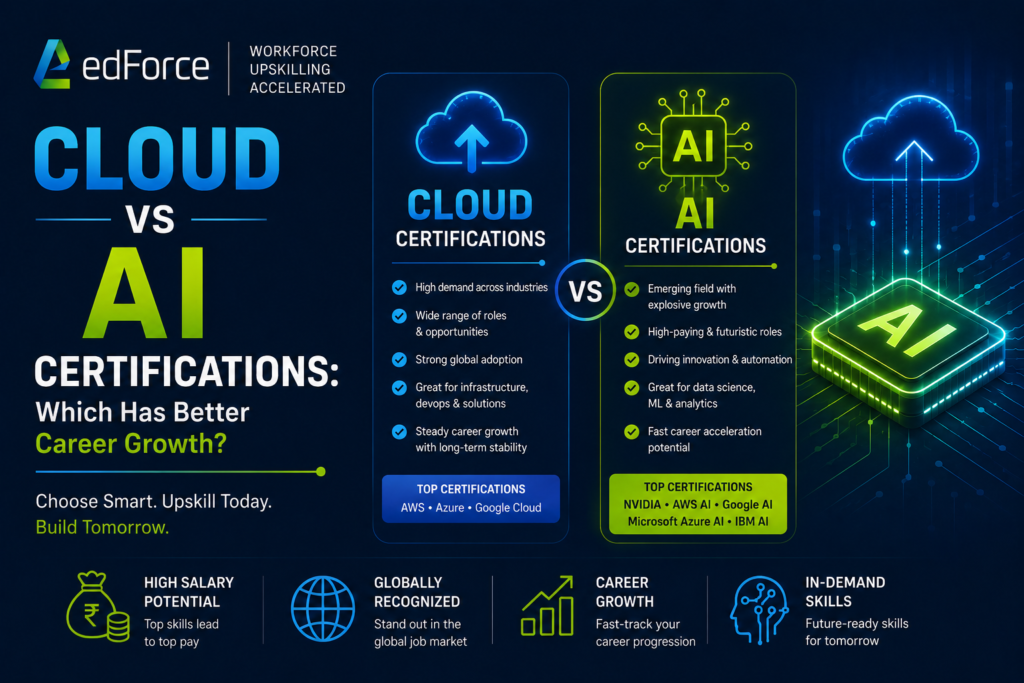
A few years back, selecting a technology certificate was relatively easy. You pursued AWS certifications, Azure certifications, and Google Cloud certificates if you were interested in working with cloud computing. You could also follow security-related learning paths if you are interested in cybersecurity. Software developers spent their time learning programming languages and frameworks. The decision today isn’t so simple. Artificial Intelligence is now a part of nearly every technology discussion. AI Engineers are being hired faster than ever by companies. Cloud computing is still the backbone of digital transformation and continues to power almost all modern applications. Many professionals are left with a question. Should you invest in AI or Cloud certifications when it comes to AI? There is no universal winner. Your current experience, your career goals and what you like to do will determine which is the best choice. The future belongs to those who can combine both. Why? Cloud Computing isn’t going anywhere People often think that older technology will lose value when a newer technology is popularized. Cloud computing has not been a failure. Cloud platforms have become even more popular since AI. Infrastructure is a necessity for every modern AI application. Models require computing power, storage and networking, as well as security, monitoring and deployment environments. Cloud services are the backbone for enterprise AI, whether an organization uses AWS or Microsoft Azure. Cloud professionals are in high demand. Cloud infrastructure is a key component of almost all digital businesses today. As a result, organizations continue to hire Cloud Engineers and Solutions Architects. They also continue to hire DevOps Engineers. AI does not replace cloud careers. It increases their importance. Why AI Certifications are Growing so Quickly AI offers new opportunities and AI Certifiations for careers, even though cloud computing is still essential. Businesses no longer experiment with AI. Businesses are now integrating AI into their customer service, software, marketing, healthcare and banking systems, as well as internal operations. As adoption increases, companies need professionals that understand: Generative AI Large Language Models Prompt Engineering Agentic AI AI deployment Retrieval – Enhanced Generation (RAG). AI Governance AI certifications are gaining in popularity because of this demand. One thing, however, is important to remember. AI is changing at an incredible rate. Every month, new models, frameworks, and tools are improved. Professionals who are constantly learning will always be at an advantage over professionals who only rely on one certification. Cloud computing and AI careers: The biggest differences The Cloud computing and AI can solve a variety of business problems. Cloud professionals create and maintain the infrastructure on which businesses rely every day. AI professionals are focused on developing intelligent applications, automating work flows, and helping companies use data better. This is a simple way of thinking about it. Clouds create the environment. AI is the intelligence. Both are needed by modern enterprises. AI applications are not scaleable without cloud infrastructure. Cloud platforms are powerful without AI but lack intelligent business capabilities. Many organizations hire professionals who are familiar with how these technologies interact rather than those who only understand them separately. What employers are looking for today Hiring for enterprise jobs is undergoing a significant shift. Several years ago, many companies hired specialists to work on specific technologies. Today, hiring managers prefer to hire professionals who have complementary skills. As an example: The Cloud Engineer with AI knowledge often stands out over someone who only has cloud knowledge. A AI Engineer with AWS or Azure knowledge can contribute to production deployments faster. DevOps professionals who are familiar with MLOps can be very valuable as they can help support the AI lifecycle. The traditional roles of technology are becoming increasingly blurred. This trend is expected to continue in the coming years. What certifications should you consider? It depends on your current location. Cloud certifications are a great way to start your career in technology. They teach you about infrastructure, networking and identity management. Popular choices include AWS Certified Solutions Architect Microsoft Azure Administrator Google Associate Cloud Engineer AI certifications are useful if you have experience in cloud computing or software development. There are many professionals who have recently explored certifications. NVIDIA AI Microsoft Azure AI AWS AI Google Machine Learning Generative AI Agentic AI These certifications do not replace cloud knowledge; they build upon it. Salary shouldn’t be the only decision Many professionals are on the lookout for the best-paying certification. Salary is important, but it shouldn’t drive your decision. Careers in technology are developed over many years. Cloud architecture is more likely for someone to develop expertise than AI, which they choose because it’s more popular. Professionals who are genuinely interested in AI innovations will also be more motivated to keep up with the changes as this field evolves. For long-term career advancement, it is best to develop deep expertise in a field you are passionate about and then expand into related technologies. The future belongs to hybrid professionals A prediction is becoming more and more realistic. In the next five to ten years, it is possible that the difference between Cloud Engineers (cloud engineers) and AI Engineers will be much smaller. Cloud infrastructure is already a major part of enterprise AI. AI services are being added to cloud platforms at a rapid pace. Organisations are looking for employees who have the skills to deploy AI applications, manage resources in the cloud, optimize infrastructure and understand business workflows. Companies are now valuing professionals who can combine multiple disciplines instead of hiring specialists for each technology. It’s a great opportunity. Many professionals could benefit from gaining expertise in both cloud computing and artificial intelligence. How to Create a Smart Learning Map Don’t consider certifications as isolated accomplishments if you are unsure of where to start. Consider them as building materials. As an example: Learn the basics of cloud computing. Learn Linux and network. DevOps is a concept that you should understand. Next, move on to AI, machine-learning, and Agentic AI. This sequence provides a solid foundation, because AI applications
Highest Paying AI Certifications in 2026
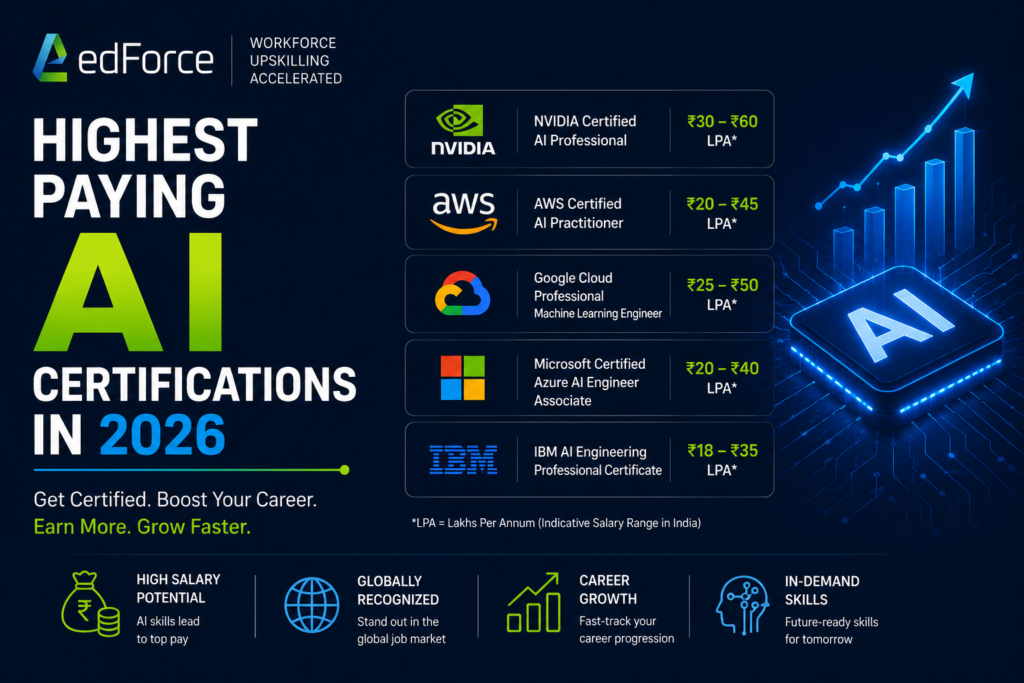
AI creates new job opportunities every month. You can find a variety of roles on any tech hiring portal, including AI Engineers, Generative AI developers, Machine Learning engineers, AI consultants, MLOps engineers, and AI Solutions architects. Many companies in banking, healthcare and retail are looking for AI professionals. One question that is often asked when there are so many options for careers is: “What should I do?” Which AI certifications help you to land high-paying positions? You may be surprised by the answer. It is not true that a certification will automatically lead to a higher wage. Employers pay more to professionals who are able to solve real-world business problems and not just those who have passed an exam. The right certification will help you develop the skills that employers are looking for, increase your credibility when hiring, and lead to better opportunities in the future. Look at the AI certifications which will create the most career opportunities by 2026. What makes an AI certification valuable? Most professionals select certifications on the basis of popularity. Asking a different question is a better way to go. Does this certification teach skills for which companies actively hire? Three things are common to the highest-paying certifications. They focus more on the practical application of theory than on the theoretical side. They are also compatible with enterprise technologies. They continue to evolve as AI changes. Cloud AI, Generative AI and GPU computing certifications, as well as AI engineering courses, are getting much more attention than general AI awareness classes. Google Cloud Professional Machine Learning Engineer Google’s Professional Machine Learning Engineer Certification continues to be one the most respected credentials among professionals who build production-ready AI systems. This course focuses on the design, deployment, monitoring and maintenance of machine learning solutions using Google Cloud. This certification is suitable for: Machine Learning Engineers AI Engineers Data Scientists MLOps Professionals It is highly valued by employers because it combines cloud deployment and machine learning skills. This area continues to be in high demand. Microsoft Azure AI Engineer Associate Microsoft technologies are already widely used by many enterprises. Azure AI Engineer Associate is one of the most sought-after AI certifications for enterprise hiring. Learn how to create, deploy and manage AI solutions with Azure AI services. This certification is particularly valuable for professionals who work with: Applications of Enterprise AI Conversational AI Computer Vision Natural Language Processing Responsible AI When organizations adopt Microsoft AI services, they often seek professionals with a thorough understanding of AI and Azure. AWS Skill Builder AWS is still one of the most popular cloud platforms for enterprises around the world. AI certifications have become increasingly valuable as they combine cloud-based knowledge with AI implementation. Popular options, depending on your level of experience, include: AWS Certified AI Practitioner AWS Machine Learning Engineer Associate These certifications will help professionals to understand AI services, machine-learning workflows, deployment and operational best practices in AWS environments. NVIDIA AI Certifications The demand for AI infrastructure professionals, and not just AI models, is growing in the enterprise. NVIDIA’s certifications are a standout. Businesses need AI professionals who are familiar with Generative AI and GPU-accelerated computing. Popular NVIDIA Learning Paths include: LLMs and Generative AI Accelerated computing AI Infrastructure Deep Learning These certifications will become increasingly important for AI engineers, infrastructure experts, developers, and enterprise AI team members working on modern AI applications. NVIDIA’s certification ecosystem has grown significantly as enterprises have invested more in AI production systems. Databricks Certifications for Generative AI When enterprises are ready to move beyond the experimentation phase, they will need AI professionals who can create AI systems based on production data. The Databricks Certifications have gained attention due to their focus on data engineering and machine learning workflows. These certifications will be of particular value to professionals who work with: AI data pipelines Enterprise Analytics Large Language Models Machine Learning Operations Databricks users often seek professionals who are able to connect data engineering and AI implementation. What certification pays the most? It is a question that every professional will ask. Employers pay for capabilities. A Machine Learning Engineer who has hands-on experience with cloud deployment, AI infrastructure and production systems, for example, will earn more money than someone holding only multiple certificates. Recent industry comparisons consistently rank advanced Google Cloud ML certifications, AWS Machine learning, Azure AI Engineer and the newer NVIDIA-focused certificates among the best options for high-paying AI positions, especially when paired alongside real project experience. Salary is not the only thing to chase Many professionals make the mistake of choosing a certification solely based on salary reports. It is better to match your certifications with the career you want. As an example: AWS AI or Azure certifications are a good choice if you like cloud technology. NVIDIA certifications and Generative AI certificates are increasingly important if you want to develop enterprise AI applications. Google Cloud Professional Machine Learning Engineer may be a good choice for you if you are interested in machine learning and AI production systems. Career growth is usually achieved when learning and interests are aligned. Trends to Watch A shift in the hiring process is taking place. The trend is to hire specialists with a wide range of skills, rather than hiring specialists that are experts in a single technology. They are instead looking for professionals with a combination of AI and cloud computing, DevOps or data engineering. It seems more and more likely that the future AI professional will require a broader knowledge of technology than just AI expertise. A person who is familiar with AI, cloud platforms and business processes will have an advantage over someone who only focuses on machine learning. Many professionals combine AI certifications and cloud and enterprise technologies certifications rather than pursuing them individually. Build AI skills that employers actually need Certificates are not the best way to grow your career. Combining learning with experience is the key. Passing an exam is not as valuable as working on projects, understanding the business
Red Hat Certifications That Employers Value Most
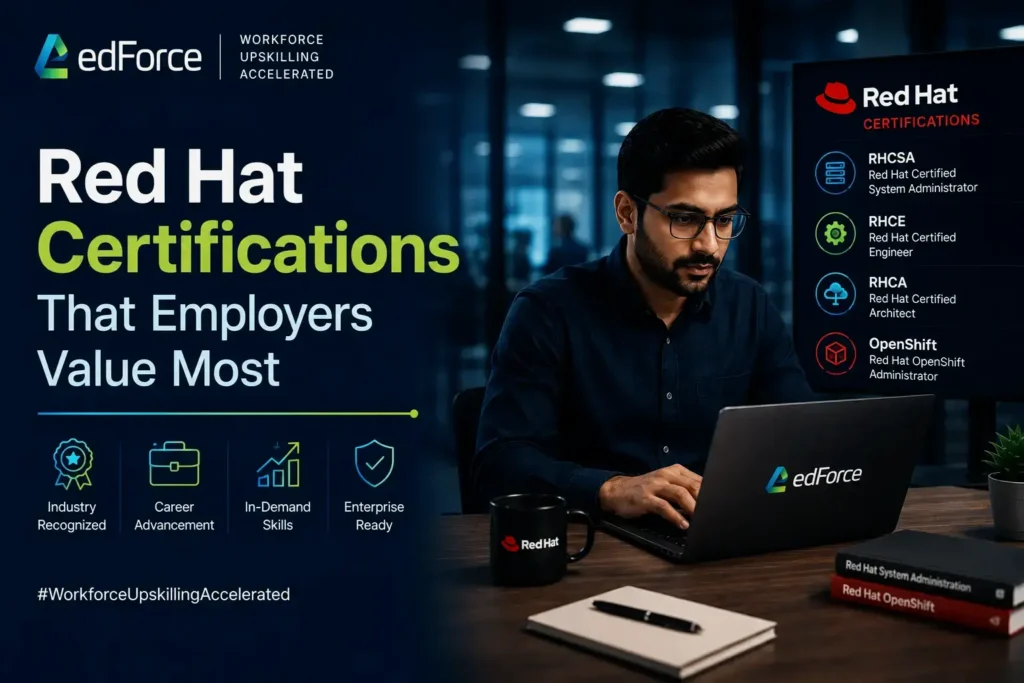
The hiring of technology professionals has changed dramatically over the past few years. In the past, employers mainly looked for professionals who had experience. Employers still value experience, but they also want to know that the candidate can use modern enterprise technology. Professional certifications are still valuable, particularly in the fields of cloud computing, Linux administration and automation, as well as enterprise infrastructure. Red Hat Certifications are among the most popular because they emphasize practical skills over theoretical knowledge. The candidates are required to complete real-life tasks rather than answering multiple choice questions. This makes a big difference for employers. Many professionals are unaware of this fact. The goal isn’t to get certified. The goal is to develop the skills organizations require to operate secure, reliable and scalable IT environments. Look at which Red Hat certifications employers most value and why they remain relevant to 2026. Red Hat certifications continue to matter Linux is a major part of the enterprise technology landscape today. Linux is the basis for many business-critical systems, including cloud platforms, banking systems, telecom networks, health applications, government infrastructure and healthcare applications. Red Hat Enterprise Linux users need professionals with the skills to secure, manage, troubleshoot and optimize their environments. Red Hat Certifications are a standout. Red Hat tests require that candidates demonstrate their practical skills. This hands-on approach is often appreciated by employers because it helps them feel more confident that professionals certified can make a contribution from the first day. Red Hat’s skills will continue to be in demand as businesses adopt hybrid cloud, automation and container technologies. Red Hat Certified System Administration (RHCSA) RHCSA is a good place to start for many IT professionals. This course focuses on essential Linux administration skills, which employers look for in system administrators and professionals who work with infrastructure. Rather than memorizing commands and solving practical tasks, learners use real systems to solve practical problems. Professionals who prepare for RHCSA learn: Manage Linux systems Configure storage and users Basics of networking Monitor system performance Manage security settings Troubleshoot common Linux issues RHCSA is often considered by organizations that hire junior Linux administrators or support engineers to be one of the best entry-level credentials because it validates actual skills rather than knowledge. Red Hat Certified Engineer (RHCE) Many professionals choose RHCE after they have become familiar with Linux administration. This certification goes beyond system administration, and is more focused on enterprise system management and advanced administration. Automation is now a common expectation in today’s business environments. It is no longer viewed as a skill. In order to manage infrastructure efficiently, teams are increasingly using tools instead of manually configuring hundreds or servers. RHCE is a valuable tool for professionals who work in the Linux environment, including system engineers, DevOps specialists, and senior Linux administrators. RHCE is often viewed by hiring managers as proof that a candidate has the ability to manage more complex and larger enterprise environments. Red Hat Certified Architect RHCA is the highest level of Red Hat Certification. Instead of focusing on one technology, it allows professionals develop expertise in multiple enterprise domains, such as cloud computing, automation, containers and virtualization, security and application platforms. Experienced professionals who work as: Infrastructure Architects Enterprise Architects Senior Consultants Cloud Specialists Technical Leads Professionals with advanced Red Hat knowledge often play a key role in helping organizations manage large IT environments. They can plan infrastructure, improve operational efficiency and support digital transformation initiatives. Red Hat OpenShift certifications Container technologies continue to reshape enterprise software development. OpenShift is becoming more valuable as organizations adopt Kubernetes, cloud-native apps and Kubernetes. Red Hat OpenShift Certifications provide professionals with the knowledge they need to understand: Container Platforms Kubernetes administration Application deployment Cluster Management Container operations These skills will be particularly valuable to DevOps teams and cloud engineers as well as organizations that are modernizing their application infrastructure. Many enterprises no longer hire only Kubernetes experts. They want people who know how Kubernetes integrates into enterprise operations, governance and security. This broader understanding opens up new career opportunities. Red Hat Ansible Automation certifications Enterprise IT has a new priority: automation. It is not practical to manage infrastructure manually for companies that operate hundreds or thousands systems. Red Hat Ansible Automation is gaining in popularity. Professionals will learn how to automate repetitive administrative duties, improve consistency, decrease manual errors, and enhance operational efficiency. Automation saves time and improves reliability in enterprise environments. Automation knowledge will become more valuable as infrastructure expands. What Certification Should you choose? Your current position and career goals will determine the certification you need. RHCSA is most beneficial to someone who is just starting out in a Linux-based career. RHCE is often used by professionals who manage enterprise Linux environments. RHCE can be combined with OpenShift and Ansible for cloud engineers or DevOps professionals. RHCA is a certification that allows architects to expand their enterprise knowledge. It is better to create a learning pathway where each certification helps you reach the next level of your career, rather than collecting certifications. What Employers Look for It is a common misconception that employers only hire people with certifications. Certifications are a great way to get candidates noticed. They can get hired with their skills. Employers often ask questions during interviews to determine how professionals use their knowledge in real-life situations. Are they able to solve production problems? Is it able to automate repetitive tasks Are they able to troubleshoot Linux environments Can they confidently support enterprise infrastructure? Professionals with certification and hands-on work experience tend to stand out more than those who only focus on passing exams. The Future of IT Careers Could Be Shaped by a Trend The traditional infrastructure roles of enterprise are starting to overlap with cloud computing and cybersecurity. Today, a Linux administrator may also be working with containers. A cloud engineer may need automation skills. A DevOps professional may manage Kubernetes clusters alongside enterprise Linux systems. Red Hat certifications now serve a broader range of technology professionals, rather
How to Upskill While Working Full Time
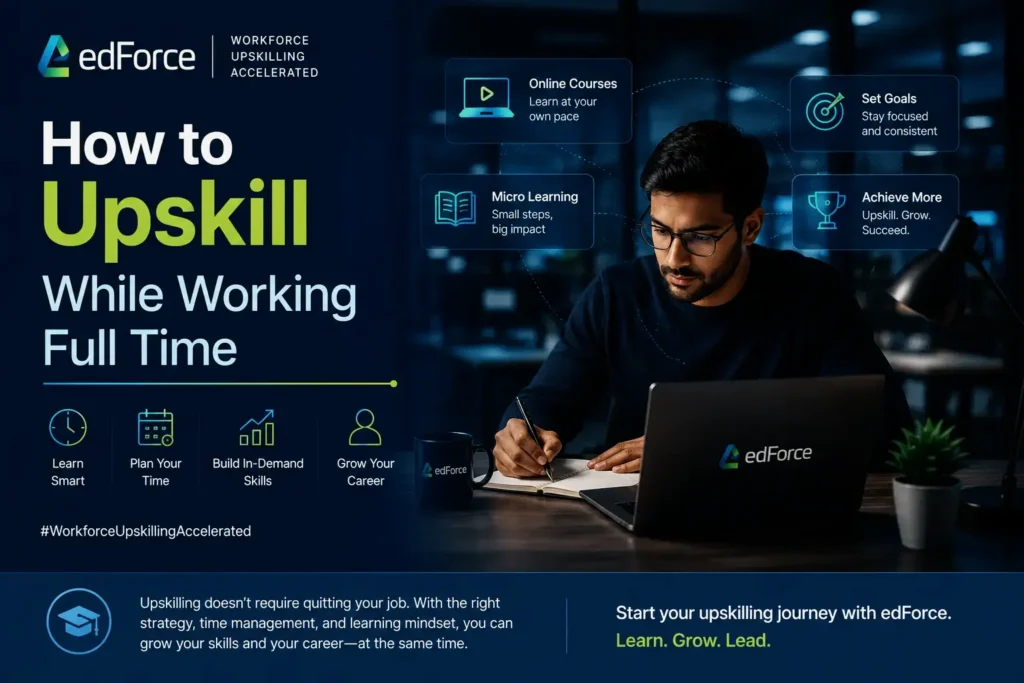
Many professionals are not willing to learn. There is never enough time. Meetings, deadlines, email, project updates and unexpected requests are all part of a typical workday. Learning something new can feel like an extra task by the end of the day. Many people put off upgrading their skills. After the project is completed, the next release or when work becomes less hectic, they tell themselves that they will start working after this. Sadly, the perfect moment rarely comes. Technology continues to advance. AI is now part of the everyday workplace. Cloud platforms are changing. Cybersecurity needs are evolving. Every few months, new tools are released. The fastest growing people aren’t necessarily the ones with the most time. They are the ones who continue to learn, even when busy. It is possible to upgrade your skills while still working full-time. It is not necessary to spend hours studying every day. It is important to integrate learning into your daily routine, rather than treating it as an extra project. No more waiting for extra time The myth that learning requires large blocks of uninterrupted space is a common one. Most working professionals will never enjoy this luxury. You may have to wait months if you are waiting until you schedule is completely free. Think about learning in the same way that you would think about healthy eating or exercise. Consistent, small efforts usually produce better results than intense bursts. Over a period of months, even thirty minutes of focused work per day can make a significant difference. Finding more time is not the challenge. The use of existing time is more intentional. Learn skills that will help you solve today’s problems A common mistake is to choose courses based on popularity. Ask yourself one question before enrolling in a program. Will this skill be used in the next few months by me? Motivation becomes easier if you answer yes. Cloud training, for example, will feel immediately relevant if your business is moving towards cloud platforms. Learning prompt engineering or Generative AI can be beneficial almost immediately if AI tools become part of your everyday work. When you can use new knowledge within a week of learning it, you will find that you are able to learn more quickly. Focus on one skill instead of five Many professionals start out with enthusiasm. Students can enroll in AI courses. They add cloud certification. Cybersecurity is a must. Then data analytics. They stop learning after a few days because they are overwhelmed. It is better to develop one skill at a given time. Learn the basics. Use what you have learned. Continue to the next area. Initially, progress may seem slower but usually it becomes more sustainable. Learning is not a sprint, but a marathon. Learn on the Job Many successful professionals have a habit of combining learning and work. They combine both. Imagine you’re learning Azure. Volunteer to do a simple cloud-related job. Use AI tools to summarize or organize documents and meeting notes if you’re studying AI. Automate a task that takes you several minutes each day if you’re learning Python. When theory and real work are combined, the fastest learning occurs. Your practice environment becomes your projects. Create a weekly learning routine Consistency is more important than intensity. It is not necessary to study each evening. You need a realistic schedule. This might look something like: Weekdays, 30 minutes before starting work A weekend learning event that focuses on one specific topic Reviewing notes during short breaks Practice new skills whenever possible on real tasks Routines eliminate the daily question of “Should you study today?” “ Learning becomes a part of the week. Do not chase every new technology The technology is constantly changing. Each week, it seems, there is a brand new AI model or framework. It is impossible to know everything. Build strong foundations instead. Understanding cloud architecture, for example, is more important than memorizing all the new cloud services. It is better to learn AI basics than jump from one AI application to another. Professionals who have solid foundations are more likely to adapt quickly when new technologies emerge. Qualifications open doors, skills build careers Professional certifications are still valuable. These courses help to demonstrate commitment, and they provide structured learning pathways. Employers are increasingly looking beyond certificates. Hiring managers are looking for people who have the ability to solve problems. When two candidates have the same certifications, the candidate who can demonstrate how they used those skills on a real-life project will often stand out. When you finish a course ask yourself the following questions: “How can I apply this knowledge to my work?” This question transforms learning into experience. The Trends Worth Paying Attention to The value placed on the learning abilities themselves is a noticeable change. Technology stacks change. The job roles of employees are changing. AI is reshaping the way work is done. Employers are increasingly looking for professionals with the ability to adapt quickly, rather than those with experience in a single technology. It seems more and more likely that continual learning will be a key career skill, rather than merely an advantage. People who update their knowledge annually are likely to be valuable no matter how technology changes. The Right Structure Makes Learning Easier Some professionals find that self-learning is a good option. Other people benefit from a structured path of learning, live mentoring and hands-on labs. It is important to have a practical understanding of technologies like AI, Red Hat, NVIDIA and cybersecurity as well as data engineering. A well-designed program can help reduce confusion, increase confidence and keep learners motivated until they achieve their goals. Grow Your Career without Pressing Pause Many professionals feel they must choose between their career and their current responsibilities. Both can occur simultaneously. Most successful professionals don’t take long breaks to learn. They instead integrate learning into their daily routine. edForce.co training programs are created with the working professional in mind. Learners can build