


Red Hat Certifications That Employers Value Most
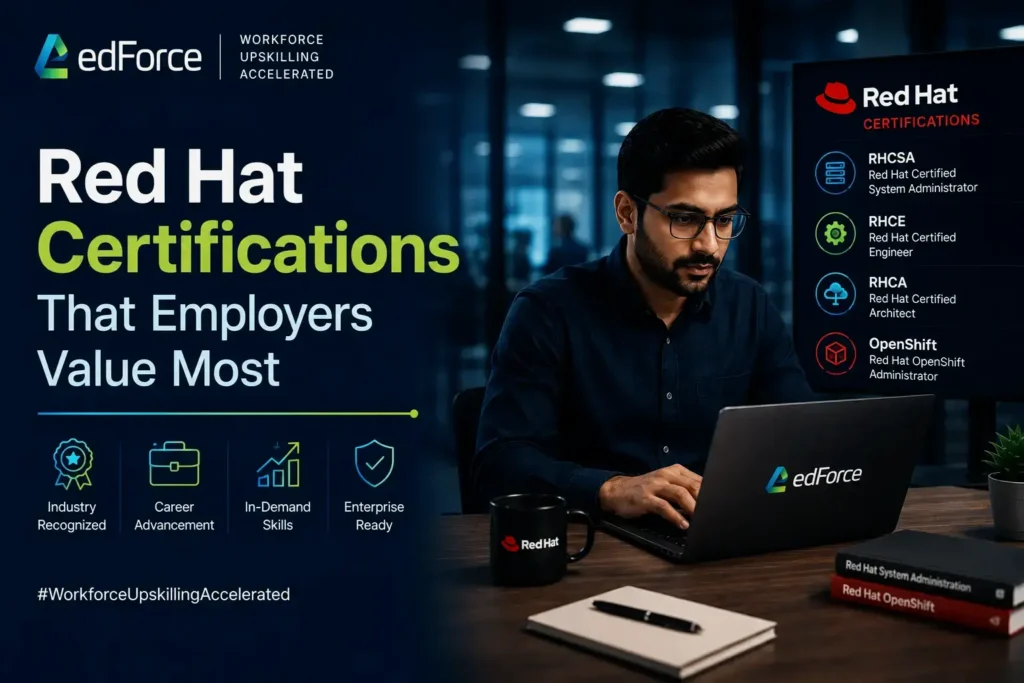
The hiring of technology professionals has changed dramatically over the past few years. In the past, employers mainly looked for professionals who had experience. Employers still value experience, but they also want to know that the candidate can use modern enterprise technology. Professional certifications are still valuable, particularly in the fields of cloud computing, Linux administration and automation, as well as enterprise infrastructure. Red Hat Certifications are among the most popular because they emphasize practical skills over theoretical knowledge. The candidates are required to complete real-life tasks rather than answering multiple choice questions. This makes a big difference for employers. Many professionals are unaware of this fact. The goal isn’t to get certified. The goal is to develop the skills organizations require to operate secure, reliable and scalable IT environments. Look at which Red Hat certifications employers most value and why they remain relevant to 2026. Red Hat certifications continue to matter Linux is a major part of the enterprise technology landscape today. Linux is the basis for many business-critical systems, including cloud platforms, banking systems, telecom networks, health applications, government infrastructure and healthcare applications. Red Hat Enterprise Linux users need professionals with the skills to secure, manage, troubleshoot and optimize their environments. Red Hat Certifications are a standout. Red Hat tests require that candidates demonstrate their practical skills. This hands-on approach is often appreciated by employers because it helps them feel more confident that professionals certified can make a contribution from the first day. Red Hat’s skills will continue to be in demand as businesses adopt hybrid cloud, automation and container technologies. Red Hat Certified System Administration (RHCSA) RHCSA is a good place to start for many IT professionals. This course focuses on essential Linux administration skills, which employers look for in system administrators and professionals who work with infrastructure. Rather than memorizing commands and solving practical tasks, learners use real systems to solve practical problems. Professionals who prepare for RHCSA learn: Manage Linux systems Configure storage and users Basics of networking Monitor system performance Manage security settings Troubleshoot common Linux issues RHCSA is often considered by organizations that hire junior Linux administrators or support engineers to be one of the best entry-level credentials because it validates actual skills rather than knowledge. Red Hat Certified Engineer (RHCE) Many professionals choose RHCE after they have become familiar with Linux administration. This certification goes beyond system administration, and is more focused on enterprise system management and advanced administration. Automation is now a common expectation in today’s business environments. It is no longer viewed as a skill. In order to manage infrastructure efficiently, teams are increasingly using tools instead of manually configuring hundreds or servers. RHCE is a valuable tool for professionals who work in the Linux environment, including system engineers, DevOps specialists, and senior Linux administrators. RHCE is often viewed by hiring managers as proof that a candidate has the ability to manage more complex and larger enterprise environments. Red Hat Certified Architect RHCA is the highest level of Red Hat Certification. Instead of focusing on one technology, it allows professionals develop expertise in multiple enterprise domains, such as cloud computing, automation, containers and virtualization, security and application platforms. Experienced professionals who work as: Infrastructure Architects Enterprise Architects Senior Consultants Cloud Specialists Technical Leads Professionals with advanced Red Hat knowledge often play a key role in helping organizations manage large IT environments. They can plan infrastructure, improve operational efficiency and support digital transformation initiatives. Red Hat OpenShift certifications Container technologies continue to reshape enterprise software development. OpenShift is becoming more valuable as organizations adopt Kubernetes, cloud-native apps and Kubernetes. Red Hat OpenShift Certifications provide professionals with the knowledge they need to understand: Container Platforms Kubernetes administration Application deployment Cluster Management Container operations These skills will be particularly valuable to DevOps teams and cloud engineers as well as organizations that are modernizing their application infrastructure. Many enterprises no longer hire only Kubernetes experts. They want people who know how Kubernetes integrates into enterprise operations, governance and security. This broader understanding opens up new career opportunities. Red Hat Ansible Automation certifications Enterprise IT has a new priority: automation. It is not practical to manage infrastructure manually for companies that operate hundreds or thousands systems. Red Hat Ansible Automation is gaining in popularity. Professionals will learn how to automate repetitive administrative duties, improve consistency, decrease manual errors, and enhance operational efficiency. Automation saves time and improves reliability in enterprise environments. Automation knowledge will become more valuable as infrastructure expands. What Certification Should you choose? Your current position and career goals will determine the certification you need. RHCSA is most beneficial to someone who is just starting out in a Linux-based career. RHCE is often used by professionals who manage enterprise Linux environments. RHCE can be combined with OpenShift and Ansible for cloud engineers or DevOps professionals. RHCA is a certification that allows architects to expand their enterprise knowledge. It is better to create a learning pathway where each certification helps you reach the next level of your career, rather than collecting certifications. What Employers Look for It is a common misconception that employers only hire people with certifications. Certifications are a great way to get candidates noticed. They can get hired with their skills. Employers often ask questions during interviews to determine how professionals use their knowledge in real-life situations. Are they able to solve production problems? Is it able to automate repetitive tasks Are they able to troubleshoot Linux environments Can they confidently support enterprise infrastructure? Professionals with certification and hands-on work experience tend to stand out more than those who only focus on passing exams. The Future of IT Careers Could Be Shaped by a Trend The traditional infrastructure roles of enterprise are starting to overlap with cloud computing and cybersecurity. Today, a Linux administrator may also be working with containers. A cloud engineer may need automation skills. A DevOps professional may manage Kubernetes clusters alongside enterprise Linux systems. Red Hat certifications now serve a broader range of technology professionals, rather
The ROI of Red Hat OpenShift Training for Enterprise Teams in 2026
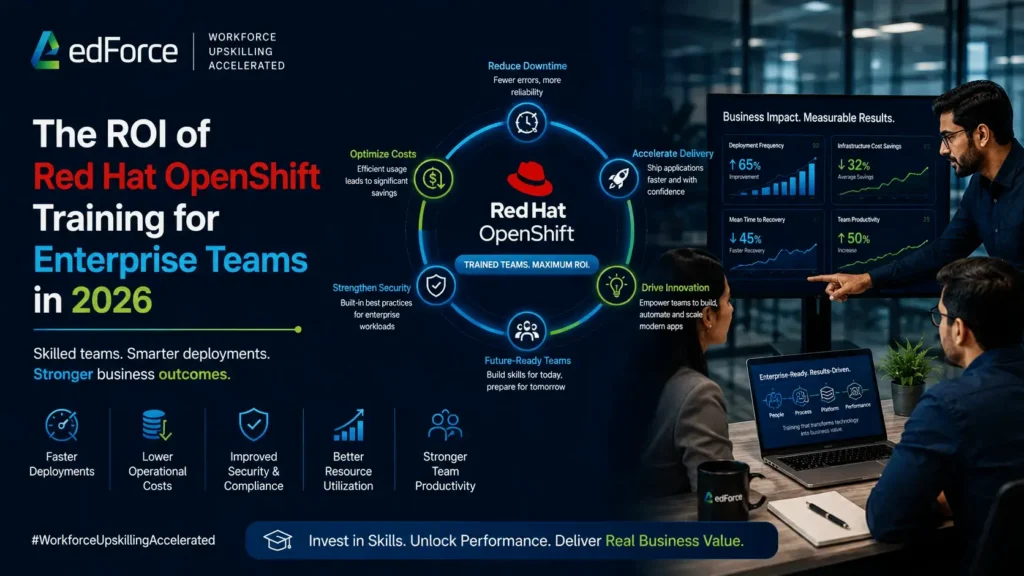
Many IT decisions in the enterprise seem straightforward at first. A business adopts Kubernetes. Teams begin moving applications into containers. Cloud infrastructure becomes more important. Leaders want faster deployments and greater scalability. Then reality sets in. The technology may be available, but the teams are not always ready for it. This is one reason many OpenShift projects move more slowly than expected. The problem is not usually the platform itself. In many cases, organizations underestimate how much workforce readiness affects performance. By 2026, most enterprises already understand the value of cloud-native technology. The conversation has changed. Companies are no longer asking whether containers matter. They want to know how quickly teams can use them effectively. That is where Red Hat training becomes important. The ROI is not just about learning a platform. It is about helping teams work more efficiently, reducing operational errors, and supporting modern application environments with confidence. Why OpenShift Projects Often Slow Down Many organizations invest heavily in infrastructure but underestimate the learning curve that comes with it. A common scenario looks like this: The platform is successfully deployed. Technical teams complete the installation. Leadership expects faster development cycles. However, developers continue using older workflows. Operations teams struggle with new deployment models. Security teams need time to adapt to container-based environments. As a result, technology adoption progresses more slowly than expected. What appears to be a platform problem is often a skills problem. This trend is becoming more common as organizations adopt Kubernetes, cloud-native architectures, and modern DevOps practices. The Real ROI of OpenShift Training When organizations discuss training ROI, the conversation usually begins with cost. How much will the training cost? How many employees need to be trained? How long will it take? These questions matter, but they often miss the bigger picture. The real value comes from reducing the inefficiencies that slow projects down. For example, trained teams tend to spend less time: Troubleshooting avoidable issues Correcting deployment mistakes Managing inconsistent environments Resolving configuration errors Teams also become more comfortable working with containers and cloud-native applications. That confidence matters. Many enterprise projects struggle not because employees lack capability, but because they lack familiarity with modern operating models. Training helps close that gap faster. Why Enterprises Are Looking Beyond Certifications In the past, certifications were often enough to demonstrate capability. Today, organizations are becoming more practical. Certifications still matter, but companies increasingly focus on implementation skills. Can teams deploy applications efficiently? if They manage container environments effectively? Can they support business-critical workloads without creating operational bottlenecks? These are the questions leadership teams are asking. This is why the most effective OpenShift training programs focus on practical application rather than theory alone. Employees need to understand how the platform fits into day-to-day operations, not just how it works in a lab environment. How Long Does OpenShift Training Take? One common mistake organizations make is assuming every employee needs the same training path. In reality, timelines vary depending on roles and responsibilities. A developer learning OpenShift will require a different learning path than an infrastructure engineer or DevOps specialist. In most organizations, learning happens in stages rather than all at once. Stage 1: Foundation The first stage usually focuses on building a strong understanding of how OpenShift fits into modern cloud-native environments and how containerized applications are managed. Stage 2: Practical Application The next stage focuses on applying concepts to real projects, workflows, and operational processes. Stage 3: Advanced Operations The final stage often includes automation, security practices, optimization, and modern platform management. Organizations that train in phases typically see better adoption because employees can apply knowledge gradually instead of trying to absorb everything at once. The Team Structure That Works Best One trend becoming increasingly visible across enterprises is that OpenShift success does not depend on a single team. In the past, technology initiatives were often managed by one department. Modern cloud-native environments are different. Successful OpenShift environments usually require collaboration across multiple teams. Developers focus on application delivery. Operations teams focus on reliability and performance. Security teams focus on governance and compliance. Platform engineers maintain infrastructure consistency. Leadership teams ensure alignment with business goals. When these groups work in isolation, adoption becomes more difficult. When they share a common understanding of the platform, implementation becomes much smoother. This is one reason organizations increasingly train cross-functional teams instead of focusing only on infrastructure specialists. The Hidden Cost of Delayed Upskilling One factor many organizations overlook is the cost of waiting. When new platforms are introduced without workforce preparation, projects may still move forward, but progress is usually slower than expected. Employees spend more time searching for answers. Teams become dependent on a small number of experts. Knowledge remains concentrated instead of being shared across the organization. Over time, this creates operational risk. Surprisingly, many enterprise technology delays can be traced back to capability gaps rather than technology limitations. That is why many organizations now include training as part of deployment planning instead of treating it as an afterthought. OpenShift Skills Are Becoming More Valuable The broader market is evolving rapidly. Cloud-native technologies continue expanding across industries. Organizations are investing heavily in containers, automation, DevOps, and hybrid cloud environments. As a result, professionals with OpenShift expertise are becoming increasingly valuable. However, the most sought-after professionals are usually not those who only understand the platform. Organizations need people who understand: Cloud-native operations Automation workflows Container management Enterprise security requirements Modern application delivery OpenShift sits at the center of many of these capabilities. That is why OpenShift training often delivers value far beyond a single platform. A Trend Enterprises Should Pay Attention To One prediction is becoming increasingly likely over the next few years. The gap between organizations that adopt cloud technologies and those that successfully use them will continue to grow. Technology is becoming easier to acquire. Workforce capability is becoming harder to develop. The competitive advantage may come less from access to advanced platforms and more from having teams that know how to use those platforms effectively.
Red Hat Training and Certification Guide for 2026
Linux skills will be more valuable in 2026 for a different reason. Red Hat certifications used to be primarily associated with infrastructure teams and system administrators. Linux knowledge today is associated with much larger fields like cloud computing and DevOps. It also includes automation, cybersecurity, enterprise infrastructure management, and containerization. Companies are actively seeking professionals with experience in enterprise Linux systems to help them move towards hybrid cloud environments. Red Hat’s training and certification program is in high demand among enterprises and technology teams. Many professionals continue to ask the same question. Does Red Hat certification really matter in 2026? Yes, but only if the learning is relevant and aligned to real job roles. Red Hat Skills Still Matter Technology changes quickly, but enterprise infrastructure does not change overnight. Many businesses still heavily rely on Linux-based platforms for: Red Hat Enterprise Linux is one of the most popular enterprise Linux platforms, because it offers stability, security and long-term support. It is for this reason that companies value professionals who are familiar with Linux environments rather than those who only learn cloud platforms on a superficial level. What is the biggest problem with IT certifications today? Many professionals today are faced with certification overload. Many people have multiple certifications, but struggle with real-life implementation tasks. The employers are becoming more cautious when evaluating the candidates, as many certifications do not guarantee practical ability. It is particularly true for roles in cloud and infrastructure. Although many students understand theory and commands, they often struggle with the practical application. Practical Red Hat training is more important than just passing an exam. Red Hat Certification: What it Really Means Red Hat certifications are more than just credentials for a resume. This shows that the professional has a good understanding of how Linux systems operate in enterprise environments. Included in this is: Red Hat certifications have a reputation for being performance-oriented, unlike many certifications that are heavy on theory. This is why employers still value them when it comes to technical hiring. What Red Hat certifications are important in 2026? Different certifications can be useful for different career paths. It depends on what type of cloud or infrastructure role you want to pursue. Red Hat Certified System Administration (RHCSA). RHCSA is one of the most popular Linux certifications among professionals who are entering roles in enterprise infrastructure and Linux administration. The focus is on: This certification is often regarded as the basis for further Red Hat learning. Red Hat Certified Engineer (RHCE) RHCE is a more advanced version of RHCE and places a greater emphasis on: RHCE is a valuable certification for professionals in DevOps or enterprise operations as well as infrastructure management. Red Hat OpenShift and Automation certifications OpenShift skills are growing rapidly as enterprises adopt Kubernetes and containers. Professionals who can understand the needs of companies are in high demand. It is for this reason that advanced Red Hat training goes beyond Linux administration. Why enterprises still invest in Red Hat Training Today, many businesses face major infrastructure challenges. The adoption of cloud computing is growing rapidly, yet many teams lack a deep understanding of Linux and infrastructure. This leads to a dependency on external teams for support and slows operational execution. Enterprise Red Hat training has become important once again. Organisations invest in Linux training because a strong infrastructure helps: Companies that focus on skill development over certifications are more likely to see positive results. Red Hat Training for Modern Infrastructure Roles In 2026, Linux skills will no longer be limited to the system administrator role. Red Hat Training supports professionals in the following areas: Red Hat certifications are more flexible than most people think. Experts with a combination of Linux and cloud knowledge, as well as automation skills, are highly valued in enterprise environments. What is the Difference between Learning Linux and Working with Linux? Many online courses are very good at explaining Linux concepts, but the reality of enterprise environments is different. Teams are involved in the actual business operation of: Hands-on Red Hat Training is more effective than passive video training alone. Red Hat’s training programs at edforce.co are based on a practical approach, guided learning and the development of enterprise-focused skills, rather than a theoretical preparation. This allows professionals to gain confidence when working in Linux environments. What professionals should focus on in 2026 Many learners are guilty of chasing certifications, without gaining operational understanding. Employers will increasingly look for professionals with the following skills in 2026: It is more important to have a practical understanding of the material than memorize it. When a certification reflects real skill readiness, it becomes valuable. Does Red Hat certification still make sense in 2026? Yes, if you are a professional in the infrastructure, cloud, DevOps or enterprise operations. The certificate is not the only thing that adds value. Real value is found in: Businesses still need professionals to understand the modern systems that run on cloud and AI platforms. Red Hat certification and training will still be relevant in 2026. Final Thoughts Enterprise systems are still heavily dependent on a strong infrastructure, despite the fact that technology is constantly changing. Red Hat certifications are still valuable because they emphasize practical Linux knowledge instead of just theoretical knowledge. Linux knowledge is a valuable long-term asset for professionals who want to advance their careers in DevOps and cloud computing, enterprise operations, infrastructure, or DevOps. In 2026, the professionals who will stand out are not the ones with the most certifications. The professionals who will stand out in 2026 are not the ones with the most certifications.
Is Red Hat Linux Certification Worth It in 2026? A Practical Guide
If you ask this question today, you are asking the right thing. Because in 2026, not every certification is worth your time or money.Some certificates look good on paper but do not change your career. Others actually build skills that companies pay for.Red Hat Linux certification falls into the second category — but only if you understand where it fits. What Makes Red Hat Certification Different After working with hiring teams and tech professionals, one thing is clear. Not all certifications are trusted equally. Red Hat stands out for a simple reason. It is hands-on, not theory-based. You do not pass by remembering answers. You pass by solving real problems on a live system.That is why companies trust it more and edforce.co is a trusted partner partner who provides best training. It shows you can actually work, not just study. Is There Real Demand in 2026? Yes, and it is not slowing down.Linux is still the base of: Cloud systemsDevOps setupsServers and enterprise systems Most cloud platforms like AWS and Azure depend heavily on Linux systems, which keeps demand strong for professionals with real Linux skills.Red Hat Enterprise Linux is widely used in companies, which increases demand for certified professionals. This is not a short trend. It is a long-term need. Salary and Career Impact Let’s talk practical value. In India, RHCSA-certified professionals can earn around ₹4 LPA to ₹10 LPA based on experienceMid-level roles can go up to ₹8–12 LPA or moreGlobally, salaries often cross $100K for experienced professionals It also opens roles like: Linux System AdministratorDevOps EngineerCloud EngineerSite Reliability Engineer These are not basic roles. These are core system roles. Where It Helps and Where It Does Not This is where most people get confused.Red Hat certification is strong, but only in the right situation. It is worth it if: You want a career in Linux, DevOps, or CloudYou are targeting backend or system rolesYou are serious about hands-on work It is NOT worth it if: You want quick job placement without skillsYou are in non-technical roles like marketingYou think certification alone will get you hired Even in developer communities, this is clear. Certification helps, but without real practice, it does not guarantee a job. The Real Advantage Most People Miss From experience, the biggest value is not the certificate itself.It is how you learn while preparing. You gain: Strong command-line skillsBetter system understandingProblem-solving skills under pressure These are the skills companies look for but often do not find.That is why Red Hat certifications are called a gold standard in Linux. Cost vs Return Let’s be clear. It is not cheap. Exam cost is around $400–$500Training can cost more based on how you prepare But the return is clear.Many professionals recover the cost through better salary or new opportunities. So the real question is not cost.It is whether you will use the skill. Practical Opinion Based on Hiring Trends If you are serious about a tech career, especially in cloud or DevOps, Red Hat certification is still one of the best choices in 2026. But here is the truth: The certificate alone will not change your careerThe skills you build while preparing will That is the real difference. Final Words Red Hat Linux certification is worth it in 2026, but not for everyone. It is useful for people who: Want strong technical skillsAre ready to practice regularlyAre aiming for cloud or system roles It is not useful for those looking for shortcuts. In simple words, this certification does not give you a job.It gives you the ability to do the job well.And in today’s market, that is what really matters.