

From Campus to Corporate: How edForce.co prepares the next generation talent

The workplace is changing more quickly than ever before. The mere possession of a degree is no longer sufficient. Employers are looking for graduates with the ability to think, adapt and perform right from the start. Students are looking for jobs that provide growth, stability and purpose. edForce.co meets these needs by preparing the next generation of talent for corporate success. The future demands more than academic knowledge Technology will affect every type of job in the future. Cloud platforms, data-driven decision making, cybersecurity and automation are now essentials in all industries. The World Economic Forum estimates that more than 60% of students today will be working in roles which do not yet exist. It is important to focus on adaptability and not memorization when learning. edForce helps students prepare for the future by developing skills that will grow with them. How edForce Prepares Students for the Workplace From Day 1 edForce is a program that has been designed to meet the needs of today’s workplace. They practice them. Students practice concepts. Professionals face real tools, environments, and challenges every day. This practical exposure eliminates fear, builds confidence and clarifies workplace roles. Students should be prepared to participate in the workplace, and not just watch. Confused Career Pathways? Clear Career Direction is the Answer After graduation, many students feel lost. They are aware that they studied technology but they don’t know where they belong. edForce offers structured career paths based not only on subjects, but also roles. Clarity helps students to make better career decisions earlier. Learn to Grow with the Future The technology will continue to develop. edForce is a program that supports continuous learning. The students build a solid foundation which allows them to quickly learn new tools in the future. This mentality prepares them for not only their first job but also for their long-term career growth. LinkedIn says that professionals who continue to learn are three times more likely than others to progress in their career. Building Confidence along with Skills Confidence is a key factor in achieving career success. edForce focuses primarily on developing confidence through practice feedback and mentoring. Students are taught how to communicate effectively, present ideas in groups, and work as a team. They can perform better at interviews and on the job. Confidence is the key to turning knowledge into action. Creating Stronger Placement Outcomes for Institutions Colleges and Universities want to improve their placement results. edForce is a service that helps educational institutions to improve their employability by aligning the learning with industry demands. Institutions can benefit from: The institution’s reputation and the future of students are strengthened. Why Businesses prefer edForce-trained talent Professionals who can quickly deliver value are in high demand by businesses. The edForce-trained talent requires less training and can adapt faster to project needs. It reduces the training costs and increases productivity. Candidates who are familiar with the real world of work will be trusted by employers. Real Success Stories with a Future-Focused Focus Final Year Engineering StudentBecause I had worked on real scenarios, I felt confident when I walked into interviews. It was a natural transition to move from college into corporate. HR Manager Technology FirmThe candidates trained by edForce demonstrated a better level of understanding and preparedness. They required less time to adapt. College Placement HeadWe help our students become more confident and focused. Prepare Talent for Careers and Not Just Jobs Careers can change. Careers continue. edForce equips students with skills relevant to all roles and industries. These skills help students to grow, change roles and become leaders in the future. The future belongs to confident and skilled talent Those who prepare for the future will be rewarded. Students who invest today in the right skills will be leaders tomorrow. The institutions that provide industry-aligned learning will be distinguished. Those who hire talent that is ready to work will be able to move more quickly. edForce combines all three. Next Gen Talent: Are you ready? Whether you’re a student seeking a solid start, a school aiming to improve placements or a company looking for future-ready professionals, edForce can be your learning partner. Begin your campus-to-corporate journey today with edForce.co and create a better future.
The Rise of Microlearning and Its Impact on Corporate Teams

Have you tried to sit through a 3-hour training session following a long day at work? Many corporate professionals will admit that it’s difficult to remain focused. The workload is heavier, the schedules are tighter and attention spans shorter. Microlearning is the preferred way of learning at work. We’ll look at the impact of microlearning on corporate learning, and how your team could benefit more than you thought. What is Microlearning exactly? The idea of microlearning is simple. Learning is delivered as small, focused chunks, rather than long training programs. Each segment takes just a few moments. The micro units include Each unit focuses on a single topic. There is nothing extra. There’s nothing confusing. Imagine being able to learn a new tool as you wait for the meeting to begin or brushing up your compliance rules while on your commute. Microlearning is powerful. Are you looking to modernize the learning methods of your team without losing productivity hours? You might find exactly what you’re looking for. Why Microlearning is Growing so Fast Microlearning is not a trend that corporate teams have adopted by chance. This shift is driven by a number of workplace trends. Recent data shows The numbers are a good reflection of what we feel in the office. Long sessions drain your energy. Short sessions are more manageable. What Microlearning Means for Corporate Teams This is an example of how microlearning can improve performance within organizations. Impact Area What Microlearning Can Do for You Results for Teams Knowledge Retention Learning is easier when you learn one concept at atime Faster application and better recall Productivity Small breaks are used by learners to learn. Reduced time off from work Engaged in a variety of ways Enjoyable interactive and short formats Increased completion rates of courses Skill Development Quick lessons help fill in skill gaps. Faster adaptability Training Costs The content creation process is now shorter and easier Lower overall budgets Improved Knowledge Retention You forget the information quickly from long presentations. This is solved by microlearning, which keeps lessons short and simple. Employees who learn one concept at time are more likely to remember it and put it into action immediately. You can also see our Example of a Good Way to StartSales executives who learn one technique of negotiation per day will remember and use it better than those who attend a four-hour workshop once a yearly. Improved Productivity and Time-Management Finding time to learn is a major challenge for many people. Microlearning is a great way to fit learning into a busy schedule without feeling stressed. Microlearning allows employees to review something or take a short lesson in between tasks. It is a great way to keep productivity high and reduce the need for long training sessions. Strengthening Engagement and Motivation Micro-lessons that are interactive feel fun and light. They are less intimidating and more enjoyable. This results in higher completion rates as well as a stronger culture of learning. You can also see our Example of a Good Way to StartTech support teams that use daily troubleshooting scenarios of five minutes each are more sharp than those who attend quarterly training. Continued Upskilling in Modern Workplaces Modern workplaces are constantly evolving. Microlearning allows employees to grow all year round instead of waiting until annual training cycles. Many companies use platforms such as edForce.co for structured microlearning programs, which are accessible on any device. This allows for quick and consistent upskilling. How microlearning can help corporate leaders Leaders struggle to understand and track their progress. Clear analytics on microlearning platforms can help. Managers can It makes it easier to make decisions about leadership and is more data-driven. Why Microlearning is needed in industries that are undergoing rapid change Almost every month, industries like retail, healthcare, customer service, and finance undergo changes. New software, tools and regulations are constantly appearing. Microlearning allows employees the opportunity to upgrade their skills without stopping their workflow. Continual small lessons help teams stay confident and ready. You can also see our Example of a Good Way to StartThe team that receives weekly micro-alerts of five minutes each are far more alert to threats than the teams who rely on annual workshops. Future of Microlearning within the Next 3 to5 Years AI-driven personalization is expected to accelerate the growth of microlearning. By 2028, reports suggest that nearly 60% of workplace learning will be delivered in bite-sized formats, supported by intelligent recommendations (Gartner 2024). The AI is likely to be a surprise Teams that begin microlearning now will be better prepared for the digital transformations ahead. How to make microlearning even more effective Key Takeaways
How edForce.co Personalizes Employee Learning Using Data and AI

You may have sat through an extensive training and wondered “why am I learning that?” You’re not the only one who has felt this way. Many corporate and IT professionals share the same sentiment. The workplace of today is fast-paced. Roles evolve. Tools evolve. Deadlines shorten. Employees simply do not have the time to attend generic training, which teaches all but what they need. Personalized employee learning is essential. It allows employees to learn faster, remain motivated and develop their skills where they are needed. We’ll look at the ways in which data, AI and smarter tools are changing learning, and how edForce.co is using them to create relevant, personalized learning experiences for modern teams. Why personalization is more important than ever Have you noticed that music apps suggest songs you like? How about shopping apps that show you items that are similar to your style? The same principle applies to personalized learning. The traditional training is the same for everyone. People learn in different ways. Some people prefer short videos. Some prefer microlearning in short bursts, while others prefer real-life examples. Engagement drops when learning isn’t matched to the individual. Recent studies show: Are you planning to create a culture of learning that works? Start with personalization. Data and AI shape personalized employee learning Data and AI quietly monitor learning behavior, performance and preferences. They then create a learning pathway that almost feels custom-made. Here’s a quick breakdown. 1. Skill Gap Identification AI analyzes performance data, job requirements, and assessments to identify missing skills.The system can pinpoint exactly what the employee needs. Example:You may have promoted someone to a new position and only realized after three months that they were lacking a critical skill. AI can help prevent this. 2. Adaptive Learning Pathways The pace of learning is set by the individual.AI automatically adjusts the difficulty level based on progress. Learners who are fast learners will move ahead.Other people receive extra support. 3. Behavior Based Content Suggestions Some people prefer bite sized content. Some people learn better by doing.AI is able to detect this and will always recommend the correct format. Microlearning is a powerful tool. Lessons that are focused and short help busy professionals to learn without consuming their time. 4. Real-Time Performance Feedback Learners can get instant feedback instead of waiting for days to receive manual reviews.Instant feedback allows them to learn from their mistakes and improve faster. 5. Predictive Learning Analytics AI analyzes job trends to predict future skills needs.It keeps them future-ready and helps to prevent skill gaps from appearing. Future InsightIn the next three to four years, over 60 percent of all jobs will require digital hybrid skills, such as workflow automation and cloud knowledge (World Economic Forum 2025). All learning platforms will most likely include predictive learning. Table: AI and Data Improve Employee Learning Features Benefit Impact on Learners Skills gap analysis Targeted skill discovery The importance of training Adaptive pathways Content and pace can be customized Improved engagement and faster results Behavioural insights Formats of content that are preferred Increased completion rates Real-time feedback Corrections made immediately Stronger skill mastery Predictive Analytics Future ready skill building Career growth that is stronger How edForce.co Provides Personalized Professional Learning edForce.co builds training programs that are tailored to the individual using a combination of AI and data analytics. Platform studies: It then recommends the best mix of courses and microlearning modules. It is a guided learning journey that grows along with the student.Professionals can get content that is easy to understand.Businesses get quantifiable results without wasting budgets or time. A simple example:Imagine a project leader who is struggling with data dashboards. Rather than enrolling them into a generic analytics course that is long and boring, edforce.co provides short, targeted lessons focusing on the tools they use. This results in faster improvement and less frustration. Why this works so well for busy professionals Tips for Organizations Ready to Personalise Education The Future of Learning Employee learning is expected in the future to grow. Start now to build stronger teams, reduce skill gaps and stay competitive. Are you prepared to discover a better way to develop talent? Key Takeaways
Hybrid Learning Models That Improve Training Engagement

Have you ever attended a long session of training and felt exhausted within the first half hour? The majority of professionals have. The pace of work is accelerating, attention spans have shrunk, and schedules tighten. Hybrid learning is a game changer. It provides your teams with the structure they require without taking them away from their real work. We’ll look at the hybrid learning models that are changing how modern workers engage in training. What is Hybrid Learning? Hybrid education combines two worlds.Learners can access online sessions at any time.They can interact with peers and instructors in person. This flexible training model combines virtual convenience and the human connection found in the classroom. This results in a learning process that is natural, easy to understand, and practical. Imagine this: Online, you can learn the basics in a quiet home morning. You can then join a workshop to practice the same skills under guidance. This balance makes learning more interesting and efficient. Why hybrid learning is important for professionals today Are you looking to improve the skills of your team without disrupting their work? Hybrid learning allows you to do just that. Deloitte’s 2024 report states that employees who have more flexibility are 57 per cent more likely to attend training. Hybrid models allow for this freedom. The learner can move at their own pace and still get the benefit of live explanations. Do you want to create training programs that engage people? Hybrid learning is a great way to learn. This leads to improved attention and better skill retention. Key Benefits of hybrid learning models Benefit Explanation Results Flexibility Choose your preferred format and time for learning Attendance increases and fatigue decreases Personalization People learn at their own pace More confidence and better understanding Real time collaboration Live sessions promote teamwork and discussion Better engagement and recall Practical Application Combining online theory with in-person practice Job readiness and faster skill adoption Scalability Work for large and small organizations Cost efficiency and easy management How hybrid models improve training engagement 1. Participants Increase Online modules eliminate barriers such as travel, time constraints, and conflicting meetings. You may have missed a class because of back-to-back meetings. This problem is solved by hybrid learning. Online lessons can be completed before offline discussions. 2. Learners can be engaged in a variety of ways to learn Hybrid programs combine quizzes, breakout sessions, group activities, and feedback in real time. The learners aren’t just passively listening. The learners are actually doing it. According to a study by LinkedIn Learning, interactive training increases engagement by 43 percent. 3. Burnout is reduced and focus improves Online lessons that are shorter and workshops in person that are more focused can help prevent overload. Microlearning is preferred by most corporate teams because it fits into their schedule. Microlearning has been found to improve knowledge retention by 20 to 25% in companies that use it (ATD 2023). 4. Strengthening Skill Application Hybrid learning combines theory and action. Online learning helps learners to first grasp the concept. Later, in person, they practice it with real-life scenarios. This helps the knowledge to stick. 5. Clear Tracking Support Track digital platform’s It allows trainers to support their learners at the appropriate time. Employees are guided rather than pressured. Hybrid Learning: Why companies are choosing it Modern workplaces are dynamic and distributed. Many people work in different cities, time zones and continents. This environment is ideal for hybrid learning. McKinsey’s 2023 report found that nine out of 10 companies plan to increase their digital learning investments in the next five years. Hybrid models help organizations Many training providers offer hybrid programs. For example, edForce.co offers structured corporate learning solutions that combine online modules with in-person workshops to achieve high engagement and measurable results. Hybrid learning: Practical ways to boost engagement Tips to Show Support and Care for Learners What will the next 3 to 5 years look like? As remote work and digital technologies continue to develop, hybrid learning will grow rapidly. AI-based personalization is likely to become a standard, suggesting tailored content for every learner. As attention spans decrease and workloads increase, microlearning will become more popular. Hybrid training will help companies prepare for future talent requirements and skill transitions. Key Takeaways In the next few years, we will see an increase in AI-driven learning and personalization.
7 Emerging Tech Skills Every Employee Needs and How edforce Can Help
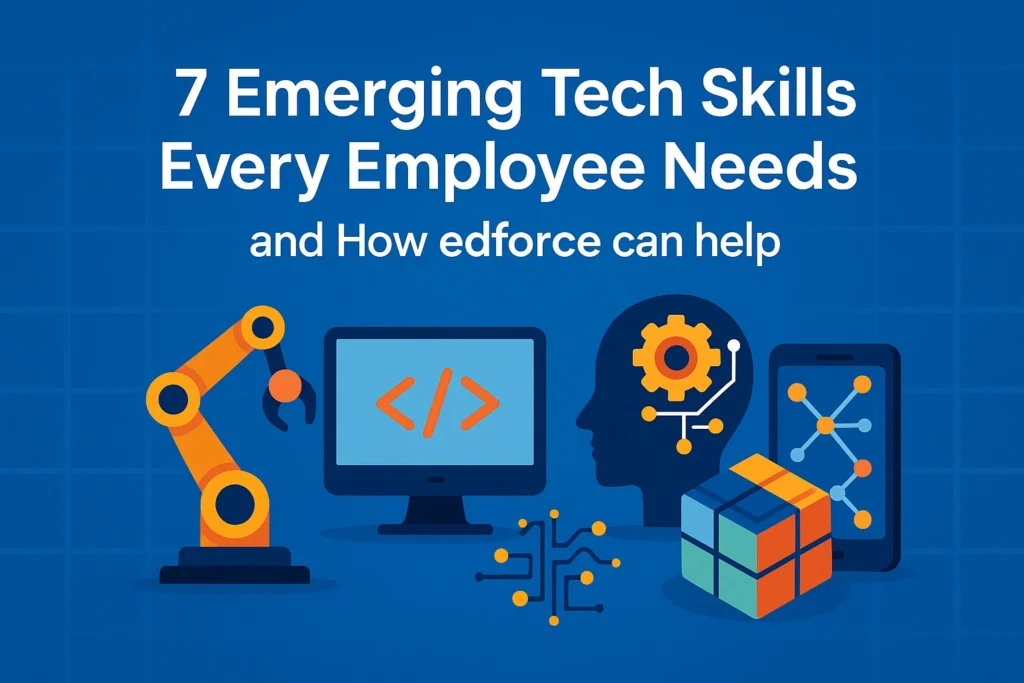
You are not the only one who has felt that technology moves faster than your job description. As workplaces move towards automation, AI, and cloud-based systems, many professionals feel pressured to “keep up”. You don’t have to become an expert in tech overnight. To stay confident, relevant and future-ready, you only need to have the right emerging technology skills. Have you noticed how fast tools are upgraded at work? How often do you see new dashboards, applications or project tracking tools? It is for this reason that upskilling is more important than ever. We’ll look at seven essential tech skills that every employee today needs and how these will impact your career over the next few decades. These tech skills are important today Digitalization is a trend across all industries. McKinsey 2020 states that in the next five years, 70 percent of jobs will require digital competency. Even traditionally non-technical roles now rely on data tools and online collaboration. Some real-world signals Are you looking to secure your future career? These skills should be your top priority. What are the seven emerging tech skills that every employee needs? Here is a table that explains what each skill is and why it’s important for your career. Skill Why it Matters What it helps you do Data Literacy Data is the basis for all business decisions Understanding dashboards will help you identify trends and make better decisions. AI Understanding Nearly every team has AI tools Automate repetitive tasks to boost productivity Cybersecurity Awareness The digital threat is on the rise Avoid costly mistakes by protecting company information Cloud Computing Basics Cloud computing is a growing trend for businesses Collaboration from anywhere allows you to work faster. Digital Project Management Coordination of teams is required for hybrid work Plan, track and deliver on time Low code or No Code Tools Businesses want quicker solutions Create simple apps to automate tasks and build them without any coding Collaboration Tools Mastery Teams are becoming more dispersed Effective communication across locations 1. Data Literacy You don’t need to be an expert in data science. Data literacy is simply the ability to read numbers, understand basic charts, and make decisions based on patterns. A relatable exampleConsider the dashboards that you receive each week. Data literacy allows you to quickly identify what’s improving, what’s slowing down, and where action needs to be taken, without having the need to guess. Gartner estimates that by 2025, 80 percent of all roles will require some sort of data interpretation (Gartner). 2. Understanding Artificial Intelligence AI is everywhere. It already helps you in the background, from email filtering and automated summaries. Have you used an AI tool to write a summary for a brief time or have you asked a chatbot a question? This is AI at work. Understanding the basics will help you to use AI tools with confidence, instead of feeling overwhelmed. Future prediction: Employees who are familiar with AI will be able to complete tasks up to 40% faster in the next three-year period than those who only use manual methods. 3. Cybersecurity Awareness Cybersecurity is more than just a technical issue. A single wrong click could put the entire business at risk. A simple exampleSomeone on your team may receive a suspicious link. Clicking on it without thinking could reveal sensitive data. Every employee can prevent these incidents by educating themselves on cybersecurity. Fact to know: Nearly 88 percent (IBM, 2023) of all data breaches are caused by human error. 4. Cloud Computing Basics Platforms such as AWS, Azure and Google Cloud are used by most organizations. Cloud is simply storing files and systems online, rather than on your computer. Have you ever accessed a file shared by a colleague instantly while working from home? Cloud computing is at work for you. Future insight: Cloud-based roles will grow by 25% in 2027. This includes non-technical functions. 5. Digital Project Management The way teams work has been transformed by hybrid work. The tasks are distributed. Virtual meetings are held. The deadlines are getting tighter. Trello, Jira and Asana are all tools that help teams to stay on track. You can better plan, monitor and deliver your work by learning digital project management. Using digital PM tools, companies report an improvement of up to 35 per cent in delivery speed. 6. Low code or No code tools You can create simple apps, forms and automated workflows using these tools without having to write code. These tools are ideal for professionals who need to solve problems quickly. Mini storyImagine automating a process of approval that takes three days. You could reduce the time to just a few hours with a tool that doesn’t require any code. Future Trend: By 2026, it is expected that low-code tools will handle more than 60 percent of all new applications (Forrester 2030). 7. Collaboration Tools Mastery The virtual world of work is now more prevalent than ever. Teams can communicate using platforms such as Teams, Slack or Zoom. You know the importance of collaboration tools if you’ve ever had trouble finding a document that someone “shared” last week. Teamwork is improved by using the right tools. This reduces delays, and everyone remains on track. How edForce.co can help you develop these skills Most professionals are aware that they need to upgrade their skills, but don’t know where to start. Platforms such as edForce.co can help by providing structured learning paths that are tailored to real industry requirements. They are designed for professionals in the workplace, so lessons are easy to understand, practical and can be immediately applied at work. Learn what today’s companies want, not old-fashioned theories. How to start your tech upskilling journey It is about advancing your career, but it’s also about upgrading your skills. Upskilling is not just about career growth. Key Takeaways
How Upskilling Directly Impacts Business KPI’s
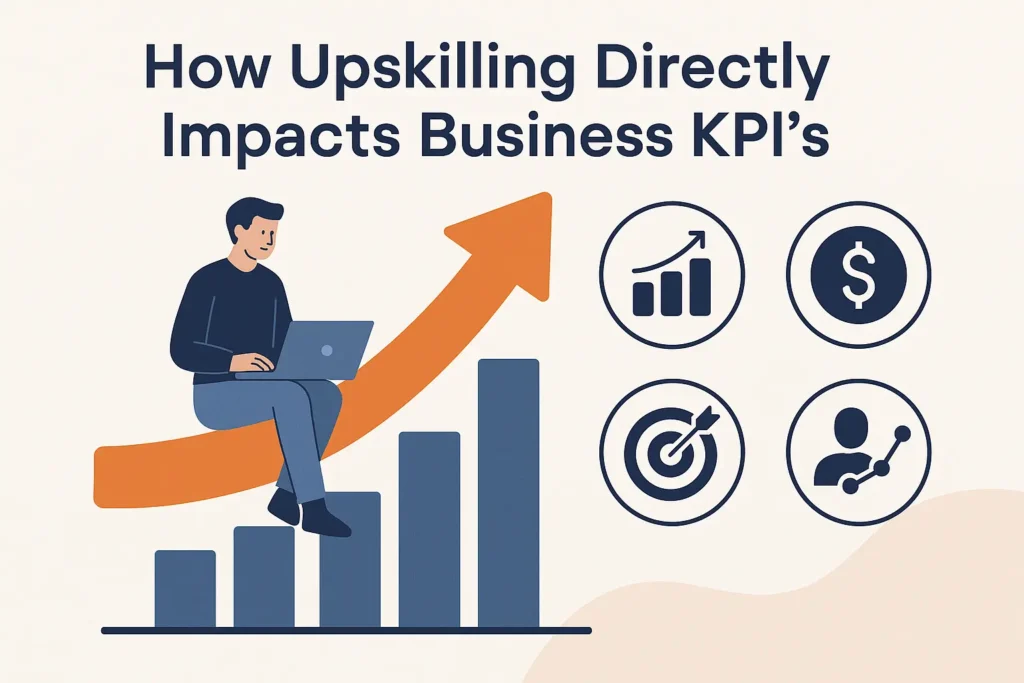
Skills are becoming obsolete faster than ever in today’s fast paced workplace. Employers are realizing they cannot fill skill gaps by hiring only. What’s the solution? Upskilling is the answer. Most companies are now focusing on upskilling their current workforce, rather than relying solely on new talent. Here’s an important question: How exactly does upskilling impact business KPIs and metrics? Take a look. What is upskilling? Upskilling is the process of helping employees acquire new skills, or to improve their existing abilities, so that they can take on new processes, technologies, or jobs. Not only is it about boosting personal career development, but also the efficiency of the business. Why upskilling is important for organizations Are you looking to improve business performance without adding more staff? Workforce Upskilling is a smart move. This ensures that your team remains relevant and reduces the need for external hiring. Your team will become more capable and confident with upskilling. How upskilling directly impacts key business KPIs Business KPI Impact of Upskilling Results Productivity The employees learn to work smarter and faster by using new tools. Efficiency and output increase Customer satisfaction Faster and more accurate service is provided by skilled employees Customer retention and satisfaction is improved. Employee Retention Employees feel valued when they have growth opportunities Reduction in turnover and costs of hiring Innovation Score Teams of trained professionals can provide fresh ideas and solutions Strong competitive advantage Revenue Growth Teams that are efficient close more deals, and reduce operational waste High Profitability Break this down even further. Increased Productivity and Efficiency Employees who learn new methods and tools complete their tasks faster and with less error. This directly reduces delays, and increases project delivery speed. The teams become more confident and proactive in tackling challenges. Increased Customer Satisfaction Are you looking for improved customer loyalty? Focus on upgrading your skills. Skilled employees are able to resolve problems faster, produce quality results and act more professionally. It builds trust with the customer. Strengthening Employee Engagement and Retention Upskilling shows commitment from the employer. Employers who invest in upskilling show their commitment. This reduces frustration caused by repetitive work and limited opportunities for learning. Innovation and Adaptability Increased Organizations face constant change. The upskilling of employees helps them adapt faster to new business models and systems. This will result in a workforce which is creative, flexible and ready for the future. Impact on profit and overall growth Revenue and profitability improve when teams are efficient and customers are happy. Upskilling initially may seem like an expense, but in the long run it is a strategic benefit. What is the best place to start? Working professionals and organisations are now looking for platforms which offer upskilling programmes that are structured and relevant to their jobs. edForce.co, for example, offers enterprise-focused training solutions that are aligned to real workplace applications. How to maximize the benefits of upskilling Upskilling has become a business necessity. It is a necessity for business. It has a direct impact on key performance indicators, and it builds a flexible and resilient workforce. If companies are to remain competitive, they must invest in their employees today. Are you prepared to make that first step?
Top Tech Skills Every Employee Should Learn in 2026

Technology is not limited to the IT team in today’s fast-paced professional world. Each employee from marketing, finance, HR or operations interacts daily with digital tools. Employers prefer to hire individuals who are able to adapt quickly and understand technology. Hey, do you plan to advance in your career? Let’s take a look at what top tech skills to learn by 2026 in order to remain relevant and future-ready. Why learning tech skills is important in 2026 The workplace is increasingly digital. Businesses are automating their processes, converting to cloud-based software, utilizing AI in decision-making and enhancing data security. Updating your tech skills will give you better opportunities, more confidence, and faster growth at work. It’s not just about learning how to code. This is about being digitally intelligent and efficient. Top tech skills to learn in 2026 Skill Why it Matters Who should learn it? Tool / Platform to Start Artificial Intelligence & Automation Tool AI increases productivity and reduces repetitive work. Anyone who works with data, workflows or documentation. ChatGPT, Zapier, Notion AI Data Literacy & Basic Analytics Cybersecurity Awareness Data-driven decisions are more accurate than guesswork. Cyber threats are on the rise and every employee needs to be aware of how to protect their data. HR, Marketing, Finance, Sales, Operations professionals. All employees, but especially remote workers. Excel, Power BI and Google Analytics Google Cybersecurity Courses and Cisco Cybersecurity Basics Cloud Productivity Tools Cloud platforms are used by most organizations. They improve coordination. Teams that handle files, collaborate, and report. Google Workspace Microsoft 365 Slack Project Management Tools Improves team coordination and helps complete tasks quicker. Junior staff and freelancers. Trello, Asana, Monday.com Digital Communication & Collaboration Skills Strong communication is required for remote and hybrid work. Roles that are customer-facing or team-based. Zoom, Teams and Loom Here are a few key skills to break down 1. Artificial Intelligence (AI) Understanding AI isn’t only for technologists. Basic knowledge of AI can improve productivity. AI tools can automate tasks such as summarizing documents, writing reports and planning schedules. 2. Data Literacy Do you want to make decisions with clarity? Data literacy allows you to understand trends, analyze reports and present insights in a simple way. You will automatically be more valuable if you are able to read charts and understand numbers. 3. Cybersecurity Basics Common threats include phishing emails, weak passwords and unprotected Wi-Fi. Small mistakes can result in big losses for an organization. It is essential to know how to verify and secure sources, as well as secure accounts. Where can you learn these skills? Many online platforms offer structured learning. One of these platforms is edforce.co. It focuses on upskilling working professionals with industry-led, practical training. Bonus: Quick Learning Tips Start your learning journey with ease: Conclusion In 2026, the workplace will reward those who are tech-savvy, adaptable and comfortable using digital tools. To start, you don’t have to be exceptional. You just need to be willing to learn and remain consistent. Are you ready to make a big step in your career? Start now. Start today. We’ll look at a goal that you can achieve today to move forward towards a more intelligent professional future.
What to Know About Upskilling Your Workforce

Your company is only as strong as the people working in it. If your employees don’t have the right skills, even the best strategies can fall short. When employees struggle to keep up, it leads to slow work, more mistakes, unhappy customers, and lower profits. But there’s a simple solution: upskilling. By helping your employees learn new skills through a structured upskilling program, you can boost their confidence, improve their performance, and grow your business. edForce helps companies like yours build the right learning programs to keep teams skilled, motivated, and ready for the future. What Is Upskilling? Upskilling means learning new skills to do a current job better. It’s usually part of a company’s employee training and development plan. Here are a few simple examples of upskilling: Upskilling is all about getting better at your current role and not just switching careers. (That would be called reskilling.) Upskilling vs. Reskilling – What’s the Difference? These two terms sound similar, but they’re not the same. For example:If an assistant learns project management to join the PM team, that’s reskilling.If a sales rep learns new CRM tools to close deals faster, that’s upskilling. Why Is Upskilling Important for Your Business? Upskilling brings clear and measurable benefits for both your company and your employees. For Your Company: Most importantly, it helps you keep your best talent. A Strategic Education survey found that 62% of employees would leave their jobs if another company offered better chances to grow their skills. And according to Gallup, replacing one employee can cost up to twice their salary. That’s a big hit to your bottom line. Upskilling helps you retain top talent, which saves money and keeps your teams strong. For Your Employees: Upskilling isn’t just good for business but it’s also good for employees. Steps to Build an Effective Upskilling Program There’s no one perfect way to upskill your workforce, but following a structured approach can help you do it right. Here’s a 7-step guide to help you get started: 1. Identify the Skills Your Team Needs Right Now Start by looking at the skills your employees need to succeed in their current roles. Think about: Every team is different. Your finance team may need accounting skills, while your marketing team needs content or SEO training. This first step helps you focus on what really matters. 2. Think About Future Skills Too Your team’s needs will change as your company grows. Don’t just plan for today you also need to think about the future. Ask yourself: For example, if you’re planning a digital transformation, you’ll want to train your team in AI, data, or digital platforms. By thinking ahead, your upskilling program stays useful over time. 3. Assess Employee Skills (Strengths & Gaps) After you identify the skill sets that are necessary, compare that list to what your employees already know. This gives you a clear idea of where to focus your training efforts. You can gather this info through surveys, assessments, or even just by asking managers. 4. Create Your Training Program Now it’s time to put together your upskilling plan. This is where edForce can help. At edForce, we collaborate with companies to build customized employee upskilling programs developed for their specific needs. Whether you’re training new hires, experienced teams, or future leaders, we have the tools, content, and expert trainers to guide you. We offer: Our clients include top names like Microsoft, HP, Infosys, Flipkart, and Siemens, who trust us to upskill their teams. 5. Choose the Right Learning Methods The way your team learns matters. Not everyone learns the same way. Here are some methods that work well: A blended approach usually works best so mix and match based on your team’s needs. 6. Track Progress and Make Improvements To make sure your upskilling program is working, track results. You can measure success with quizzes, performance reviews, or even direct feedback. 7. Keep the Learning Going Upskilling isn’t a one-time thing; it is an ongoing process. Make learning a part of your company culture. Celebrate wins, reward progress, and keep offering learning opportunities. At the same time, your team will keep growing and so will your business, with the right support. Final Thoughts So in today’s world where skills are changing fast. The companies that win tomorrow are the ones upskilling their people today. By building a thoughtful upskilling program, you’re investing in both your team’s success and your company’s future. At edForce, we’re here to help you every step of the way. Ready to Upskill Your Team? Let edForce help you design a smarter, simpler, and more effective way to upskill employees whether you’re just getting started or looking to scale your efforts Frequently Asked Questions (FAQs) 1. What is workforce upskilling? Workforce upskilling means helping employees learn new skills to do their current jobs better. It helps them grow and keeps your business strong in a fast-changing world. 2. How is upskilling different from reskilling? Upskilling improves skills for the same role, while reskilling prepares someone for a new job. Both are important for keeping your team ready for the future. 3. Why should companies invest in upskilling? Upskilling boosts employee performance, job satisfaction, and loyalty. It also saves money by reducing hiring costs and avoiding skill gaps. 4. What are the best ways to upskill employees? Some great ways include online courses, mentoring, hands-on training, and short, focused lessons. Mixing methods keeps learning interesting and effective. 5. How do I know if upskilling is working? Look for improvements in job performance, confidence, and productivity. You can also use tests, feedback, or manager reviews to check progress.
Effective Strategies for Workforce Upskilling to Engage Audiences
In today’s rapidly evolving workplace landscape, staying competitive requires a commitment to ongoing learning and upskilling. With technological advancements and market dynamics continuously shifting, companies must invest in their workforce’s development to remain agile and relevant. This article explores effective strategies for upskilling your workforce to engage audiences, leveraging the power of platforms like edForce to facilitate seamless learning experiences. In today’s rapidly evolving workplace landscape, staying competitive requires a commitment to ongoing learning and upskilling. With technological advancements and market dynamics continuously shifting, companies must invest in their workforce’s development to remain agile and relevant. This article explores effective strategies for upskilling your workforce to engage audiences, leveraging the power of platforms like edForce to facilitate seamless learning experiences. Understanding the Importance of Workforce Upskilling In an era marked by digital transformation and automation, the skills required in the workforce are constantly evolving. From technical proficiencies to soft skills like adaptability and creativity, employees need to continually enhance their capabilities to meet the demands of their roles. Workforce Upskilling not only benefits individual employees but also contributes to organizational success by fostering innovation, improving productivity, and enhancing employee retention. Identifying Key Areas for Upskilling Before implementing upskill workforce initiatives, it’s essential to identify the specific skills and competencies that are most relevant to your organization’s goals and industry trends. Conducting a skills gap analysis can help pinpoint areas where employees need additional training or development. By aligning upskilling efforts with business objectives, companies can ensure that resources are invested strategically to drive meaningful results. Leveraging Technology for Seamless Learning Experiences Platforms like edForce offer a comprehensive solution for workforce upskilling, providing a user-friendly interface and a diverse range of learning resources. From interactive modules to virtual classrooms, technology enables organizations to deliver engaging and impactful learning experiences that cater to different learning styles and preferences. By embracing digital learning platforms, companies can overcome the limitations of traditional training methods and empower employees to learn at their own pace, anytime and anywhere. Implementing Blended Learning Approaches Blended learning combines online resources with traditional classroom-based instruction, offering a flexible and customizable approach to workforce development. By incorporating a mix of e-learning modules, live webinars, and hands-on workshops, companies can cater to the diverse needs of their workforce while maximizing learning outcomes. Blended learning also allows for ongoing assessment and feedback, enabling employees to track their progress and identify areas for improvement in real-time. Fostering a Culture of Continuous Learning Workforce upskilling is not a one-time event but a continuous journey that requires a culture of learning and development to thrive. Companies can foster this culture by encouraging employees to take ownership of their learning and providing opportunities for growth and advancement. By recognizing and rewarding employees who demonstrate a commitment to self-improvement, organizations can create a positive feedback loop that motivates continuous learning at all levels. Measuring the Impact of Upskilling Initiatives To ensure the effectiveness of upskilling efforts, it’s essential to establish key performance indicators (KPIs) and regularly assess their impact on business outcomes. Metrics such as employee satisfaction, productivity improvements, and skills proficiency can help gauge the success of upskilling initiatives and identify areas for refinement. By leveraging data and analytics, companies can make data-driven decisions to optimize their upskilling programs and maximize their return on investment. Conclusion In an increasingly competitive business environment, workforce upskilling is no longer a luxury but a necessity for staying ahead of the curve. By investing in effective upskilling strategies and leveraging platforms like edForce, companies can empower their employees to thrive in the face of change and drive sustainable growth and innovation. FAQ’s
Why Choose edForce for Online Training: Flexible, Effective, and Career-Focused
The demand for online training has skyrocketed as individuals and businesses recognize its convenience, adaptability, and results-oriented approach. Among the many platforms offering such solutions, edForce stands out as a leader. Whether you’re an individual looking to upskill or an organization seeking workforce training solutions, edForce provides a comprehensive and tailored learning experience. Among the many platforms offering such solutions, edForce stands out as a leader. Whether you’re an individual looking to upskill or an organization seeking workforce training solutions, edForce provides a comprehensive and tailored learning experience. With expert instructors, interactive live sessions, and a flexible schedule, learners can gain real-time knowledge and practical skills. edForce’s industry-aligned curriculum ensures that you stay ahead of the curve and meet your career or business objectives effectively. In this article, we’ll delve into why edForce is the preferred choice for online training, exploring its flexibility, effectiveness, and career-focused approach. What Makes edForce the Ideal Online Training Partner? When choosing an online training platform, there are many factors to consider, such as course quality, accessibility, and support. edForce excels in these areas, offering a solution that meets the needs of modern learners and organizations. Flexible Learning Options for Every Learner One of the standout features of edForce is its flexibility. The platform is designed to accommodate learners with different schedules, time zones, and commitments. This level of adaptability makes edForce a trusted partner for both individuals and companies. Effective Training Designed for Results Online training must go beyond mere content delivery to ensure learners acquire practical, job-ready skills. edForce employs a results-oriented training approach to achieve this. By prioritizing real-world application and skill mastery, edForce ensures its training programs deliver measurable results. Career-Focused Training for Today’s Job Market One of the biggest challenges in online training is aligning it with career growth and job market demands. edForce bridges this gap seamlessly, offering career-focused training that empowers learners to achieve their professional aspirations. Industry-Relevant Courses edForce’s catalog includes courses across high-demand fields such as: The curriculum is continuously updated to reflect the latest industry trends, ensuring learners acquire skills that are both relevant and future-proof. Certification and Credibility Upon completing edForce courses, learners earn industry-recognized certifications. These credentials not only validate their skills but also enhance their resumes, making them stand out in competitive job markets. Soft Skills Development Beyond technical skills, edForce also emphasizes soft skills training. Leadership, communication, and problem-solving abilities are critical for career advancement, and edForce integrates these into its programs. Why Businesses Trust edForce for Workforce Training? For organizations, edForce is more than an online training provider—it’s a strategic partner. Here’s why businesses across industries choose edForce for upskilling and reskilling their teams: Tailored Training Programs Every organization has unique goals and challenges. edForce collaborates with businesses to design customized training programs that address specific skill gaps. Scalability and Global Reach Whether a company needs to train 10 employees or 10,000, edForce provides scalable solutions. With its robust online infrastructure, it can deliver training across multiple geographies simultaneously. ROI-Driven Solutions edForce ensures organizations see a clear return on their training investments. By equipping employees with skills that enhance productivity and innovation, edForce directly contributes to business growth. Advanced Learning Technology at edForce Technology plays a pivotal role in enhancing the online training experience, and edForce leverages cutting-edge tools to deliver exceptional results. Learning Management System (LMS) edForce’s LMS is intuitive and packed with features such as: AI-Powered Personalization The platform uses artificial intelligence to recommend courses and resources tailored to each learner’s needs, ensuring a personalized learning journey. Gamification for Engagement To keep learners motivated, edForce incorporates gamification techniques like badges, leaderboards, and rewards. The edForce Advantage By now, it’s clear why edForce is a leader in online training. Its emphasis on flexibility, effectiveness, and career alignment makes it a top choice for learners and businesses alike. Whether you’re starting a new career, upskilling for a promotion, or transforming your organization’s workforce, edForce has the tools, expertise, and commitment to help you succeed. FAQ’s