


AWS Cost Optimization Training: A Complete Enterprise Guide
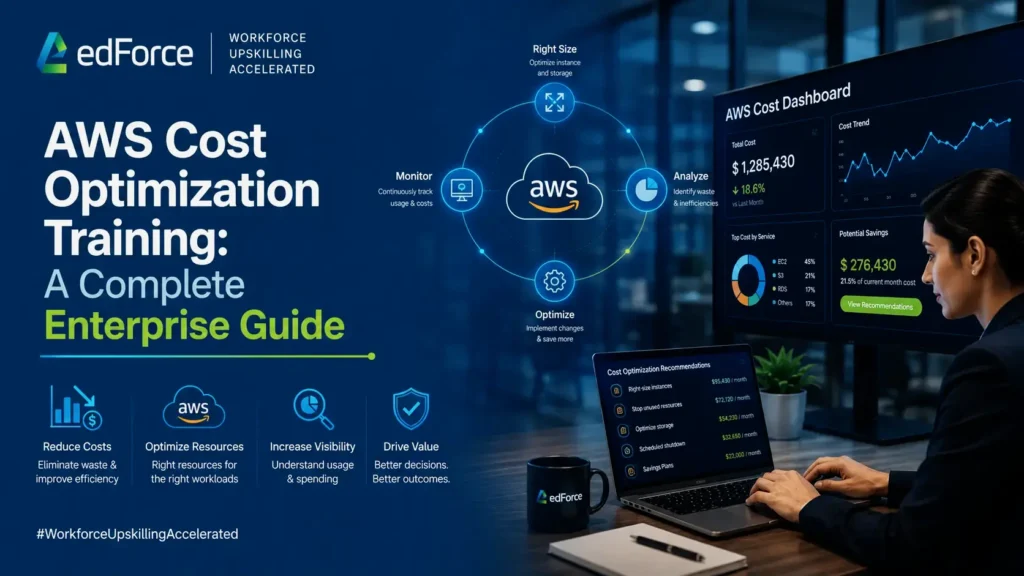
Cloud adoption isn’t the problem it was five or six years ago. A majority of enterprises have already migrated critical applications to AWS and developed processes around cloud infrastructure. The way leadership discussions are conducted is also changing. At one time, companies asked how quickly they could move to the cloud. Today, they’re asking a different question: Why are cloud costs growing faster than anticipated? This is a challenge that many organizations will face in 2026. Interestingly, cloud-related issues usually do not begin with major mistakes. Most of the time, expenses increase gradually. A project team allocates testing resources and then fails to shut them down. A larger instance is chosen because it removes performance concerns. Storage continues to grow because no one is responsible for reviewing older data. These individual decisions are not serious on their own. However, when thousands of similar decisions occur across departments, the result is a cloud bill that keeps growing every month. This is why AWS cost optimization has evolved into more than a technical topic. It’s now a business priority. Organizations are beginning to recognize that the solution isn’t simply better tools. The solution lies in building teams that understand how cloud decisions affect business costs. The Real Problem Is Not AWS As cloud costs increase, many companies begin reviewing infrastructure reports, dashboards, and analytics. While these tools are helpful, they often overlook the larger issue. The problem is typically not AWS itself. The issue is that most teams are trained to deploy infrastructure, but not necessarily to manage it efficiently. Cloud engineers might know how to launch resources, configure environments, and improve application performance. A DevOps team might be skilled in automation. Operations teams can ensure uptime and reliability. However, very few organizations teach these teams to think about cloud spending while making day-to-day decisions. As a result, cost optimization becomes reactive. Teams evaluate spending after costs increase instead of preventing unnecessary spending from happening in the first place. This is where training creates value. Why Cloud Cost Awareness Is Becoming a Critical Skill In the past, cloud expertise was measured through technical proficiency. Companies looked for professionals who understood infrastructure, networking, security, deployments, and cloud architecture. These skills remain important, but business expectations are changing. Today, organizations are increasingly looking for professionals who understand the connection between technical decisions and business outcomes. For example, cloud engineers may need to think beyond technical requirements and ask questions such as: Does this resource really need to be running? Are we paying for storage that we rarely use? Can this workload be optimized differently? What happens to costs if usage increases next quarter? These questions were not traditionally part of cloud-related roles. They are becoming increasingly important because cloud spending directly affects profitability, planning, and operational efficiency. Many organizations are discovering that the most valuable cloud professionals are not necessarily the ones who deploy infrastructure the fastest. They are often the people who can balance performance, reliability, and cost effectively. Why AWS Cost Optimization Training Matters A common misconception is that AWS cost optimization is simply about reducing costs. In reality, effective training helps teams make better decisions. When employees understand cost optimization principles, they become more aware of how infrastructure decisions influence long-term business performance. Instead of viewing cost management as solely the responsibility of the finance team, they begin incorporating it into their everyday technology decisions. This creates a completely different culture. Instead of asking how costs can be reduced after they occur, teams begin looking for ways to prevent unnecessary spending before it happens. This shift is where the biggest improvements occur. The Hidden Cost of Poor Cloud Visibility One of the biggest challenges organizations still face is visibility. As cloud environments grow, departments often manage different resources. Development teams focus on delivery timelines. Operations teams focus on reliability. Security teams focus on compliance. Everyone is working on important priorities, but no one always sees the complete picture. This can create situations where resources remain active longer than necessary or workloads gradually increase in size over time. Without proper visibility, organizations often struggle to identify: Underutilized resources Duplicate environments Unnecessary storage growth Inefficient workload configurations AWS skill builder provides powerful monitoring and analysis tools, but tools alone do not solve the problem. Teams need the knowledge and skills to interpret information and take action. That is why workforce capability remains an essential part of cloud optimization. AI Is Making Cloud Cost Management More Important Another reason the discussion is changing is AI adoption. Many organizations are now running AI and machine learning workloads on cloud infrastructure. These environments often require larger datasets, greater processing power, GPU resources, and additional storage capacity compared to traditional applications. As AI projects grow, cloud spending becomes more unpredictable. A company may launch a successful AI initiative only to discover that infrastructure costs increase significantly as usage grows. This is one reason cloud cost optimization expertise is becoming more valuable than ever. Future cloud engineers will need to understand not only AWS infrastructure but also how AI workloads affect resource consumption and operational costs. Organizations that build these capabilities early will be better prepared as AI adoption continues to expand. Why FinOps Is Becoming Part of Enterprise Strategy A term that appears more frequently in cloud discussions is FinOps. At its core, FinOps is about creating collaboration between technology and business teams so that cloud spending becomes more visible and manageable. However, the success of FinOps initiatives depends heavily on people. Tools and processes can support optimization efforts, but employees make decisions that affect spending every day. Many organizations are investing in training programs that help technical teams understand financial impact while helping business teams understand cloud realities. When both sides speak the same language, cloud optimization becomes significantly easier. What Enterprises Should Look for in AWS Cost Optimization Training Not all training programs deliver the same value. The best programs go beyond simply explaining AWS pricing models and services. They help employees develop the
Why Every Cloud Engineer Needs AI Skills in 2026
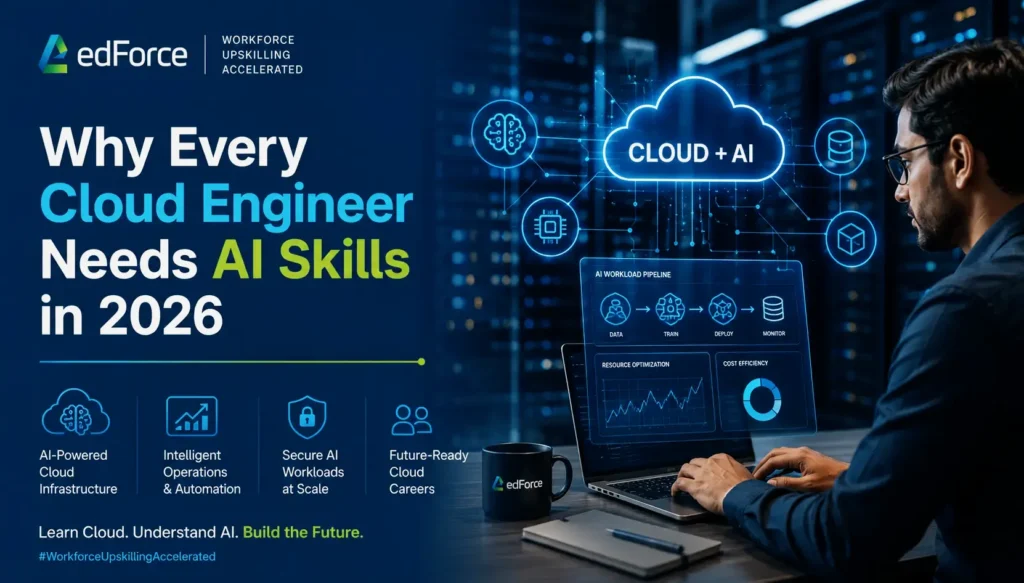
A couple of years ago, becoming a cloud engineer meant understanding platforms like AWS, Azure, or Google Cloud and learning how to deploy, manage, and scale infrastructure. Those skills alone could create significant career opportunities. The situation in 2026 looks very different. Cloud infrastructure is still vital. However, employers are increasingly looking for professionals who can combine cloud expertise with AI capabilities. The reason is simple. Modern companies aren’t using cloud services only to host applications. They use cloud computing to run AI workloads, process massive amounts of data, automate operations, and support intelligent business systems. As a result, the role of the cloud engineer is gradually evolving. Many professionals still view AI and cloud computing as separate career paths. Enterprises do not. For many organizations, the cloud engineer of the future is someone who understands both. The Cloud Industry Is Entering a New Phase The initial phase of cloud adoption was focused on migration. Companies moved databases, applications, and infrastructure from on-premises environments to cloud platforms. The second phase focused on optimization. Businesses wanted scalable systems, better performance, and reduced infrastructure costs. The phase we are entering now is different. Cloud Is Becoming the Foundation for AI Organizations are increasingly asking: “How can we use cloud environments to support AI-driven operations?” This question is changing hiring priorities. Cloud engineers are now working alongside: AI teams Machine Learning Engineers Data scientists Automation specialists Platform engineering teams Cloud computing has become the foundation for enterprise AI initiatives. This is why AI expertise is becoming a valuable advantage for cloud professionals. Infrastructure Is No Longer Just Infrastructure One of the most interesting shifts happening across enterprises is that infrastructure teams are becoming more involved in business innovation. Five years ago, cloud engineers spent most of their time managing deployments, resources, networking, and security. How Cloud Teams Are Evolving Today, cloud teams are increasingly involved in: AI model deployment GPU infrastructure planning AI workload optimization Data pipeline support Intelligent automation projects The conversation has moved beyond simply keeping systems operational. Businesses need cloud engineers who understand how modern AI systems function within cloud environments. That does not mean every cloud engineer must become a data scientist. However, it does mean understanding how AI workloads influence infrastructure decisions. The Skill Gap Companies Are Starting to Notice Many organizations have invested heavily in AI tools during the past two years. What they are discovering is that AI projects often move slower than expected because workforce capabilities have not grown at the same pace as technology investments. The Challenge Many Enterprises Face A common situation looks like this: The company has cloud engineers. The company has AI initiatives. Very few people understand both. This creates communication gaps between teams and slows implementation. Increasingly, employers are searching for professionals who can bridge that gap. These individuals are valuable because they understand infrastructure requirements while also understanding the goals AI teams need to achieve. AI Is Changing Daily Cloud Operations Another reason AI skills are becoming important is that AI is beginning to influence day-to-day cloud operations. Many modern cloud environments now include: AI-powered monitoring Automated incident management Predictive resource optimization Intelligent security systems Automated troubleshooting support What Cloud Engineers Need to Understand Cloud engineers do not need to build every AI system themselves. However, they need to understand: How these systems work Where they provide value When human oversight is required How AI impacts operational workflows Professionals who understand this shift tend to adapt faster as organizations modernize infrastructure operations. The Most Valuable Cloud Engineers Are Becoming More Adaptable One pattern becoming increasingly clear is that companies are valuing adaptability alongside specialization. Technology evolves too quickly for static skill sets. Cloud engineers experiencing the strongest career growth are often those who continuously expand their expertise into adjacent fields. Why AI Is Becoming a Core Skill AI is rapidly becoming one of the most important complementary skills. Not because AI will replace cloud engineering. But because AI is becoming a core part of the cloud environments cloud engineers support every day. Professionals who understand both infrastructure and AI workflows can contribute to more projects than those focused on only one area. Why AI Skills Matter Even If You Never Build Models This is where many professionals become confused. They assume AI skills mean learning advanced mathematics, neural network architectures, or machine learning research. For most cloud engineers, that is not the primary goal. Practical AI Knowledge for Cloud Engineers The value comes from understanding: AI infrastructure requirements Model deployment environments GPU-based computing AI security considerations Cloud-native AI services Enterprise AI workflows In many organizations, these practical skills are becoming more valuable than building AI models from scratch. Professionals need to support AI adoption in practical business environments, not only academic ones. What Enterprises Are Looking For in 2026 Hiring conversations are changing. Companies are increasingly attracted to cloud engineers who understand how AI integrates into enterprise operations. Skills Employers Want Organizations are looking for professionals who can: Support AI deployment projects Manage modern cloud infrastructure Understand AI workloads Collaborate across technical teams Adapt to emerging technologies The market does not always require AI researchers. It increasingly requires cloud professionals who can work effectively in AI-powered environments. The Future Cloud Engineer Will Work Alongside AI One prediction that is becoming increasingly likely is that cloud engineering roles will continue shifting toward AI-powered operations and automated platform management. The job itself is not disappearing. The responsibility is expanding. Managing Intelligent Systems Future cloud engineers may spend less time manually managing infrastructure and more time supervising intelligent systems that automate portions of the work. Professionals who prepare for this transition early will likely be better positioned as enterprise technology continues to evolve. Why Training Is Becoming More Important Many organizations now recognize that hiring AI-ready cloud professionals can be difficult. This is one reason businesses are investing more in workforce training programs that combine cloud and AI skills. Building AI-Ready Cloud Teams At edForce.co, cloud and AI training programs focus