


How Enterprises Train Employees Across Different Time Zones
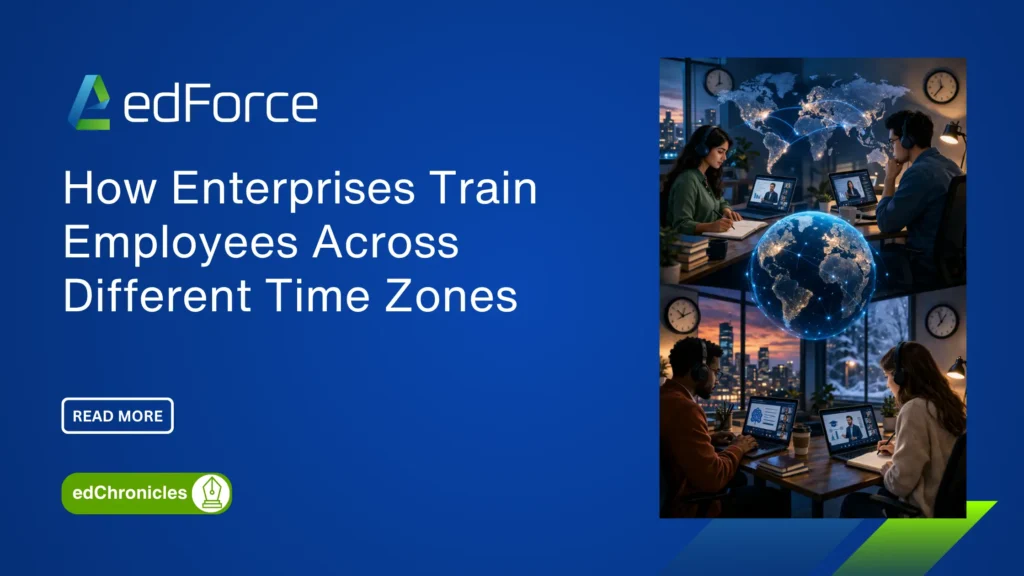
As companies expand internationally the challenge of globalization becomes inevitable. Teams are no longer confined to one place, or even the same time zone. A course of instruction that works for one area might be difficult or impossible for an entirely different region. However, the goal remains the same. Learning should be consistent, enjoyable and efficient throughout the entire workforce. Businesses that thrive in this context don’t depend on one approach. They develop learning systems that are flexible and structure with real time connectivity. Moving Beyond One Time Training Sessions Traditional training was designed to be used by teams that co-located. A fixed schedule. The shared space. A single delivery. The model is broken in a global setting. Companies are now designing courses that aren’t only limited to one time. Instead, they develop learning experiences which allow employees to participate in a variety of ways and without loosing consistency. This ensures that learning is easily accessible and not limited by location. Combining Live and Flexible Learning Live sessions are still important. They provide dialogue, interaction, and clarity. However, in teams with global reach there are many people who cannot be able to attend the same event simultaneously. This is the reason why businesses offer live training and the ability to access training in a variety of ways. Sessions are usually held in multiple time slots or aided by recordings and resources for follow-up. Employees are able to revisit the content as they need to, which can improve comprehension. This combination of real-time and flexible learning allows for more flexible training. Designing for Clarity Across Cultures The training across different time zones isn’t solely about timing. It’s also about communication. Teams have diverse professional and cultural backgrounds. The design of learning must be simple, clear and well-organized to allow everyone to learn easily. Case studies, examples and explanations should be appropriate across all regions. If the content feels familiar to the audience, it increases engagement regardless of the location. Strong Facilitation Keeps Global Learners Engaged In virtual environments, attention can drop quickly. This can be even more difficult when people are interacting at different times during the day. Enterprises invest in skilled trainers who are able to maintain their the energy of their students, promote participation and be able to adapt to a variety of audiences. Interactive elements like discussions polls, discussions, and actual scenarios keep students engaged even when they are in remote settings. Using Technology to Connect Distributed Teams Technology plays an important role in global education. Learning platforms, tools for collaboration, and virtual classrooms let employees to network with each other, exchange ideas, and collaborate regardless of distance. Additionally the tools aid in maintaining continuity. Every student receives the same level of instruction, regardless of where they are located. Continuous Support Beyond the Session In international organizations the learning process cannot stop at the time of session’s end. Employees might require clarification in the future because of time differences. Enterprises can help with discussions forums, follow-ups as well as access to the trainer or mentor. This support continues to ensure that learning is always active and easily accessible. Many companies also collaborate with formal learning partners such as edforce.co to develop scalable training systems that ensure high-quality across different regions and time zones. Final Thoughts Training in different time zones isn’t only a logistical issue. It’s also a design problem. Businesses that succeed are focused on clarity, flexibility, and engagement. They develop systems in which learning isn’t linked to a date, but is integrated into the processes teams use. As global teams continue increase, the capability to provide consistent and efficient education across different time zones is going to be an essential element of the planning for the development of workers.
What Happens When Training Is Not Applied on the Job
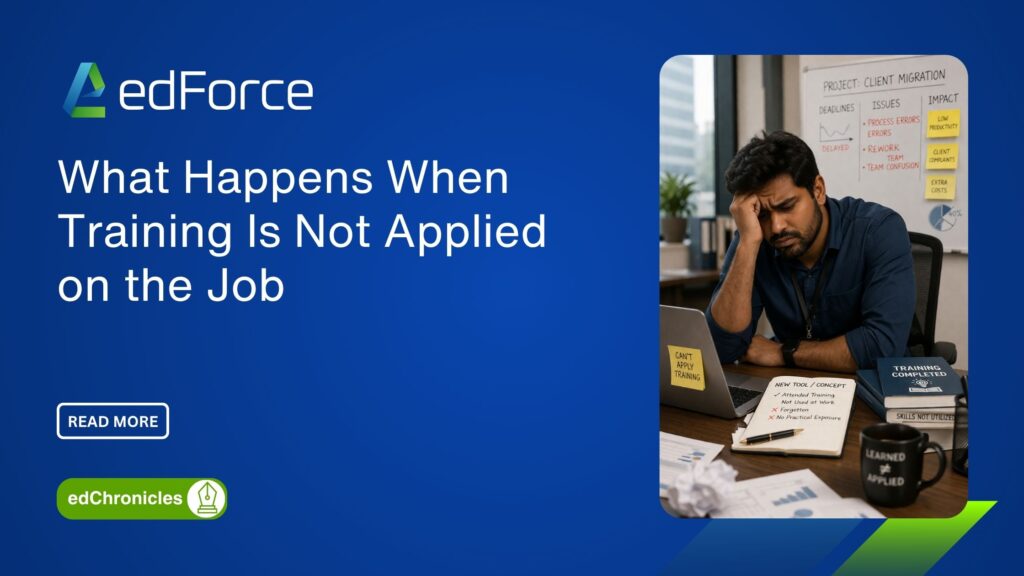
The majority of companies invest heavily in training. Programs are designed. The sessions are taught. Employees are required to attend and complete the course. Then comes the main problem. What actually changes at work? In most instances the answer is not always. That’s the point where the problem really is afoot. Since training that isn’t utilized isn’t just ineffective. It’s a cost with no return. Learning Stays Theoretical, Not Practical If training isn’t used and is not applied, it remains as a matter of knowledge. Employees might be able to grasp concepts in the class. They might even do quite well during assessments. But if they don’t have a practical application in the workplace this knowledge quickly fades away. The ability to learn is developed through practice rather than exposure. Without practice learning, it is not a capability. Performance Does Not Improve The goal of all corporate training is to improve performance. More productive. Fewer errors. Faster execution. Stronger decision making. If training isn’t applied and implemented, no results are realized. Teams continue to function exactly the same way as before. This causes a gap between the learning investment and business outcomes. Employees Lose Interest in Learning Professionals are pragmatic. They are interested in learning and how it can help them to do their work better. If training is not connected to working, employees begin thinking of it as an exercise in formality. It’s a task to be completed but not something you can use. Over time, engagement drops. The participation becomes less active. Learning culture weakens. Managers Stop Trusting Training Programs Managers are expecting the training of their teams to make them better equipped. If they do not experience an improvement that is visible, their the confidence they have in their learning program decreases. Training can feel like something to do rather than an answer. This will impact the future learning projects. The support is cut. Budgets become more difficult to justify. Time and Budget Are Wasted Training is a commitment. Not just in cash but also in time. Employees take time off from their work. Teams alter their the schedules. The allocation of resources is done. If the learning process isn’t applied the effort will be of little use. The business has to pay twice. One time for training and a second time to cover any missed improvements. Skill Gaps Continue to Grow One of the greatest dangers of not applying training is that skills gaps remain unsolved. In the abstract, workers appear well-trained. In reality, the capability of employees does not grow. This can lead to hidden weaknesses within the business. In time, these gaps impact productivity, innovation and even competitiveness. Why Application Fails in the First Place In most cases the problem isn’t with the learner. It’s with the system they are surrounded by. Training may not be aligned with the actual job requirements. Managers might not encourage the process of learning. There might be no follow-up with feedback, and there may be no opportunities to try out. If there is no connection between work and learning the application becomes difficult. The organizations that fill this gap concentrate on learning through practical experience and real-time feedback and a structured follow-up. Many companies are now working with other companies like edforce.co to create programs that make sure that learning is applied and not only given. Final Thoughts Training is only valuable by changing the way people behave. If the participants don’t implement what they learned, then training becomes a rote exercise. It could look effective on paper but isn’t in practice. Organisations seeking to have a real impact should go beyond just delivery. They should focus on reinforcement, application, and performance. Since, in the end learning is not measurable by the content of instruction. The measure is the way it is being used.
How Enterprises Map Employee Skills to Business Goals in 2026
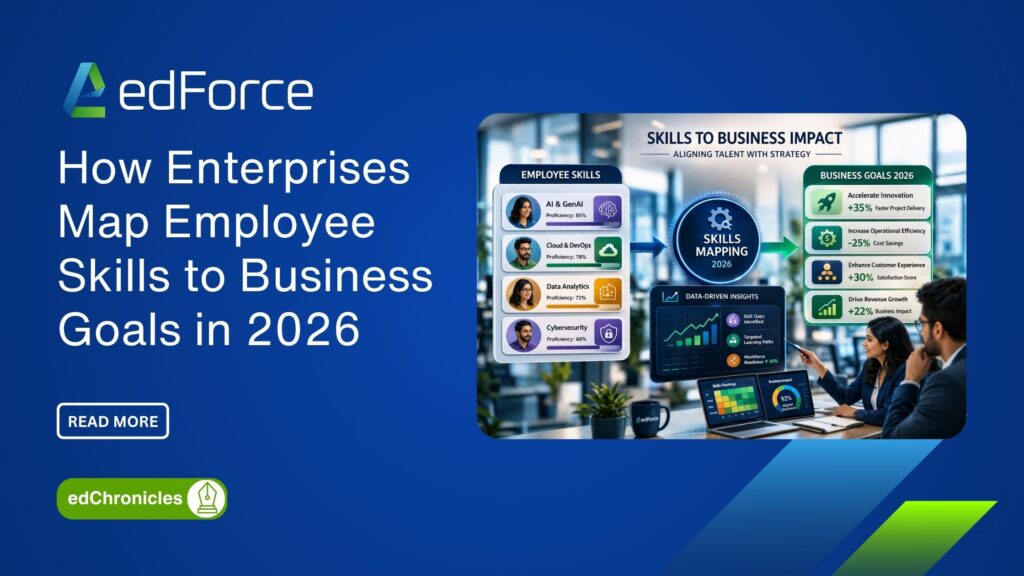
In 2026, planning for the workforce will no longer be focused on roles only. It’s about the ability to communicate, clarity, and align. Enterprises are moving away generic job descriptions, and instead asking more directly. Are we equipped with the capabilities to meet our business objectives? Since in the present world, strategy is not failing due to a lack of understanding however, it is due to a the lack of ability. It Starts With Clear Business Direction Skill mapping is not a process that begins with employees. It begins with the business goals. The first step is to define where the organizations intend to go. Expansion into new markets. Adoption of AI. Digital transformation. Efficiency in operations. Innovation in product design. Each of these objectives will require specific capabilities. In 2026, the most successful companies divide their business strategies into requirements for skills. Instead of stating “we need to grow,” they determine what skills are required to allow for that growth.. At the top, clarity provides direction throughout the workforce. From Job Roles to Skill Clusters Traditional models of work centered on the roles. However, roles are changing too rapidly. Today, companies are focusing upon the cluster of skills. A single job could require a range of capabilities in technologies, data, communication and problem-solving. For instance, a programmer might require coding cloud understanding, cloud comprehension, or AI awareness. A manager might require leadership, analytics, and digital fluency. This allows companies to better map their work and train employees to take on new tasks. Using Data to Understand Current Capability After the skill requirements have been defined then the next step is to determine what is already in place. Enterprises make use of assessments as well as performance data and management inputs to determine current levels of competence. This gives a clear understanding of the strengths and weaknesses. In lieu of guessing companies are relying on data to help solve key questions. Things that require urgent attention The ability to see clearly is the basis of a successful workforce planning. Identifying Skill Gaps That Impact Business The gaps in skills are not all equally significant. In 2026, companies will focus on gaps based on their business impact. Skills that directly impact the efficiency of their business, revenue or risk, are first addressed. The result is that the learning efforts are centered and relevant. Instead of educating anyone on everything, businesses develop specific plans for development that help solve business-related issues. Building Structured Upskilling Pathways When gaps are discovered and gaps are identified, the priority shifts to the development. Enterprises are implementing structured learning experiences that align with particular roles and future needs. These aren’t regular training sessions. They are mapped out ways to build capacity in a step-by-step manner. Many companies work with other organizations such as edforce.co to create skill-based programs that blend practical education and real-world application and quantifiable improvements. This method of structured learning ensures that learning is a catalyst for an improvement in the quality of life. Continuous Tracking and Adaptation Skill mapping isn’t just an event that happens only once. When priorities in business change the requirements for skilled workers also change. Companies continuously monitor developments, update skills frameworks and adjust their strategies for learning. This results in a dynamic system in which the capabilities of workforces change with the business requirements. Companies that view the skill mapping process as a continuous process stay more agile and ready for the future. Connecting Skills to Performance and Growth The most efficient companies take an extra step. They link their skills directly to performance goals. Employees are aware of how their skills impact their work. Managers can tie the development of skills to productivity, innovation and team performance. This increases the level of engagement as learning is perceived as valuable and relevant. Final Thoughts In 2026, the most successful businesses will not be just managing employees. They manage capabilities. When employees are able to align their skills to business objectives, companies achieve clarity, increase efficiency and create an employee workforce that is prepared to adapt. The benefits do not come in having a larger workforce. It’s about having the necessary skills in the proper location at the right time.
How edForce.co Uses AI and Data for Personalized Corporate Learning
Corporate learning has undergone a dramatic transformation. Modern enterprises no longer benefit from training that is one size fits all. By 2026, companies will need to adapt their learning programs to the needs of employees, business objectives, and technological changes. Artificial intelligence and data-driven learning can make a big difference. edForce.co personalizes corporate learning using AI and data, helping businesses build skills faster and smarter with measurable impacts. Why Personalized Learning is Important for Enterprises Each employee has a unique role, skill set, and pace of learning. The results of training everyone the same way are not as good. Deloitte reports that personalized learning improves employee performance over 30% compared to generic models of training. The personalization of the learning process ensures that each employee learns what is most important for their job and applies it directly to work. AI enables smarter learning experiences AI allows for learning platforms to go beyond static content. edForce analyzes learner behavior, skill gaps, and progress using artificial intelligence. The platform can then recommend content, labs and learning paths that are relevant to individual needs. Employees receive guided learning that is aligned to their roles and goals, rather than guessing. Role-Based Learning with Data Insights Different roles require different skills. Cloud engineers, data professionals, and security analysts should not all follow the same training. edForce uses data to create role-based learning paths aligned with enterprise job roles. These learning paths are designed to help you develop the skills needed to excel in specific roles. Gartner states that role-based learning can improve training relevance and cut learning time up to 40%. Analyse to Identify Skill Gaps Understanding skills gaps is crucial for workforce planning. edForce’s learning analytics helps identify areas where employees need to improve and those where they are strong. Organizations can see the real skills readiness by assessing lab performance and engagement data. This data-driven visibility allows leaders make informed decisions regarding training investments. Adaptive learning that evolves with the learner The needs of learning change with time. edForce AI algorithms continuously adjust learning recommendations based upon progress and performance. Additional resources may be suggested if a student struggles to understand a particular concept. When they progress quickly, the learning path changes to match their speed. This adaptive approach motivates and engages learners. IBM claims that adaptive learning can increase course completion rates up to 25 percent. Use of Data to Measure Training Effect Businesses need to prove that their learning investments are paying off. edForce tracks outcomes, such as improvement in skills, assessment scores and the application of learning to work, using data. It allows companies to link their learning efforts with performance. Leaders can demonstrate the value of corporate learning programs using data-backed insights. Improve Employee Engagement with Personalized Learning Corporate training faces a significant challenge: engagement. AI-driven personalization makes learning relevant and interactive. When training is aligned with the employee’s role and career goal, they are more likely complete their programs. LinkedIn Research shows that employees who engage in personalized learning are twice as likely to remain with their company. How edForce supports enterprise learning leaders edForce works with business, HR and L&D leaders to provide scalable, personalized learning solutions. The key benefits are: Role-aligned learning programs, hands-on labs with real scenarios and AI driven recommendations, skill analytics and reporting and enterprise level scalability It is important to ensure that learning has a real impact on business, and not just course completions. Real Enterprise Results with edForce Head of Learning Global Technology CompanyPersonalized learning paths helped us to close skill gaps quicker. Within months, we saw an improvement in the team’s performance. CTO Mid Size EnterpriseData transparency into skill readiness allowed us to plan better and reduce reliance on external hires. HR DirectorThe engagement of employees increased dramatically once the learning was relevant to their roles and specific. Corporate Learning: The Future of Corporate Learning AI and data will continue influencing how organizations develop skills. Learning will be adaptive, predictive and deeply integrated in the daily work of the future. edForce helps enterprises achieve this future through the combination of technology, data and human expertise. You can now personalize learning for your workforce Learning solutions for modern enterprises must be flexible and adaptable to the needs of both people and businesses. If you want to improve your training, increase engagement and achieve measurable results in your organization, then personalized learning will be the best option. Learn how edForce.co leverages AI and data analytics to transform corporate training and create future-ready teams. Smarter learning creates stronger organizations. Start your transformation now.
The Critical Skill Gap India Enterprises Face and How edforce is Closing It

Have you noticed how rapidly workplace technology is changing today? Next month, your team will have mastered a new tool. This is something that many corporate and IT professionals experience every day. This constant shift is the reason India faces a growing skill gap and is a major business problem. Here is the good news. It is a real problem, but it can be solved. We’ll look at the causes, how they impact your organization, and how platforms such as edForce.co help companies overcome this gap. Understanding the Skill Gap In India The gap between employers’ needs and employee knowledge is called the skill gap. This gap is increasing in India because the job roles are changing faster than learning systems. In a recent report, NASSCOM2023 discovered that over 70% of Indian employees felt underprepared for digital roles in the future. In the meantime, 82 per cent of companies anticipate that tech skills will change significantly by 2027. (World Economic Forum 2020). Are you building a workforce that is future-ready? Understanding what causes this skills gap is the first thing to do. What is the cause of the skill gap? Here’s a simple look at what drives the Indian gap. Key Factor What it Contributes to the Skill Gap Rapid technological adoption New tools and digital systems are causing employees to fall behind. Access to training updates is limited Many teams still rely on outdated training programs Demand for digital roles on the rise There are not enough professionals to fill the new digital jobs Hands-on learning is not available The majority of employees only learn the theory and not real-world practice Business models are constantly changing The skills needed today are very different than five years ago The issues are prevalent in almost all industries, including manufacturing, IT, telecom, finance and health care. Indian Enterprises: The Impact is Growing Do you need reasons to take the skills gap seriously? Its real business impact is listed below. How edForce.co is closing the skill gap in India Modern businesses need more than generic training. They need business-aligned, structured training that has a real impact. A platform such as edForce.co can play a key role in this. Take a look and see how it can help. Enterprise Focused Learning The majority of learning tools include courses. Enterprises need more. They need an educational plan that supports their business goals. edForce offers: Employees do not simply learn skills. The skills they need for tomorrow’s job are taught. Hands-on and Outcome-Driven Training Have you ever been to a training that was great on paper but didn’t change anything at work? This is what causes India’s skills gap. Learning does not stick without hands-on practice. edForce is able to solve this problem through: Employees gain confidence by practicing real-life workplace scenarios. Data-Driven Workforce Insights Clarity is essential for leaders. Leaders need clarity. edForce helps organisations with analytics Instead of guesswork, enterprises can now have a data-driven roadmap. Building a Culture for Continuous Learning Have you noticed how quickly teams fall behind when they stop acquiring new skills? The skill gaps are widening because many companies don’t have a culture that encourages continuous learning. edForce can help build this culture by enabling consistent and structured growth at all levels. Companies grow faster when employees are regularly trained. Why Closing the Skill Gap Matters for Indian Enterprises Take a look at the benefits that companies get when they bridge their skill gap. Business Benefit How Upskilling Contributes High productivity Teams are more productive and make fewer errors Better customer experience Employees deliver accurate, timely outcomes Reduced hiring costs Companies rely less on external recruiting Stronger innovation Teams come up with new and innovative ideas Future-ready workforce Employees remain relevant when changing jobs McKinsey’s 2023 report states that companies who invest in continual upskilling can see a 30 percent increase in productivity within 2 years. What the next 3-5 years may look like India’s skills gap will likely widen, before shrinking. By 2027 the country could face a shortage in digitally-skilled workers of more than 3 million (WEF, 2023). Digital transformation will accelerate in all sectors. If enterprises want to remain competitive in the future, they must invest today in upskilling that is structured, practical and aligned with their future. How to reduce the skill gap in your business Here are some practical and simple steps. The skills gap is real but manageable. India’s businesses can create a future-ready workforce with the right strategy and learning partners. Key Takeaways