


What Actually Makes Someone “Job-Ready” in 2026
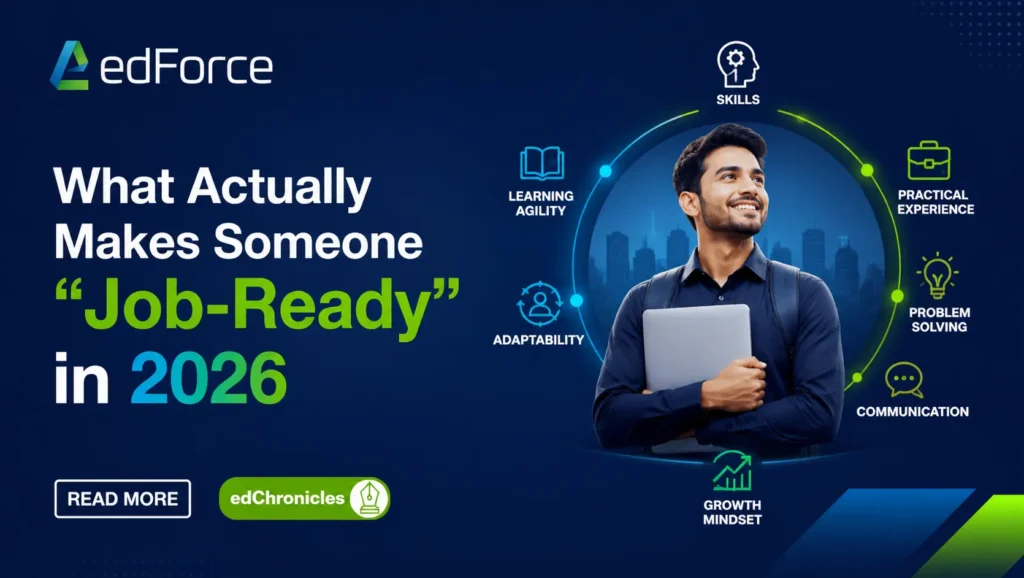
The concept that one should be “job-ready” has changed more in the last couple of years than during the previous decade. In the past, an education, a basic understanding of technology and the desire to learn were usually enough to be able to work. In 2026, the expectation has changed dramatically. Employers aren’t employing only for the future potential. They are now hiring for immediate contributions, which means an employee who is job-ready who can take on an existing job and begin generating value in a short amount of time. This isn’t an accident. It’s a result of the speed at which companies are operating in the present. Teams are not able to afford lengthy training curves and executives are unable to be able to spend months bridging the gap between their knowledge and the execution. In the end, job-readiness has evolved from a concept based on qualifications to becoming an actuality based on capabilities. Job-Ready Is About Application, Not Just Knowledge One of the biggest problems that organizations find is the distinction between knowing and implementing. Many applicants have solid knowledge of the theory. They are able to explain concepts clearly as well as discuss frameworks, and even excel in tests that are structured. However, when they are put in real-world situations, their capability to apply the knowledge can be inconsistent. In 2026, the only thing that truly defines job-readiness is to use knowledge and apply it in real-world situations. This means solving real-world problems, taking decisions using limited information, and adjusting knowledge to meet the needs of business. Businesses value people who apply their knowledge to action without needing constant supervision. Understanding Context Is What Makes Skills Useful The skills alone will not suffice If they’re not used in the proper context. Modern jobs are based on complex systems that include teams and tools, timelines, and business goals. A professional who is job-ready understands the way their work is connected to bigger outcomes. These professionals are cognizant of their priorities as well as constraints and expectations and are able to make more informed choices. Without this understanding of context Even technically proficient individuals may be unable to comprehend the context. They might know what they should do, but they don’t know how or why they should perform it. This is the reason why companies increasingly seek out professionals who are able to combine technical skills with a business-minded perspective. Adaptability Has Become a Core Requirement The rapid pace of modernization in the workplace has made it essential to be flexible. Technology evolves, processes shift and roles grow more quickly than they ever have before. An employee-ready professional in 2026 is not someone who has all the answers but rather someone who is able to adapt quickly and learn without a hitch. The ability to adapt shows in how people respond to new problems. Instead of being resistant to changes or waiting for certainty, they are engaged with the change. They try new things, gain feedback, and continue to improve. This is a way to ensure long-term relevance in an ever-changing setting. Communication Directly Impacts Performance Another important aspect of job-readiness is the ability to communicate. In modern workplaces, work rarely happens in isolation. Collaboration among teams is commonplace and the clarity of communication directly impacts outcomes. Professionals who communicate their thoughts clearly and ask the right questions and collaborate with stakeholders, perform better. On the other hand even the most skilled people may have difficulty when they are unable to communicate their ideas or contribute to discussion in a constructive manner. This is the reason why communication is now considered a skill that can be used to perform instead of a mere soft capability. Problem-Solving in Real Work Conditions Problem-solving in real-world situations is quite different from formal learning environments. In real-world situations there is often a lack of information and timelines are a bit rushed and the decisions are based on trade-offs. Professions that are job-ready are able to operate under these conditions. They don’t wait for perfection in their instructions. Instead, they evaluate the situation, make educated decisions and are accountable for results. The ability to manage uncertain waters is highly valued since it shows the ability to take on real-world obligations. The Role of Structured Skill Development One reason that many aren’t job-ready is how learning is organized. A majority of traditional education focuses on the delivery of content rather than capacity building. This results in a gap between the knowledge people have and the skills they are able to accomplish. The organizations are tackling this by implementing skill-based learning methods. Instead of focusing solely on specific topics, they create training programs based on real-world work requirements and quantifiable outcomes. Many companies collaborate with partners such as edforce.co to develop learning environments that replicate real-world scenarios, which ensures that employees acquire useful, practical capabilities. Final Thoughts The year 2026 is when being ready for work is not just about achieving basic requirements. It’s about showing the capability to contribute effectively right from the beginning. This involves using the knowledge gained, analyzing the context, adapting to change by communicating clearly and tackling real-world issues under real-life situations. Professionals need to be not focusing as much on gathering data and more on building capacity. For businesses, it’s about changing how talent is evaluated and created. Because in a highly competitive business environment, the real value of an individual who is job-ready is not in what they know, but rather in how well they utilize it.
Top Tech Skills Every Employee Should Learn in 2026

Technology is not limited to the IT team in today’s fast-paced professional world. Each employee from marketing, finance, HR or operations interacts daily with digital tools. Employers prefer to hire individuals who are able to adapt quickly and understand technology. Hey, do you plan to advance in your career? Let’s take a look at what top tech skills to learn by 2026 in order to remain relevant and future-ready. Why learning tech skills is important in 2026 The workplace is increasingly digital. Businesses are automating their processes, converting to cloud-based software, utilizing AI in decision-making and enhancing data security. Updating your tech skills will give you better opportunities, more confidence, and faster growth at work. It’s not just about learning how to code. This is about being digitally intelligent and efficient. Top tech skills to learn in 2026 Skill Why it Matters Who should learn it? Tool / Platform to Start Artificial Intelligence & Automation Tool AI increases productivity and reduces repetitive work. Anyone who works with data, workflows or documentation. ChatGPT, Zapier, Notion AI Data Literacy & Basic Analytics Cybersecurity Awareness Data-driven decisions are more accurate than guesswork. Cyber threats are on the rise and every employee needs to be aware of how to protect their data. HR, Marketing, Finance, Sales, Operations professionals. All employees, but especially remote workers. Excel, Power BI and Google Analytics Google Cybersecurity Courses and Cisco Cybersecurity Basics Cloud Productivity Tools Cloud platforms are used by most organizations. They improve coordination. Teams that handle files, collaborate, and report. Google Workspace Microsoft 365 Slack Project Management Tools Improves team coordination and helps complete tasks quicker. Junior staff and freelancers. Trello, Asana, Monday.com Digital Communication & Collaboration Skills Strong communication is required for remote and hybrid work. Roles that are customer-facing or team-based. Zoom, Teams and Loom Here are a few key skills to break down 1. Artificial Intelligence (AI) Understanding AI isn’t only for technologists. Basic knowledge of AI can improve productivity. AI tools can automate tasks such as summarizing documents, writing reports and planning schedules. 2. Data Literacy Do you want to make decisions with clarity? Data literacy allows you to understand trends, analyze reports and present insights in a simple way. You will automatically be more valuable if you are able to read charts and understand numbers. 3. Cybersecurity Basics Common threats include phishing emails, weak passwords and unprotected Wi-Fi. Small mistakes can result in big losses for an organization. It is essential to know how to verify and secure sources, as well as secure accounts. Where can you learn these skills? Many online platforms offer structured learning. One of these platforms is edforce.co. It focuses on upskilling working professionals with industry-led, practical training. Bonus: Quick Learning Tips Start your learning journey with ease: Conclusion In 2026, the workplace will reward those who are tech-savvy, adaptable and comfortable using digital tools. To start, you don’t have to be exceptional. You just need to be willing to learn and remain consistent. Are you ready to make a big step in your career? Start now. Start today. We’ll look at a goal that you can achieve today to move forward towards a more intelligent professional future.
How to Measure ROI of Employee Training Without Guesswork

Every forward-thinking company has realized that employee training is a vital investment. One question is always asked by HR, L&D, and business leaders. Is training working? You may have already faced this problem if you are an active professional or business decision maker. When training programs appear good on paper, but do not have a measurable impact on the business, then you are in real trouble. How can you determine the ROI for employee training, without relying solely on gut feelings or assumptions? Here’s a look. Why Measuring ROI on Training is Important Many organizations have training programs because it is deemed necessary. Training becomes a cost if you don’t measure the results. Measuring ROI can help you: ROI measures ensure that every dollar and hour spent on resources is justified. What is the ROI of training? The Training ROI shows you the return on investment that your organization receives from its training investments. It compares training costs to the benefits they produce. Many companies use the following formula: Aspect The word “meaning” is used to describe the meaning of the phrase Benefits Reduced errors, increased productivity, improved performance, and better customer satisfaction Costs Trainer fees, employee time, and resources ROI = (Training Cost – Training Benefits) / 100 Are you going to launch a new initiative in training? You will make better decisions if you know how to calculate ROI. How to measure ROI of training without guesswork 1. Set clear training goals Define success. As an example, you might define success as faster task completion, higher sales, reduced compliance errors or increased retention. 2. Measure pre-training performance First, you need to understand the situation. Start by collecting baseline data, such as employee output or time spent per task. 3. Track skill gains during and after training Assesses, real-project evaluations and manager observations can be used to determine if the employees have improved. 4. Connect Business Metrics with Outcomes Many companies have difficulty in this area. Converting improvements into measurable values is a challenge for many companies. As an example: 5. Calculate your Final ROI Your ROI will become clearer once you compare the benefits with the costs. There are many tools and platforms that can help Modern learning platforms enable businesses to track employee performance, growth and alignment of cost-benefit. Solutions like edforce.co, for example, offer structured training frameworks and skill gap analytics that allow organizations to make data-driven decision rather than relying solely on assumptions. Common mistakes to avoid Simple Example Training Focus Cost Measurement of Impact ROI (Return on Investment) Customer handling training 1,00,000 Approx Retention of clients worth 250,000 Positive ROI of 150% Cybersecurity Awareness 75,000 Approx Averted a possible security incident of 5,00,000 Strong ROI Case The following simple comparison shows the transformation of training into real business value. Do You Want a Smarter Learning Strategy? It’s time to move from guesswork and learning measurements to evidence-based measurement if your training investment is not showing results. How to show you care about growth When approached systematically, calculating ROI isn’t difficult. Training can be a powerful tool for business growth when it is done with clarity, tracking and the correct tools.