

Guide to Building High-Performance Tech Teams in 2026

The technology teams are not just a support function. By 2026, technology teams will be the foundation of growth, innovation and competitiveness. Many organizations still struggle to create high-performance tech teams. It’s harder than ever to build high-performance tech teams. This guide will explain how to build strong tech teams that are future-ready in 2026, and how the correct upskilling strategies play a crucial role. Why high performance tech teams matter in 2026 The digital transformation is increasing in every industry. Cloud platforms, cybersecurity and data analytics, as well as artificial intelligence and automation, are now essential business tools. McKinsey says that organizations with high-performing tech teams are more than 1.8 times likely to experience above-average revenue growth. It’s not just the technology that makes a difference. The difference is in how the teams use it. What is a high performance tech team? High-performance tech teams have common traits. They align their technology efforts with the business goals. Performance will be measured in 2026 by results, not activities. Aligning Skills with Business Objectives: Step 1 Many companies invest in training, but do not link it to their business needs. It is a way to learn without impact. Building high-performance teams requires mapping skills requirements directly to business objectives. For example: Gartner states that companies who align their workforce skills to business strategy will see a 25 percent increase in productivity. Step Two: Role-based Upskilling Generic training is no longer effective. Role-specific workforce upskilling will be critical in 2026. Cloud engineers do not require the same training as security analysts or data engineers. Role-based learning is more relevant, easier to apply, and increases engagement. edForce is a tool that helps companies create structured learning paths tailored for specific roles and technologies. Step Three: Build hands-on capability, not just knowledge Knowledge alone does not create performance. Practical capability is the foundation of high performance tech teams. Teams can apply their skills to real-world situations by using simulations, hands-on labs and scenarios. PwC reports that employees who receive training in the workplace are 40% more likely to apply new skills. Practical exposure improves confidence and speeds up project delivery. Step Four: Create a culture of continuous learning Learning is a continuous process in 2026 it will not stop. The technology is evolving every quarter. The teams must also evolve and upskill their skills. Organizations that excel in their work embed learning and development into the daily routine. The following is included: LinkedIn’s research indicates that companies with a strong learning culture retain talent for 30 percent more time. Step Five: Strengthen collaboration and soft skills The technical excellence is not sufficient. Tech teams need to communicate with product teams, business stakeholders and leaders. Soft skills such as communication, problem-solving, and ownership, are essential. Google’s research on team performance found that psychological safety and collaboration mattered more than pure technical abilities. Teams that excel work together and not in silos. Step Six: Use data to measure team performance Measurement is the key to improvement. By 2026, companies will use data on skills to make decisions. Learning analytics, such as performance metrics and skill assessments, can help to identify progress and gaps. It allows leaders to invest the right amount of money in the correct training at the right moment. The use of data-driven upskilling results in better results and less training waste. How edForce supports high performance tech teams edForce.co works with companies to develop future-ready tech talent. Its approach is based on Enterprise-aligned learning programs Role-based skill development Hands-on labs and real situations Industry recognized certifications Measurable Learning Outcomes It is important to ensure that training is translated into actual workplace performance. Real Enterprise Impact Stories IT Director Global EnterpriseOur cloud migration timelines have improved and our dependency on external vendors has reduced after implementing structured upskilling programmes. Head of Learning and DevelopmentWe gained clarity and confidence for our teams. We experienced faster project completion and improved collaboration across departments. Common mistakes to avoid when building tech teams By avoiding these mistakes, you can save time, money, and effort. The Future of Tech Teams 2026 and Beyond The biggest teams will not necessarily be the most successful. These companies will have the best-motivated, most adaptable and capable teams. High-performance tech teams are created through strategy, continuous learning and improvement. You are ready to build your high performance tech team The right partner and the correct approach are essential to building future-ready tech teams. Now is the perfect time to take action if you want to improve your business results, close skills gaps and increase productivity. Explore enterprise upskilling with edForce to empower your team and help them perform at their peak in 2026. Strong teams make strong businesses. Build yours Tech Team now.
Career Growth Roadmap for IT Professionals in 2026

The IT industry changes faster than ever. Skills that were popular a few short years ago no longer benificial. In 2026, IT pros will need a clear roadmap for their career development to remain relevant, earn higher salaries, and advance into better roles. This guide is for IT professionals who are wondering what skills to develop next or how to advance their career by 2026. Why career planning is more important in 2026 Businesses cannot ignore technology. Businesses are heavily investing in digital transformation, cloud-based platforms, cybersecurity and artificial intelligence. World Economic Forum estimates that over 50% of employees will require reskilling to keep up with the technology changes by 2026. LinkedIn Workforce report shows that professionals who regularly upgrade their skills can see their salaries grow up to 30% faster than those who don’t. This is a sign. The IT career growth is not an accident. Career growth in IT must be planned. Step One: Build Core IT Skills Every IT professional should strengthen their foundation before moving on to advanced roles. Core skills still matter. Included are programming basics, database concepts, and system understanding. In 2026, the most popular foundational skills will include Python and Java programming SQL fundamentals and database concepts Linux and operating systems networking basics Git version control tools. You can adapt to new technologies quickly if you have these skills. Step 2: Choose the right career path in IT IT isn’t a single profession. There are multiple paths to success. Early selection of the best path can save time and effort. The top IT careers for 2026 Cloud Computing Careers Cloud adoption is increasing in all industries. These professionals are needed by companies to manage their cloud infrastructure and applications. Gartner predicts that by 2026, over 85 percent of companies will adopt cloud-first strategies. Cloud security, AWS, Azure and Google Cloud are among the skills to be learned. Cybersecurity Careers Cyber-threats are on the rise. Businesses invest heavily in security professionals. The most in-demand cybersecurity roles include ISC2’s report shows that there is a shortage of more than 3.4 million cybersecurity experts in the world. Cybersecurity is one of the highest-paying and most stable IT careers. Data and Artificial Intelligence Careers Every organization relies on data to make decisions. In 2026, the following roles will be in high demand: IBM says that companies who use data to make decisions are 23 times as likely to gain customers. Python, data visualization and machine learning basics are among the skills to be focused on. Software Development and Engineering Software development is a great career choice. But now, a full stack and scalable systems knowledge is expected. Developers who are able to understand business requirements and technology are highly valued by companies. Step 3: Earn Industry Recognized Certificates They also help to validate your skills. Certifications also help to build trust with employers. Employers will prefer to hire professionals who have practical certifications that are verified. Certified professionals earn up to 40% more than non-certified peers. Step Four focuses on hands-on experience It is not sufficient to learn theory. Employers are looking for professionals who have the ability to apply their knowledge in real-life situations. Career growth is largely influenced by hands-on labs, real-world projects, simulations and assessments. Platforms with practical learning environments can help bridge the learning gap and the working world. Step Five: Develop soft skills for leadership growth Soft skills can help you grow. Soft skills help you grow. By 2026, IT professionals will be expected to work in teams, communicate clearly and manage projects. Soft skills are important for problem solving, communication, time management and decision making. Google’s research shows that top-performing teams are characterized by their ability to communicate and collaborate, rather than just to be technically proficient. How edForce helps IT professionals grow faster edForce.co partners with businesses and professionals to develop future-ready skills. The course offers structured learning paths, hands-on cloud labs and industry aligned certificates. Professionals can benefit from real-world business examples, practical exposure and career guidance. Professionals’ Views on Career Development Rohit SharmaCloud Engineer I was stuck for years in a support position. After completing a structured learning path in the cloud and doing hands-on labs, I was able to transition into a cloud engineering role within six month. Ananya Verma, Cybersecurity AnalystI was able to confidently ace interviews with the help of practical training and certification. After switching roles, my salary increased by 35%. Amit Kapoor, Software DeveloperThe learning of system design and solving real-world problems has completely transformed the way I approach developing projects. Career Growth Tips for IT professionals in 2026 Learning everything is not the key to career growth. Learning the right things, at the right time is the key to career growth. You are ready to build your IT career roadmap IT professionals who are always on the cutting edge of technology will be rewarded. Moreover now is the time to take action if you are looking for a career roadmap that includes practical learning and skills aligned with industry. Get hands-on experience and learn how to prepare for IT jobs in 2026. Start today and reach your next career milestone.
The Rise of Microlearning and Its Impact on Corporate Teams

Have you tried to sit through a 3-hour training session following a long day at work? Many corporate professionals will admit that it’s difficult to remain focused. The workload is heavier, the schedules are tighter and attention spans shorter. Microlearning is the preferred way of learning at work. We’ll look at the impact of microlearning on corporate learning, and how your team could benefit more than you thought. What is Microlearning exactly? The idea of microlearning is simple. Learning is delivered as small, focused chunks, rather than long training programs. Each segment takes just a few moments. The micro units include Each unit focuses on a single topic. There is nothing extra. There’s nothing confusing. Imagine being able to learn a new tool as you wait for the meeting to begin or brushing up your compliance rules while on your commute. Microlearning is powerful. Are you looking to modernize the learning methods of your team without losing productivity hours? You might find exactly what you’re looking for. Why Microlearning is Growing so Fast Microlearning is not a trend that corporate teams have adopted by chance. This shift is driven by a number of workplace trends. Recent data shows The numbers are a good reflection of what we feel in the office. Long sessions drain your energy. Short sessions are more manageable. What Microlearning Means for Corporate Teams This is an example of how microlearning can improve performance within organizations. Impact Area What Microlearning Can Do for You Results for Teams Knowledge Retention Learning is easier when you learn one concept at atime Faster application and better recall Productivity Small breaks are used by learners to learn. Reduced time off from work Engaged in a variety of ways Enjoyable interactive and short formats Increased completion rates of courses Skill Development Quick lessons help fill in skill gaps. Faster adaptability Training Costs The content creation process is now shorter and easier Lower overall budgets Improved Knowledge Retention You forget the information quickly from long presentations. This is solved by microlearning, which keeps lessons short and simple. Employees who learn one concept at time are more likely to remember it and put it into action immediately. You can also see our Example of a Good Way to StartSales executives who learn one technique of negotiation per day will remember and use it better than those who attend a four-hour workshop once a yearly. Improved Productivity and Time-Management Finding time to learn is a major challenge for many people. Microlearning is a great way to fit learning into a busy schedule without feeling stressed. Microlearning allows employees to review something or take a short lesson in between tasks. It is a great way to keep productivity high and reduce the need for long training sessions. Strengthening Engagement and Motivation Micro-lessons that are interactive feel fun and light. They are less intimidating and more enjoyable. This results in higher completion rates as well as a stronger culture of learning. You can also see our Example of a Good Way to StartTech support teams that use daily troubleshooting scenarios of five minutes each are more sharp than those who attend quarterly training. Continued Upskilling in Modern Workplaces Modern workplaces are constantly evolving. Microlearning allows employees to grow all year round instead of waiting until annual training cycles. Many companies use platforms such as edForce.co for structured microlearning programs, which are accessible on any device. This allows for quick and consistent upskilling. How microlearning can help corporate leaders Leaders struggle to understand and track their progress. Clear analytics on microlearning platforms can help. Managers can It makes it easier to make decisions about leadership and is more data-driven. Why Microlearning is needed in industries that are undergoing rapid change Almost every month, industries like retail, healthcare, customer service, and finance undergo changes. New software, tools and regulations are constantly appearing. Microlearning allows employees the opportunity to upgrade their skills without stopping their workflow. Continual small lessons help teams stay confident and ready. You can also see our Example of a Good Way to StartThe team that receives weekly micro-alerts of five minutes each are far more alert to threats than the teams who rely on annual workshops. Future of Microlearning within the Next 3 to5 Years AI-driven personalization is expected to accelerate the growth of microlearning. By 2028, reports suggest that nearly 60% of workplace learning will be delivered in bite-sized formats, supported by intelligent recommendations (Gartner 2024). The AI is likely to be a surprise Teams that begin microlearning now will be better prepared for the digital transformations ahead. How to make microlearning even more effective Key Takeaways
How edForce.co Personalizes Employee Learning Using Data and AI

You may have sat through an extensive training and wondered “why am I learning that?” You’re not the only one who has felt this way. Many corporate and IT professionals share the same sentiment. The workplace of today is fast-paced. Roles evolve. Tools evolve. Deadlines shorten. Employees simply do not have the time to attend generic training, which teaches all but what they need. Personalized employee learning is essential. It allows employees to learn faster, remain motivated and develop their skills where they are needed. We’ll look at the ways in which data, AI and smarter tools are changing learning, and how edForce.co is using them to create relevant, personalized learning experiences for modern teams. Why personalization is more important than ever Have you noticed that music apps suggest songs you like? How about shopping apps that show you items that are similar to your style? The same principle applies to personalized learning. The traditional training is the same for everyone. People learn in different ways. Some people prefer short videos. Some prefer microlearning in short bursts, while others prefer real-life examples. Engagement drops when learning isn’t matched to the individual. Recent studies show: Are you planning to create a culture of learning that works? Start with personalization. Data and AI shape personalized employee learning Data and AI quietly monitor learning behavior, performance and preferences. They then create a learning pathway that almost feels custom-made. Here’s a quick breakdown. 1. Skill Gap Identification AI analyzes performance data, job requirements, and assessments to identify missing skills.The system can pinpoint exactly what the employee needs. Example:You may have promoted someone to a new position and only realized after three months that they were lacking a critical skill. AI can help prevent this. 2. Adaptive Learning Pathways The pace of learning is set by the individual.AI automatically adjusts the difficulty level based on progress. Learners who are fast learners will move ahead.Other people receive extra support. 3. Behavior Based Content Suggestions Some people prefer bite sized content. Some people learn better by doing.AI is able to detect this and will always recommend the correct format. Microlearning is a powerful tool. Lessons that are focused and short help busy professionals to learn without consuming their time. 4. Real-Time Performance Feedback Learners can get instant feedback instead of waiting for days to receive manual reviews.Instant feedback allows them to learn from their mistakes and improve faster. 5. Predictive Learning Analytics AI analyzes job trends to predict future skills needs.It keeps them future-ready and helps to prevent skill gaps from appearing. Future InsightIn the next three to four years, over 60 percent of all jobs will require digital hybrid skills, such as workflow automation and cloud knowledge (World Economic Forum 2025). All learning platforms will most likely include predictive learning. Table: AI and Data Improve Employee Learning Features Benefit Impact on Learners Skills gap analysis Targeted skill discovery The importance of training Adaptive pathways Content and pace can be customized Improved engagement and faster results Behavioural insights Formats of content that are preferred Increased completion rates Real-time feedback Corrections made immediately Stronger skill mastery Predictive Analytics Future ready skill building Career growth that is stronger How edForce.co Provides Personalized Professional Learning edForce.co builds training programs that are tailored to the individual using a combination of AI and data analytics. Platform studies: It then recommends the best mix of courses and microlearning modules. It is a guided learning journey that grows along with the student.Professionals can get content that is easy to understand.Businesses get quantifiable results without wasting budgets or time. A simple example:Imagine a project leader who is struggling with data dashboards. Rather than enrolling them into a generic analytics course that is long and boring, edforce.co provides short, targeted lessons focusing on the tools they use. This results in faster improvement and less frustration. Why this works so well for busy professionals Tips for Organizations Ready to Personalise Education The Future of Learning Employee learning is expected in the future to grow. Start now to build stronger teams, reduce skill gaps and stay competitive. Are you prepared to discover a better way to develop talent? Key Takeaways
Hybrid Learning Models That Improve Training Engagement

Have you ever attended a long session of training and felt exhausted within the first half hour? The majority of professionals have. The pace of work is accelerating, attention spans have shrunk, and schedules tighten. Hybrid learning is a game changer. It provides your teams with the structure they require without taking them away from their real work. We’ll look at the hybrid learning models that are changing how modern workers engage in training. What is Hybrid Learning? Hybrid education combines two worlds.Learners can access online sessions at any time.They can interact with peers and instructors in person. This flexible training model combines virtual convenience and the human connection found in the classroom. This results in a learning process that is natural, easy to understand, and practical. Imagine this: Online, you can learn the basics in a quiet home morning. You can then join a workshop to practice the same skills under guidance. This balance makes learning more interesting and efficient. Why hybrid learning is important for professionals today Are you looking to improve the skills of your team without disrupting their work? Hybrid learning allows you to do just that. Deloitte’s 2024 report states that employees who have more flexibility are 57 per cent more likely to attend training. Hybrid models allow for this freedom. The learner can move at their own pace and still get the benefit of live explanations. Do you want to create training programs that engage people? Hybrid learning is a great way to learn. This leads to improved attention and better skill retention. Key Benefits of hybrid learning models Benefit Explanation Results Flexibility Choose your preferred format and time for learning Attendance increases and fatigue decreases Personalization People learn at their own pace More confidence and better understanding Real time collaboration Live sessions promote teamwork and discussion Better engagement and recall Practical Application Combining online theory with in-person practice Job readiness and faster skill adoption Scalability Work for large and small organizations Cost efficiency and easy management How hybrid models improve training engagement 1. Participants Increase Online modules eliminate barriers such as travel, time constraints, and conflicting meetings. You may have missed a class because of back-to-back meetings. This problem is solved by hybrid learning. Online lessons can be completed before offline discussions. 2. Learners can be engaged in a variety of ways to learn Hybrid programs combine quizzes, breakout sessions, group activities, and feedback in real time. The learners aren’t just passively listening. The learners are actually doing it. According to a study by LinkedIn Learning, interactive training increases engagement by 43 percent. 3. Burnout is reduced and focus improves Online lessons that are shorter and workshops in person that are more focused can help prevent overload. Microlearning is preferred by most corporate teams because it fits into their schedule. Microlearning has been found to improve knowledge retention by 20 to 25% in companies that use it (ATD 2023). 4. Strengthening Skill Application Hybrid learning combines theory and action. Online learning helps learners to first grasp the concept. Later, in person, they practice it with real-life scenarios. This helps the knowledge to stick. 5. Clear Tracking Support Track digital platform’s It allows trainers to support their learners at the appropriate time. Employees are guided rather than pressured. Hybrid Learning: Why companies are choosing it Modern workplaces are dynamic and distributed. Many people work in different cities, time zones and continents. This environment is ideal for hybrid learning. McKinsey’s 2023 report found that nine out of 10 companies plan to increase their digital learning investments in the next five years. Hybrid models help organizations Many training providers offer hybrid programs. For example, edForce.co offers structured corporate learning solutions that combine online modules with in-person workshops to achieve high engagement and measurable results. Hybrid learning: Practical ways to boost engagement Tips to Show Support and Care for Learners What will the next 3 to 5 years look like? As remote work and digital technologies continue to develop, hybrid learning will grow rapidly. AI-based personalization is likely to become a standard, suggesting tailored content for every learner. As attention spans decrease and workloads increase, microlearning will become more popular. Hybrid training will help companies prepare for future talent requirements and skill transitions. Key Takeaways In the next few years, we will see an increase in AI-driven learning and personalization.
The Critical Skill Gap India Enterprises Face and How edforce is Closing It

Have you noticed how rapidly workplace technology is changing today? Next month, your team will have mastered a new tool. This is something that many corporate and IT professionals experience every day. This constant shift is the reason India faces a growing skill gap and is a major business problem. Here is the good news. It is a real problem, but it can be solved. We’ll look at the causes, how they impact your organization, and how platforms such as edForce.co help companies overcome this gap. Understanding the Skill Gap In India The gap between employers’ needs and employee knowledge is called the skill gap. This gap is increasing in India because the job roles are changing faster than learning systems. In a recent report, NASSCOM2023 discovered that over 70% of Indian employees felt underprepared for digital roles in the future. In the meantime, 82 per cent of companies anticipate that tech skills will change significantly by 2027. (World Economic Forum 2020). Are you building a workforce that is future-ready? Understanding what causes this skills gap is the first thing to do. What is the cause of the skill gap? Here’s a simple look at what drives the Indian gap. Key Factor What it Contributes to the Skill Gap Rapid technological adoption New tools and digital systems are causing employees to fall behind. Access to training updates is limited Many teams still rely on outdated training programs Demand for digital roles on the rise There are not enough professionals to fill the new digital jobs Hands-on learning is not available The majority of employees only learn the theory and not real-world practice Business models are constantly changing The skills needed today are very different than five years ago The issues are prevalent in almost all industries, including manufacturing, IT, telecom, finance and health care. Indian Enterprises: The Impact is Growing Do you need reasons to take the skills gap seriously? Its real business impact is listed below. A Deloitte 2024 study found that 40 percent of Indian companies cite a lack of talent as the biggest obstacle to their growth. This problem cannot be solved by hiring alone. Retraining and upskilling are now essential strategies for business. How edForce.co is closing the skill gap in India Modern businesses need more than generic training. They need business-aligned, structured training that has a real impact. A platform such as edForce.co can play a key role in this. Take a look and see how it can help. Enterprise Focused Learning The majority of learning tools include courses. Enterprises need more. They need an educational plan that supports their business goals. edForce offers: Employees do not simply learn skills. The skills they need for tomorrow’s job are taught. Hands-on and Outcome-Driven Training Have you ever been to a training that was great on paper but didn’t change anything at work? This is what causes India’s skills gap. Learning does not stick without hands-on practice. edForce is able to solve this problem through: Employees gain confidence by practicing real-life workplace scenarios. Data-Driven Workforce Insights Clarity is essential for leaders. Leaders need clarity. edForce helps organisations with analytics Instead of guesswork, enterprises can now have a data-driven roadmap. Building a Culture for Continuous Learning Have you noticed how quickly teams fall behind when they stop acquiring new skills? The skill gaps are widening because many companies don’t have a culture that encourages continuous learning. edForce can help build this culture by enabling consistent and structured growth at all levels. Companies grow faster when employees are regularly trained. Why Closing the Skill Gap Matters for Indian Enterprises Take a look at the benefits that companies get when they bridge their skill gap. Business Benefit How Upskilling Contributes High productivity Teams are more productive and make fewer errors Better customer experience Employees deliver accurate, timely outcomes Reduced hiring costs Companies rely less on external recruiting Stronger innovation Teams come up with new and innovative ideas Future-ready workforce Employees remain relevant when changing jobs McKinsey’s 2023 report states that companies who invest in continual upskilling can see a 30 percent increase in productivity within 2 years. What the next 3-5 years may look like India’s skills gap will likely widen, before shrinking. By 2027 the country could face a shortage in digitally-skilled workers of more than 3 million (WEF, 2023). Digital transformation will accelerate in all sectors. If enterprises want to remain competitive in the future, they must invest today in upskilling that is structured, practical and aligned with their future. How to reduce the skill gap in your business Here are some practical and simple steps. The skills gap is real but manageable. India’s businesses can create a future-ready workforce with the right strategy and learning partners. Key Takeaways
7 Emerging Tech Skills Every Employee Needs and How edforce Can Help
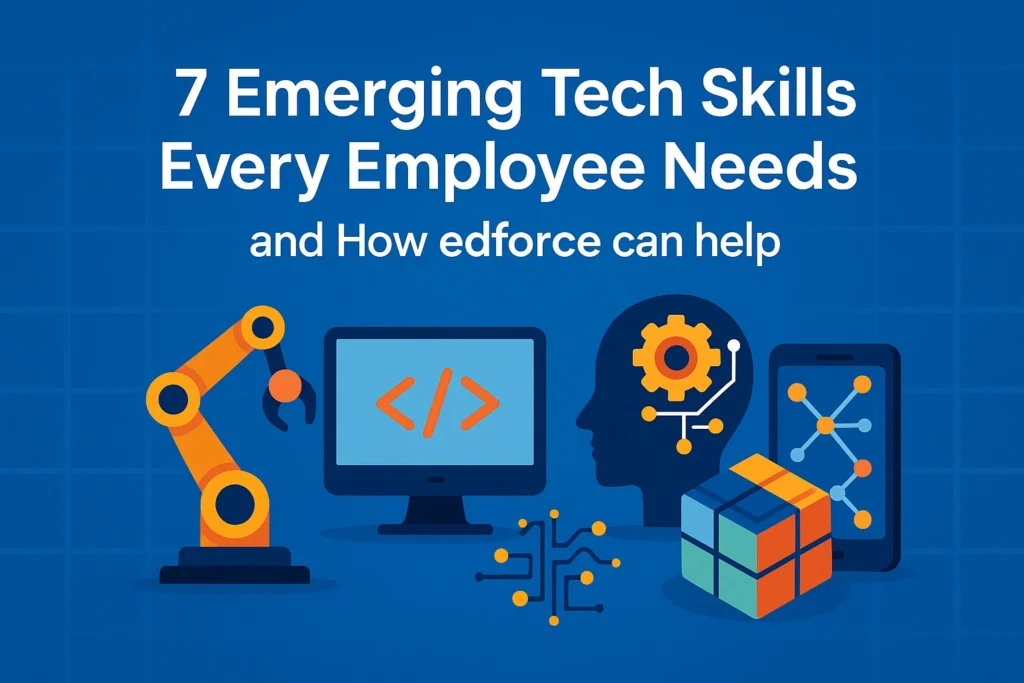
You are not the only one who has felt that technology moves faster than your job description. As workplaces move towards automation, AI, and cloud-based systems, many professionals feel pressured to “keep up”. You don’t have to become an expert in tech overnight. To stay confident, relevant and future-ready, you only need to have the right emerging technology skills. Have you noticed how fast tools are upgraded at work? How often do you see new dashboards, applications or project tracking tools? It is for this reason that upskilling is more important than ever. We’ll look at seven essential tech skills that every employee today needs and how these will impact your career over the next few decades. These tech skills are important today Digitalization is a trend across all industries. McKinsey 2020 states that in the next five years, 70 percent of jobs will require digital competency. Even traditionally non-technical roles now rely on data tools and online collaboration. Some real-world signals Are you looking to secure your future career? These skills should be your top priority. What are the seven emerging tech skills that every employee needs? Here is a table that explains what each skill is and why it’s important for your career. Skill Why it Matters What it helps you do Data Literacy Data is the basis for all business decisions Understanding dashboards will help you identify trends and make better decisions. AI Understanding Nearly every team has AI tools Automate repetitive tasks to boost productivity Cybersecurity Awareness The digital threat is on the rise Avoid costly mistakes by protecting company information Cloud Computing Basics Cloud computing is a growing trend for businesses Collaboration from anywhere allows you to work faster. Digital Project Management Coordination of teams is required for hybrid work Plan, track and deliver on time Low code or No Code Tools Businesses want quicker solutions Create simple apps to automate tasks and build them without any coding Collaboration Tools Mastery Teams are becoming more dispersed Effective communication across locations 1. Data Literacy You don’t need to be an expert in data science. Data literacy is simply the ability to read numbers, understand basic charts, and make decisions based on patterns. A relatable exampleConsider the dashboards that you receive each week. Data literacy allows you to quickly identify what’s improving, what’s slowing down, and where action needs to be taken, without having the need to guess. Gartner estimates that by 2025, 80 percent of all roles will require some sort of data interpretation (Gartner). 2. Understanding Artificial Intelligence AI is everywhere. It already helps you in the background, from email filtering and automated summaries. Have you used an AI tool to write a summary for a brief time or have you asked a chatbot a question? This is AI at work. Understanding the basics will help you to use AI tools with confidence, instead of feeling overwhelmed. Future prediction: Employees who are familiar with AI will be able to complete tasks up to 40% faster in the next three-year period than those who only use manual methods. 3. Cybersecurity Awareness Cybersecurity is more than just a technical issue. A single wrong click could put the entire business at risk. A simple exampleSomeone on your team may receive a suspicious link. Clicking on it without thinking could reveal sensitive data. Every employee can prevent these incidents by educating themselves on cybersecurity. Fact to know: Nearly 88 percent (IBM, 2023) of all data breaches are caused by human error. 4. Cloud Computing Basics Platforms such as AWS, Azure and Google Cloud are used by most organizations. Cloud is simply storing files and systems online, rather than on your computer. Have you ever accessed a file shared by a colleague instantly while working from home? Cloud computing is at work for you. Future insight: Cloud-based roles will grow by 25% in 2027. This includes non-technical functions. 5. Digital Project Management The way teams work has been transformed by hybrid work. The tasks are distributed. Virtual meetings are held. The deadlines are getting tighter. Trello, Jira and Asana are all tools that help teams to stay on track. You can better plan, monitor and deliver your work by learning digital project management. Using digital PM tools, companies report an improvement of up to 35 per cent in delivery speed. 6. Low code or No code tools You can create simple apps, forms and automated workflows using these tools without having to write code. These tools are ideal for professionals who need to solve problems quickly. Mini storyImagine automating a process of approval that takes three days. You could reduce the time to just a few hours with a tool that doesn’t require any code. Future Trend: By 2026, it is expected that low-code tools will handle more than 60 percent of all new applications (Forrester 2030). 7. Collaboration Tools Mastery The virtual world of work is now more prevalent than ever. Teams can communicate using platforms such as Teams, Slack or Zoom. You know the importance of collaboration tools if you’ve ever had trouble finding a document that someone “shared” last week. Teamwork is improved by using the right tools. This reduces delays, and everyone remains on track. How edForce.co can help you develop these skills Most professionals are aware that they need to upgrade their skills, but don’t know where to start. Platforms such as edForce.co can help by providing structured learning paths that are tailored to real industry requirements. They are designed for professionals in the workplace, so lessons are easy to understand, practical and can be immediately applied at work. Learn what today’s companies want, not old-fashioned theories. How to start your tech upskilling journey It is about advancing your career, but it’s also about upgrading your skills. Upskilling is not just about career growth. Key Takeaways
How Upskilling Directly Impacts Business KPI’s
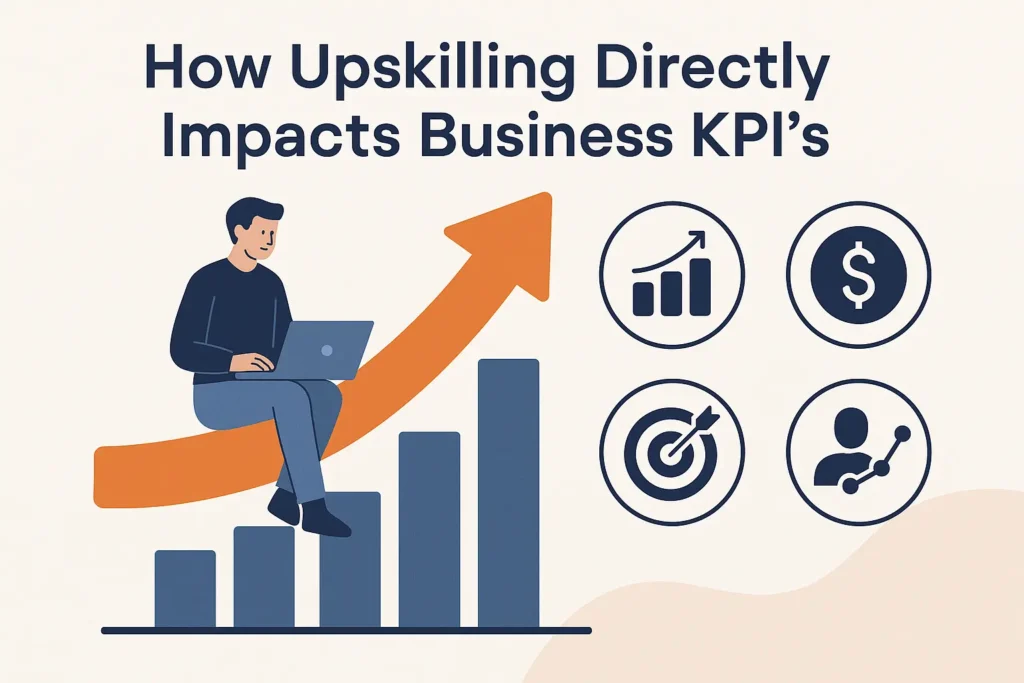
Skills are becoming obsolete faster than ever in today’s fast paced workplace. Employers are realizing they cannot fill skill gaps by hiring only. What’s the solution? Upskilling is the answer. Most companies are now focusing on upskilling their current workforce, rather than relying solely on new talent. Here’s an important question: How exactly does upskilling impact business KPIs and metrics? Take a look. What is upskilling? Upskilling is the process of helping employees acquire new skills, or to improve their existing abilities, so that they can take on new processes, technologies, or jobs. Not only is it about boosting personal career development, but also the efficiency of the business. Why upskilling is important for organizations Are you looking to improve business performance without adding more staff? Workforce Upskilling is a smart move. This ensures that your team remains relevant and reduces the need for external hiring. Your team will become more capable and confident with upskilling. How upskilling directly impacts key business KPIs Business KPI Impact of Upskilling Results Productivity The employees learn to work smarter and faster by using new tools. Efficiency and output increase Customer satisfaction Faster and more accurate service is provided by skilled employees Customer retention and satisfaction is improved. Employee Retention Employees feel valued when they have growth opportunities Reduction in turnover and costs of hiring Innovation Score Teams of trained professionals can provide fresh ideas and solutions Strong competitive advantage Revenue Growth Teams that are efficient close more deals, and reduce operational waste High Profitability Break this down even further. Increased Productivity and Efficiency Employees who learn new methods and tools complete their tasks faster and with less error. This directly reduces delays, and increases project delivery speed. The teams become more confident and proactive in tackling challenges. Increased Customer Satisfaction Are you looking for improved customer loyalty? Focus on upgrading your skills. Skilled employees are able to resolve problems faster, produce quality results and act more professionally. It builds trust with the customer. Strengthening Employee Engagement and Retention Upskilling shows commitment from the employer. Employers who invest in upskilling show their commitment. This reduces frustration caused by repetitive work and limited opportunities for learning. Innovation and Adaptability Increased Organizations face constant change. The upskilling of employees helps them adapt faster to new business models and systems. This will result in a workforce which is creative, flexible and ready for the future. Impact on profit and overall growth Revenue and profitability improve when teams are efficient and customers are happy. Upskilling initially may seem like an expense, but in the long run it is a strategic benefit. What is the best place to start? Working professionals and organisations are now looking for platforms which offer upskilling programmes that are structured and relevant to their jobs. edForce.co, for example, offers enterprise-focused training solutions that are aligned to real workplace applications. How to maximize the benefits of upskilling Upskilling has become a business necessity. It is a necessity for business. It has a direct impact on key performance indicators, and it builds a flexible and resilient workforce. If companies are to remain competitive, they must invest in their employees today. Are you prepared to make that first step?
Why Most Corporate Training Fails and How edForce Solves It
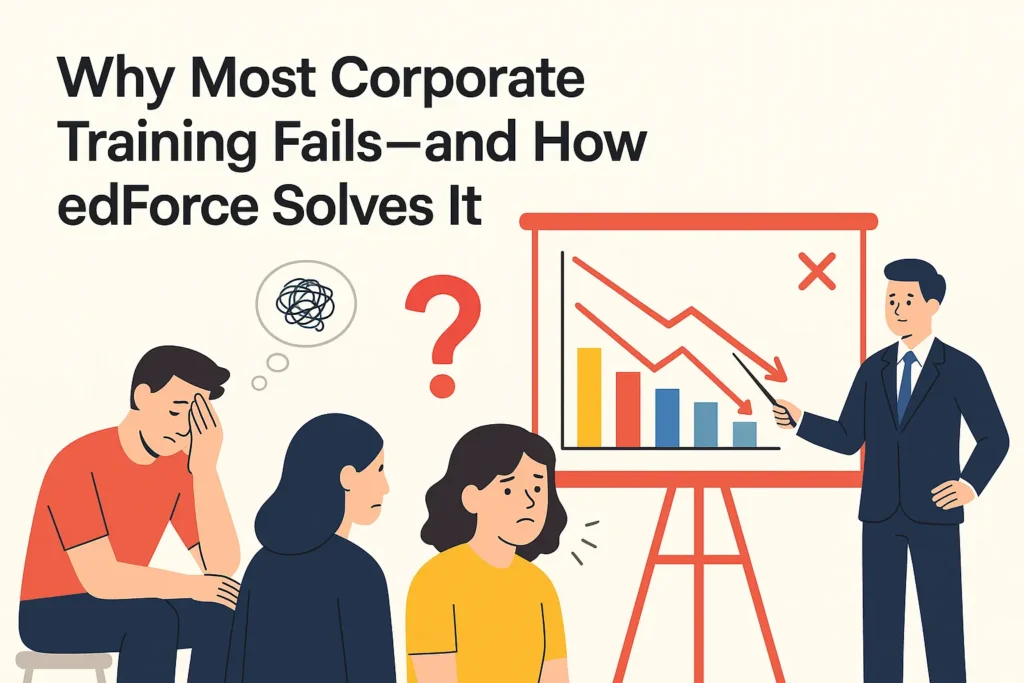
Corporate training is a vital part of ensuring that companies stay competitive and upskill their employees.If we examine closely, however, the majority of corporate training programs do not deliver the results expected. Skills do not improve as expected, employees forget the lessons they have learned, and ROI is often unclear. Why does it happen? How can organisations fix this?Take a look. There are many reasons why corporate training fails. 1. One size fits all approachMany companies still use generic training programs, which are not tailored for different job roles. What may work for a marketer might not be the best thing for someone who works in cybersecurity. Employees lose interest when training is not tailored to their needs. 2. Continuous learning is lackingLearning is not an event that happens once. Most companies still treat training as a once-a-year activity or merely a one week workshop. Real retention is affected by a lack of follow-up. Employees forget what they learned today. 3. No connection to real-world WorkThe training will become theoretical if learners are unable to apply it directly to their everyday tasks. Employees must be able to relate to real-life scenarios, use cases and practical examples. 4. Limited engagementCorporate training can often feel like a lecture. Less interaction is present and there’s more passive listening. Unengaging sessions can be mentally draining for professionals who already have busy schedules. 5. Measurement of results is not accurateMost companies do not track the impact of training on performance. It is difficult to know what works without data. In the end, programs of training continue to be implemented without any improvement. edForce Solves These Challenges edForce’s approach to corporate training is different, with a focus on outcomes, individualization and continuous engagement. edForce offers solutions that are: Are you worried about the low impact of training on your team? edforce.co is a leader in this area because it ensures that learning transforms performance. Why working professionals prefer edForce Do you want training that actually works? Most organizations don’t need more training. Most organizations need better-designed, more effective training.Relevant, practical, trackable and engaging training. edForce is a company that helps businesses upgrade their workforce capability in a way which has measurable impacts.Learning stick is easier with this tool. How to improve corporate training? Before beginning any training, define clear learning objectives. When learning is relevant, meaningful, and engaging, it becomes more meaningful.Edforce’s corporate training aligns with business goals, so it’s worth looking into if you want to get the most out of your training.
Top Tech Skills Every Employee Should Learn in 2026

Technology is not limited to the IT team in today’s fast-paced professional world. Each employee from marketing, finance, HR or operations interacts daily with digital tools. Employers prefer to hire individuals who are able to adapt quickly and understand technology. Hey, do you plan to advance in your career? Let’s take a look at what top tech skills to learn by 2026 in order to remain relevant and future-ready. Why learning tech skills is important in 2026 The workplace is increasingly digital. Businesses are automating their processes, converting to cloud-based software, utilizing AI in decision-making and enhancing data security. Updating your tech skills will give you better opportunities, more confidence, and faster growth at work. It’s not just about learning how to code. This is about being digitally intelligent and efficient. Top tech skills to learn in 2026 Skill Why it Matters Who should learn it? Tool / Platform to Start Artificial Intelligence & Automation Tool AI increases productivity and reduces repetitive work. Anyone who works with data, workflows or documentation. ChatGPT, Zapier, Notion AI Data Literacy & Basic Analytics Cybersecurity Awareness Data-driven decisions are more accurate than guesswork. Cyber threats are on the rise and every employee needs to be aware of how to protect their data. HR, Marketing, Finance, Sales, Operations professionals. All employees, but especially remote workers. Excel, Power BI and Google Analytics Google Cybersecurity Courses and Cisco Cybersecurity Basics Cloud Productivity Tools Cloud platforms are used by most organizations. They improve coordination. Teams that handle files, collaborate, and report. Google Workspace Microsoft 365 Slack Project Management Tools Improves team coordination and helps complete tasks quicker. Junior staff and freelancers. Trello, Asana, Monday.com Digital Communication & Collaboration Skills Strong communication is required for remote and hybrid work. Roles that are customer-facing or team-based. Zoom, Teams and Loom Here are a few key skills to break down 1. Artificial Intelligence (AI) Understanding AI isn’t only for technologists. Basic knowledge of AI can improve productivity. AI tools can automate tasks such as summarizing documents, writing reports and planning schedules. 2. Data Literacy Do you want to make decisions with clarity? Data literacy allows you to understand trends, analyze reports and present insights in a simple way. You will automatically be more valuable if you are able to read charts and understand numbers. 3. Cybersecurity Basics Common threats include phishing emails, weak passwords and unprotected Wi-Fi. Small mistakes can result in big losses for an organization. It is essential to know how to verify and secure sources, as well as secure accounts. Where can you learn these skills? Many online platforms offer structured learning. One of these platforms is edforce.co. It focuses on upskilling working professionals with industry-led, practical training. Bonus: Quick Learning Tips Start your learning journey with ease: Conclusion In 2026, the workplace will reward those who are tech-savvy, adaptable and comfortable using digital tools. To start, you don’t have to be exceptional. You just need to be willing to learn and remain consistent. Are you ready to make a big step in your career? Start now. Start today. We’ll look at a goal that you can achieve today to move forward towards a more intelligent professional future.