


Cloud vs AI Certifications: Which Has Better Career Growth?
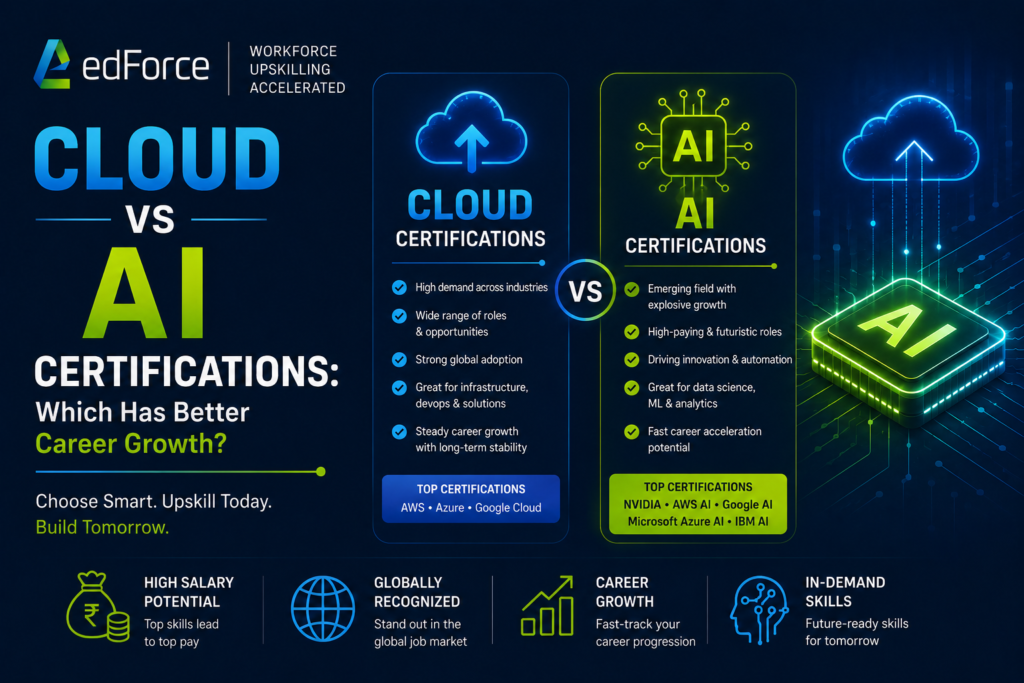
A few years back, selecting a technology certificate was relatively easy. You pursued AWS certifications, Azure certifications, and Google Cloud certificates if you were interested in working with cloud computing. You could also follow security-related learning paths if you are interested in cybersecurity. Software developers spent their time learning programming languages and frameworks. The decision today isn’t so simple. Artificial Intelligence is now a part of nearly every technology discussion. AI Engineers are being hired faster than ever by companies. Cloud computing is still the backbone of digital transformation and continues to power almost all modern applications. Many professionals are left with a question. Should you invest in AI or Cloud certifications when it comes to AI? There is no universal winner. Your current experience, your career goals and what you like to do will determine which is the best choice. The future belongs to those who can combine both. Why? Cloud Computing isn’t going anywhere People often think that older technology will lose value when a newer technology is popularized. Cloud computing has not been a failure. Cloud platforms have become even more popular since AI. Infrastructure is a necessity for every modern AI application. Models require computing power, storage and networking, as well as security, monitoring and deployment environments. Cloud services are the backbone for enterprise AI, whether an organization uses AWS or Microsoft Azure. Cloud professionals are in high demand. Cloud infrastructure is a key component of almost all digital businesses today. As a result, organizations continue to hire Cloud Engineers and Solutions Architects. They also continue to hire DevOps Engineers. AI does not replace cloud careers. It increases their importance. Why AI Certifications are Growing so Quickly AI offers new opportunities and AI Certifiations for careers, even though cloud computing is still essential. Businesses no longer experiment with AI. Businesses are now integrating AI into their customer service, software, marketing, healthcare and banking systems, as well as internal operations. As adoption increases, companies need professionals that understand: Generative AI Large Language Models Prompt Engineering Agentic AI AI deployment Retrieval – Enhanced Generation (RAG). AI Governance AI certifications are gaining in popularity because of this demand. One thing, however, is important to remember. AI is changing at an incredible rate. Every month, new models, frameworks, and tools are improved. Professionals who are constantly learning will always be at an advantage over professionals who only rely on one certification. Cloud computing and AI careers: The biggest differences The Cloud computing and AI can solve a variety of business problems. Cloud professionals create and maintain the infrastructure on which businesses rely every day. AI professionals are focused on developing intelligent applications, automating work flows, and helping companies use data better. This is a simple way of thinking about it. Clouds create the environment. AI is the intelligence. Both are needed by modern enterprises. AI applications are not scaleable without cloud infrastructure. Cloud platforms are powerful without AI but lack intelligent business capabilities. Many organizations hire professionals who are familiar with how these technologies interact rather than those who only understand them separately. What employers are looking for today Hiring for enterprise jobs is undergoing a significant shift. Several years ago, many companies hired specialists to work on specific technologies. Today, hiring managers prefer to hire professionals who have complementary skills. As an example: The Cloud Engineer with AI knowledge often stands out over someone who only has cloud knowledge. A AI Engineer with AWS or Azure knowledge can contribute to production deployments faster. DevOps professionals who are familiar with MLOps can be very valuable as they can help support the AI lifecycle. The traditional roles of technology are becoming increasingly blurred. This trend is expected to continue in the coming years. What certifications should you consider? It depends on your current location. Cloud certifications are a great way to start your career in technology. They teach you about infrastructure, networking and identity management. Popular choices include AWS Certified Solutions Architect Microsoft Azure Administrator Google Associate Cloud Engineer AI certifications are useful if you have experience in cloud computing or software development. There are many professionals who have recently explored certifications. NVIDIA AI Microsoft Azure AI AWS AI Google Machine Learning Generative AI Agentic AI These certifications do not replace cloud knowledge; they build upon it. Salary shouldn’t be the only decision Many professionals are on the lookout for the best-paying certification. Salary is important, but it shouldn’t drive your decision. Careers in technology are developed over many years. Cloud architecture is more likely for someone to develop expertise than AI, which they choose because it’s more popular. Professionals who are genuinely interested in AI innovations will also be more motivated to keep up with the changes as this field evolves. For long-term career advancement, it is best to develop deep expertise in a field you are passionate about and then expand into related technologies. The future belongs to hybrid professionals A prediction is becoming more and more realistic. In the next five to ten years, it is possible that the difference between Cloud Engineers (cloud engineers) and AI Engineers will be much smaller. Cloud infrastructure is already a major part of enterprise AI. AI services are being added to cloud platforms at a rapid pace. Organisations are looking for employees who have the skills to deploy AI applications, manage resources in the cloud, optimize infrastructure and understand business workflows. Companies are now valuing professionals who can combine multiple disciplines instead of hiring specialists for each technology. It’s a great opportunity. Many professionals could benefit from gaining expertise in both cloud computing and artificial intelligence. How to Create a Smart Learning Map Don’t consider certifications as isolated accomplishments if you are unsure of where to start. Consider them as building materials. As an example: Learn the basics of cloud computing. Learn Linux and network. DevOps is a concept that you should understand. Next, move on to AI, machine-learning, and Agentic AI. This sequence provides a solid foundation, because AI applications
Why Every Cloud Engineer Needs AI Skills in 2026
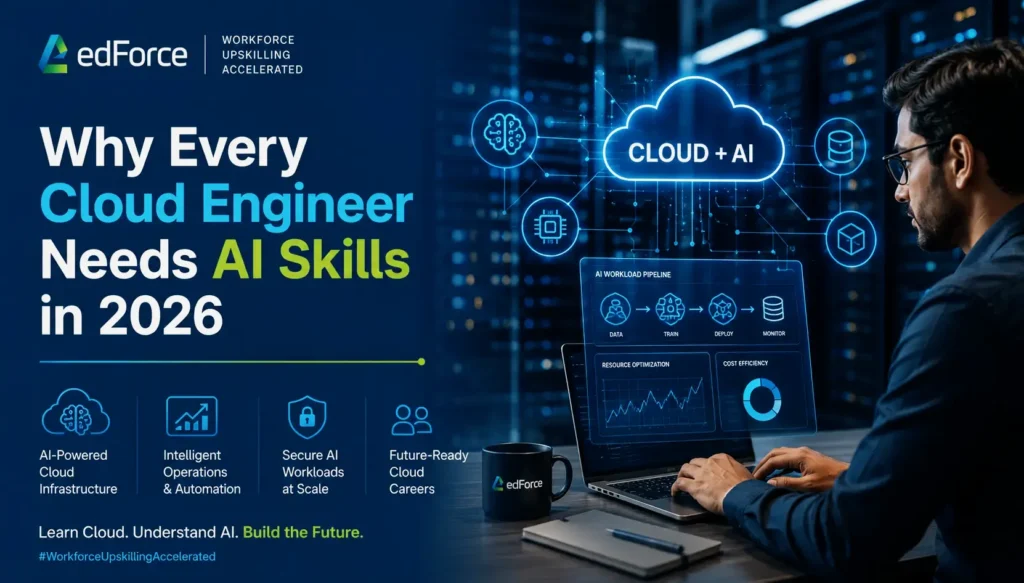
A couple of years ago, becoming a cloud engineer meant understanding platforms like AWS, Azure, or Google Cloud and learning how to deploy, manage, and scale infrastructure. Those skills alone could create significant career opportunities. The situation in 2026 looks very different. Cloud infrastructure is still vital. However, employers are increasingly looking for professionals who can combine cloud expertise with AI capabilities. The reason is simple. Modern companies aren’t using cloud services only to host applications. They use cloud computing to run AI workloads, process massive amounts of data, automate operations, and support intelligent business systems. As a result, the role of the cloud engineer is gradually evolving. Many professionals still view AI and cloud computing as separate career paths. Enterprises do not. For many organizations, the cloud engineer of the future is someone who understands both. The Cloud Industry Is Entering a New Phase The initial phase of cloud adoption was focused on migration. Companies moved databases, applications, and infrastructure from on-premises environments to cloud platforms. The second phase focused on optimization. Businesses wanted scalable systems, better performance, and reduced infrastructure costs. The phase we are entering now is different. Cloud Is Becoming the Foundation for AI Organizations are increasingly asking: “How can we use cloud environments to support AI-driven operations?” This question is changing hiring priorities. Cloud engineers are now working alongside: AI teams Machine Learning Engineers Data scientists Automation specialists Platform engineering teams Cloud computing has become the foundation for enterprise AI initiatives. This is why AI expertise is becoming a valuable advantage for cloud professionals. Infrastructure Is No Longer Just Infrastructure One of the most interesting shifts happening across enterprises is that infrastructure teams are becoming more involved in business innovation. Five years ago, cloud engineers spent most of their time managing deployments, resources, networking, and security. How Cloud Teams Are Evolving Today, cloud teams are increasingly involved in: AI model deployment GPU infrastructure planning AI workload optimization Data pipeline support Intelligent automation projects The conversation has moved beyond simply keeping systems operational. Businesses need cloud engineers who understand how modern AI systems function within cloud environments. That does not mean every cloud engineer must become a data scientist. However, it does mean understanding how AI workloads influence infrastructure decisions. The Skill Gap Companies Are Starting to Notice Many organizations have invested heavily in AI tools during the past two years. What they are discovering is that AI projects often move slower than expected because workforce capabilities have not grown at the same pace as technology investments. The Challenge Many Enterprises Face A common situation looks like this: The company has cloud engineers. The company has AI initiatives. Very few people understand both. This creates communication gaps between teams and slows implementation. Increasingly, employers are searching for professionals who can bridge that gap. These individuals are valuable because they understand infrastructure requirements while also understanding the goals AI teams need to achieve. AI Is Changing Daily Cloud Operations Another reason AI skills are becoming important is that AI is beginning to influence day-to-day cloud operations. Many modern cloud environments now include: AI-powered monitoring Automated incident management Predictive resource optimization Intelligent security systems Automated troubleshooting support What Cloud Engineers Need to Understand Cloud engineers do not need to build every AI system themselves. However, they need to understand: How these systems work Where they provide value When human oversight is required How AI impacts operational workflows Professionals who understand this shift tend to adapt faster as organizations modernize infrastructure operations. The Most Valuable Cloud Engineers Are Becoming More Adaptable One pattern becoming increasingly clear is that companies are valuing adaptability alongside specialization. Technology evolves too quickly for static skill sets. Cloud engineers experiencing the strongest career growth are often those who continuously expand their expertise into adjacent fields. Why AI Is Becoming a Core Skill AI is rapidly becoming one of the most important complementary skills. Not because AI will replace cloud engineering. But because AI is becoming a core part of the cloud environments cloud engineers support every day. Professionals who understand both infrastructure and AI workflows can contribute to more projects than those focused on only one area. Why AI Skills Matter Even If You Never Build Models This is where many professionals become confused. They assume AI skills mean learning advanced mathematics, neural network architectures, or machine learning research. For most cloud engineers, that is not the primary goal. Practical AI Knowledge for Cloud Engineers The value comes from understanding: AI infrastructure requirements Model deployment environments GPU-based computing AI security considerations Cloud-native AI services Enterprise AI workflows In many organizations, these practical skills are becoming more valuable than building AI models from scratch. Professionals need to support AI adoption in practical business environments, not only academic ones. What Enterprises Are Looking For in 2026 Hiring conversations are changing. Companies are increasingly attracted to cloud engineers who understand how AI integrates into enterprise operations. Skills Employers Want Organizations are looking for professionals who can: Support AI deployment projects Manage modern cloud infrastructure Understand AI workloads Collaborate across technical teams Adapt to emerging technologies The market does not always require AI researchers. It increasingly requires cloud professionals who can work effectively in AI-powered environments. The Future Cloud Engineer Will Work Alongside AI One prediction that is becoming increasingly likely is that cloud engineering roles will continue shifting toward AI-powered operations and automated platform management. The job itself is not disappearing. The responsibility is expanding. Managing Intelligent Systems Future cloud engineers may spend less time manually managing infrastructure and more time supervising intelligent systems that automate portions of the work. Professionals who prepare for this transition early will likely be better positioned as enterprise technology continues to evolve. Why Training Is Becoming More Important Many organizations now recognize that hiring AI-ready cloud professionals can be difficult. This is one reason businesses are investing more in workforce training programs that combine cloud and AI skills. Building AI-Ready Cloud Teams At edForce.co, cloud and AI training programs focus