

What Actually Makes Someone “Job-Ready” in 2026
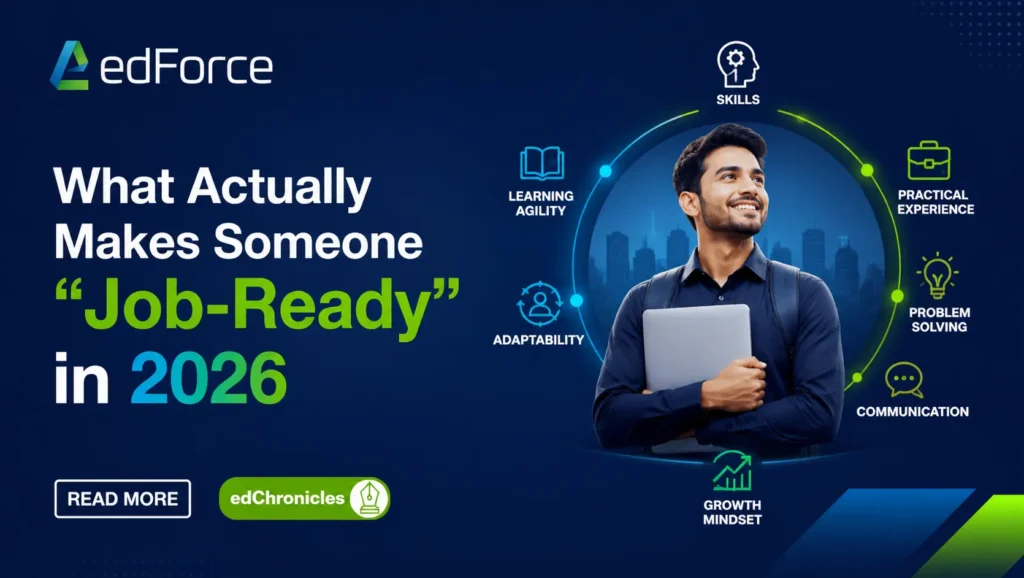
The concept that one should be “job-ready” has changed more in the last couple of years than during the previous decade. In the past, an education, a basic understanding of technology and the desire to learn were usually enough to be able to work. In 2026, the expectation has changed dramatically. Employers aren’t employing only for the future potential. They are now hiring for immediate contributions, which means an employee who is job-ready who can take on an existing job and begin generating value in a short amount of time. This isn’t an accident. It’s a result of the speed at which companies are operating in the present. Teams are not able to afford lengthy training curves and executives are unable to be able to spend months bridging the gap between their knowledge and the execution. In the end, job-readiness has evolved from a concept based on qualifications to becoming an actuality based on capabilities. Job-Ready Is About Application, Not Just Knowledge One of the biggest problems that organizations find is the distinction between knowing and implementing. Many applicants have solid knowledge of the theory. They are able to explain concepts clearly as well as discuss frameworks, and even excel in tests that are structured. However, when they are put in real-world situations, their capability to apply the knowledge can be inconsistent. In 2026, the only thing that truly defines job-readiness is to use knowledge and apply it in real-world situations. This means solving real-world problems, taking decisions using limited information, and adjusting knowledge to meet the needs of business. Businesses value people who apply their knowledge to action without needing constant supervision. Understanding Context Is What Makes Skills Useful The skills alone will not suffice If they’re not used in the proper context. Modern jobs are based on complex systems that include teams and tools, timelines, and business goals. A professional who is job-ready understands the way their work is connected to bigger outcomes. These professionals are cognizant of their priorities as well as constraints and expectations and are able to make more informed choices. Without this understanding of context Even technically proficient individuals may be unable to comprehend the context. They might know what they should do, but they don’t know how or why they should perform it. This is the reason why companies increasingly seek out professionals who are able to combine technical skills with a business-minded perspective. Adaptability Has Become a Core Requirement The rapid pace of modernization in the workplace has made it essential to be flexible. Technology evolves, processes shift and roles grow more quickly than they ever have before. An employee-ready professional in 2026 is not someone who has all the answers but rather someone who is able to adapt quickly and learn without a hitch. The ability to adapt shows in how people respond to new problems. Instead of being resistant to changes or waiting for certainty, they are engaged with the change. They try new things, gain feedback, and continue to improve. This is a way to ensure long-term relevance in an ever-changing setting. Communication Directly Impacts Performance Another important aspect of job-readiness is the ability to communicate. In modern workplaces, work rarely happens in isolation. Collaboration among teams is commonplace and the clarity of communication directly impacts outcomes. Professionals who communicate their thoughts clearly and ask the right questions and collaborate with stakeholders, perform better. On the other hand even the most skilled people may have difficulty when they are unable to communicate their ideas or contribute to discussion in a constructive manner. This is the reason why communication is now considered a skill that can be used to perform instead of a mere soft capability. Problem-Solving in Real Work Conditions Problem-solving in real-world situations is quite different from formal learning environments. In real-world situations there is often a lack of information and timelines are a bit rushed and the decisions are based on trade-offs. Professions that are job-ready are able to operate under these conditions. They don’t wait for perfection in their instructions. Instead, they evaluate the situation, make educated decisions and are accountable for results. The ability to manage uncertain waters is highly valued since it shows the ability to take on real-world obligations. The Role of Structured Skill Development One reason that many aren’t job-ready is how learning is organized. A majority of traditional education focuses on the delivery of content rather than capacity building. This results in a gap between the knowledge people have and the skills they are able to accomplish. The organizations are tackling this by implementing skill-based learning methods. Instead of focusing solely on specific topics, they create training programs based on real-world work requirements and quantifiable outcomes. Many companies collaborate with partners such as edforce.co to develop learning environments that replicate real-world scenarios, which ensures that employees acquire useful, practical capabilities. Final Thoughts The year 2026 is when being ready for work is not just about achieving basic requirements. It’s about showing the capability to contribute effectively right from the beginning. This involves using the knowledge gained, analyzing the context, adapting to change by communicating clearly and tackling real-world issues under real-life situations. Professionals need to be not focusing as much on gathering data and more on building capacity. For businesses, it’s about changing how talent is evaluated and created. Because in a highly competitive business environment, the real value of an individual who is job-ready is not in what they know, but rather in how well they utilize it.
How Internal Mobility Reduces Hiring Costs in Large Organizations
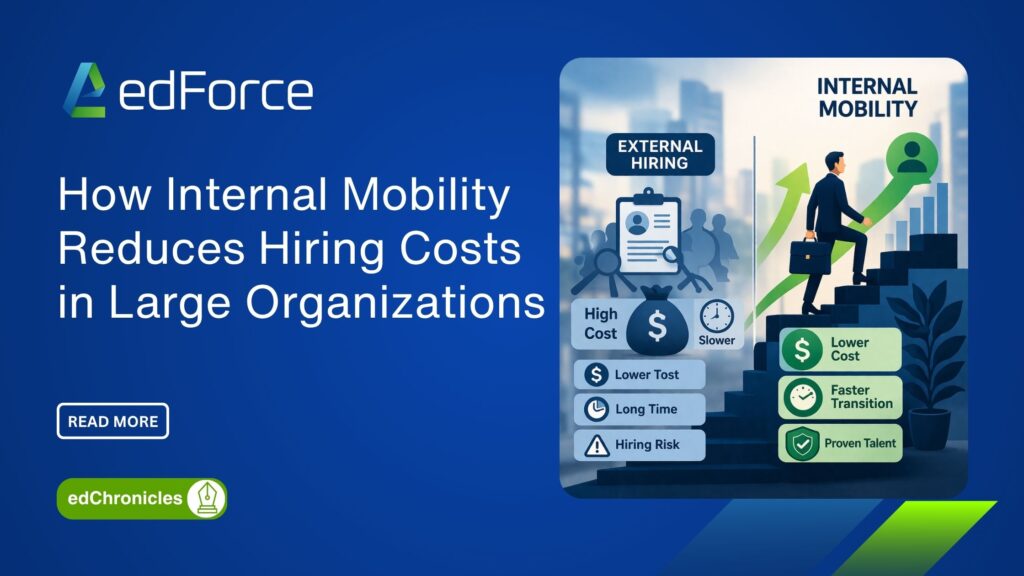
The cost of hiring today is high. Not only in terms of costs for recruitment but also in terms of time and effort as well as lost productivity. For larger organizations the cost of this increase is constant as roles change quicker and competition for talent becomes more intense. Many companies are shifting their focus away from recruiting externally, to constructing internally. The concept of internal mobility has evolved beyond a purely HR initiative. It’s becoming a sensible business plan. External Hiring Comes With Hidden Costs The majority of companies believe that hiring costs begins with recruiting. In reality, the biggest cost of hiring comes after the hiring process. New employees need time to learn about the systems, teams and the culture of the company. It is not an instantaneous process to increase productivity. There is always the risk of a mismatch that could cause early exits or frequent hiring. On the contrary, employees within the organization already know how the company operates. They are more flexible and begin contributing more quickly. This is a huge time saver and money. Internal Mobility Fills Roles Faster When a job is open and work is slow. Teams feel pressure and deadlines become more difficult. The process of hiring externally can last for weeks, or even months. Internal mobility accelerates this process. Organisations can place the best people into the roles they need more quickly, particularly when they already have similar capabilities. By enhancing their skills employees are able to transition seamlessly. This can reduce the time spent in downtime and keep operational processes running smoothly. Upskilling Costs Less Than Hiring Finding a new employee to hire involves several steps. Finding, interviews onboarding, training, and so on. All of it adds to. The process of retraining an employee in place is typically more affordable. They already know the business. They need only to understand what’s new in the position. A lot of companies now invest in structured learning programs that assist in this transition. Some collaborate with partners such as edforce.co to develop skill-based development plans to prepare employees to move internally. This method reduces the need to hire and creates long-term capabilities. Internal Growth Improves Retention Employees quit because they don’t experience the growth they would like to see. If organizations provide clear opportunities within the company, employees are more likely to remain. They feel appreciated and can see potential within the organization. Better retention means fewer resignations. Resignations that are less frequent mean less cost to hire. It’s a simple, but effective cycle. Better Use of Existing Talent Large companies typically have more talent than they think. The issue is gaining visibility. If companies can track their skills correctly they can match their employees to roles that are more effective. This means that they do not have to look for all the requirements. Internal mobility is most effective when is accompanied by clear mapping of skills and workforce plans. Stronger Teams and Faster Performance People who advance within the company bring knowledge and stability. They know what to expect. They are aware of how teams work. This helps them be more effective in their new positions than those hired from outside who are trying to adjust. As time passes, this creates stronger teams as well as a more coordinated workplace culture. Final Thoughts It is always important to hire but it shouldn’t be the sole solution. Internal mobility can be a more effective and more sustainable method of working. It lowers the cost of hiring and improves retention. It also assists organizations to move faster. In today’s competitive business world the most significant benefit is not in hiring new talent. It’s using existing talent more effectively and assisting it to develop.