

Achieve Success through Live Instructor-Led Training with edForce

In today’s rapidly evolving world, the demand for highly skilled professionals is higher than ever. As technology advances and industries adapt, the need for ongoing professional development has become essential for both individuals and organizations. To remain competitive and relevant, continuous upskilling and reskilling are crucial steps. One of the most effective ways to achieve this is through live instructor-led training (ILT), where participants engage in real-time learning guided by experienced trainers. Unlike pre-recorded courses, live training enables dynamic interaction, personalized feedback, and the opportunity to ask questions on the spot—qualities that enrich the learning experience and make it more impactful. edForce, a leading provider of live training solutions, has emerged as a game-changer in the upskilling and reskilling space. With a wide range of tailored programs, edForce combines the structured benefits of traditional classroom teaching with the convenience and flexibility of online learning. By delivering a highly engaging, interactive learning environment, edForce ensures that professionals gain the practical skills needed to excel in their careers. Through its innovative ILT approach, edForce not only enhances knowledge but also empowers learners to adapt to the ever-changing demands of the modern workforce, setting them up for lasting success. What is Live Instructor-Led Training? Live instructor-led training is a teaching method where a qualified instructor delivers training in real-time, either online or in a physical classroom. Unlike pre-recorded video lectures, live ILT sessions allow for interactive communication between instructors and learners. This interactivity ensures that participants can ask questions, seek clarifications, and engage in discussions, leading to a deeper understanding of the subject matter. Benefits of Live Instructor-Led Training 1. Real-Time Interaction and Immediate Feedback One of the most significant advantages of live ILT is the ability to interact with instructors and peers in real-time. This interaction fosters a collaborative learning environment where participants can ask questions, share insights, and get immediate feedback. The opportunity to clarify doubts on the spot ensures that learners do not carry misconceptions forward, resulting in a more effective learning experience. 2. Personalized Learning Experience Live ILT sessions can be tailored to meet the specific needs of individual learners or organizations. Instructors can modify the course content based on the learners’ existing knowledge levels and learning pace. edForce takes this personalization to the next level by assessing the learning needs of participants and customizing the training program accordingly. This approach ensures that the training is relevant, engaging, and aligned with the learners’ career goals. 3. Structured Learning Environment Unlike self-paced online courses, live ILT provides a structured learning environment that promotes discipline and accountability. Scheduled classes and set timelines help learners stay focused and committed to their learning journey. With edForce, participants can benefit from a well-organized curriculum that covers all essential topics comprehensively, ensuring that no critical aspect is overlooked. 4. Enhanced Motivation and Engagement Live ILT fosters a sense of community among learners. Knowing that there are other participants who share the same learning goals creates a motivating environment. Group discussions, collaborative projects, and peer interactions enhance engagement and make learning a more enjoyable experience. edForce’s live training sessions are designed to be interactive and engaging, keeping participants motivated throughout the course. 5. Access to Expert Instructors One of the key benefits of live ILT is the opportunity to learn from subject matter experts. These instructors bring years of industry experience and expertise to the classroom, providing learners with valuable insights and practical knowledge. edForce ensures that all its instructors are highly qualified and experienced professionals who are passionate about teaching and committed to helping learners succeed. 6. Flexibility and Convenience While live ILT offers the benefits of traditional classroom learning, it also provides the flexibility of online education. Participants can attend training sessions from anywhere, eliminating the need for travel and accommodation expenses. edForce’s live training programs are accessible through various devices, making it convenient for learners to join classes at a time and place that suits them best. How edForce Stands Out in Live Instructor-Led Training 1. Comprehensive Course Offerings edForce offers a wide range of courses across various domains, including IT, project management, leadership, and soft skills. Whether you are looking to enhance your technical skills or develop your leadership capabilities, edForce has a course that meets your needs. Each course is carefully designed to provide practical knowledge and hands-on experience, ensuring that learners are well-prepared for real-world challenges. 2. Customized Corporate Training Solutions In addition to individual training, edForce provides customized training solutions for organizations. These corporate training programs are tailored to address the specific needs and objectives of the company. edForce works closely with organizations to understand their goals and develop training modules that align with their business strategies. This tailored approach ensures that employees gain the skills required to drive organizational success. 3. Blended Learning Approach While live ILT is at the core of edForce’s training methodology, the company also incorporates other learning formats to enhance the overall learning experience. This blended learning approach combines live sessions with self-paced modules, interactive quizzes, and hands-on projects. The integration of different learning methods ensures that participants gain a holistic understanding of the subject matter and can apply their knowledge effectively. 4. State-of-the-Art Learning Platform edForce’s live training sessions are conducted through a state-of-the-art online learning platform that provides a seamless and user-friendly experience. The platform is equipped with features such as virtual whiteboards, chat rooms, and breakout sessions, allowing for interactive and collaborative learning. Participants can access course materials, assignments, and recorded sessions at any time, making it easy to review and reinforce their learning. 5. Continuous Support and Mentorship Learning does not end when the training session is over. edForce provides continuous support and mentorship to its learners, helping them apply their new skills in their professional roles. Instructors and mentors are available to provide guidance, answer questions, and offer feedback even after the course has been completed. This ongoing support ensures that learners feel confident and capable of achieving their career goals. Real-World Success Stories Many individuals and organizations
Achieve Seamless Onboarding with edForce Induction Training

Employee onboarding is a crucial phase that greatly influences new hires’ initial experience and their long-term performance within an organization. A well-structured onboarding process is more than just an introduction; it’s a strategic step that sets the tone for employees to feel welcomed, informed, and prepared. Effective onboarding can significantly boost engagement and retention, helping new employees become productive members of the team more swiftly and with greater confidence. However, many organizations struggle to deliver a seamless onboarding experience that combines consistency, engagement, and adaptability. Amid a wide range of onboarding solutions, edForce Induction Training stands out as a comprehensive platform tailored to streamline and elevate the onboarding journey. edForce offers an innovative approach that covers everything from company culture and role expectations to essential skills and compliance, ensuring that every new hire gains a thorough understanding of their position within the organization. Understanding the Importance of Effective Onboarding Onboarding is more than just an introduction to the company; it’s a strategic process that ensures new employees are well-integrated into the organization’s culture and workflow. Effective onboarding helps reduce turnover rates, boosts employee engagement, and accelerates the time-to-productivity of new hires. Companies that invest in robust onboarding programs are more likely to retain their talent and foster a positive work environment. Challenges in Traditional Onboarding Traditional onboarding methods often involve extensive paperwork, manual processes, and face-to-face sessions that can be time-consuming and inefficient. These methods may lead to information overload, inconsistent messaging, and a lack of personalized support for new hires. As a result, employees may feel overwhelmed and disconnected, affecting their overall performance and satisfaction. The Role of Technology in Modern Onboarding With the advent of technology, onboarding processes have evolved to become more efficient, engaging, and scalable. Digital onboarding platforms like edForce leverage technology to automate administrative tasks, deliver consistent training, and provide personalized experiences for new hires. This not only saves time but also ensures a more engaging and supportive onboarding journey. Introduction to edForce Induction Training Induction Training is a state-of-the-art onboarding solution designed to simplify and enhance the onboarding process. It offers a comprehensive suite of tools and features that cater to the diverse needs of new employees and the organization. From pre-boarding activities to continuous support, edForce covers every aspect of the onboarding journey. Key Features of edForce Induction Training 1. Automated Administrative Tasks One of the standout features of edForce is its ability to automate administrative tasks such as document management, form filling, and compliance tracking. This automation reduces the administrative burden on HR teams and ensures that new hires have a smooth and hassle-free onboarding experience. 2. Personalized Onboarding Pathways edForce allows organizations to create personalized onboarding pathways tailored to the specific roles and needs of new hires. This ensures that employees receive relevant information and training, making their transition into the company more efficient and effective. 3. Interactive Training Modules The platform offers interactive training modules that engage new hires and facilitate better learning. These modules can include videos, quizzes, and simulations that help employees grasp important concepts and processes quickly. 4. Continuous Support and Feedback edForce provides continuous support through various channels such as chatbots, FAQs, and dedicated support teams. This ensures that new hires always have access to the information and assistance they need. Additionally, the platform facilitates feedback collection to continuously improve the onboarding process. 5. Analytics and Reporting With edForce, organizations can track the progress of their onboarding programs through detailed analytics and reporting. This data-driven approach helps identify areas of improvement and measure the effectiveness of the onboarding process. Benefits of Using edForce for Onboarding Enhanced Employee Experience By leveraging edForce Induction Training, organizations can create a positive and engaging onboarding experience that leaves a lasting impression on new hires. This fosters a sense of belonging and motivation from the very beginning. Reduced Time-to-Productivity With personalized training pathways and efficient administrative processes, new hires can become productive members of the team much faster. This reduces the time and resources spent on getting employees up to speed. Improved Retention Rates A well-structured onboarding process significantly impacts employee retention. By providing a seamless and supportive onboarding experience, organizations can reduce turnover rates and retain top talent. Consistency and Compliance edForce ensures that all new hires receive consistent information and training, reducing the risk of errors and ensuring compliance with company policies and regulations. Scalability Whether an organization is onboarding a handful of employees or a large group, edForce can scale to meet the needs of the organization. This makes it a versatile solution for companies of all sizes. Implementing edForce Induction Training Assessing Your Onboarding Needs Before implementing edForce, it’s essential to assess your organization’s onboarding needs and goals. Identify the key areas where the current onboarding process can be improved and set clear objectives for the new system. Customizing Onboarding Pathways Work with the edForce team to customize onboarding pathways that align with your organization’s roles, culture, and values. This ensures that new hires receive relevant and engaging content that facilitates their integration into the company. Training HR Teams Provide training for your HR teams to ensure they are well-versed in using the edForce platform. This includes understanding how to manage administrative tasks, track progress, and provide support to new hires. Communicating the Change Clearly communicate the transition to edForce Induction Training to all stakeholders, including current employees and new hires. Highlight the benefits and address any concerns to ensure a smooth transition. Monitoring and Improving Continuously monitor the onboarding process using edForce’s analytics and feedback features. Use this data to make informed decisions and continuously improve the onboarding experience. Case Studies: Success Stories with edForce Company A: Accelerating Time-to-Productivity Company A, a leading tech firm, implemented edForce Induction Training to streamline their onboarding process. By automating administrative tasks and providing personalized training modules, they reduced the time-to-productivity for new hires by 30%. This led to increased efficiency and higher employee satisfaction. Company B: Enhancing Employee Engagement Company B, a mid-sized retail company, used edForce to
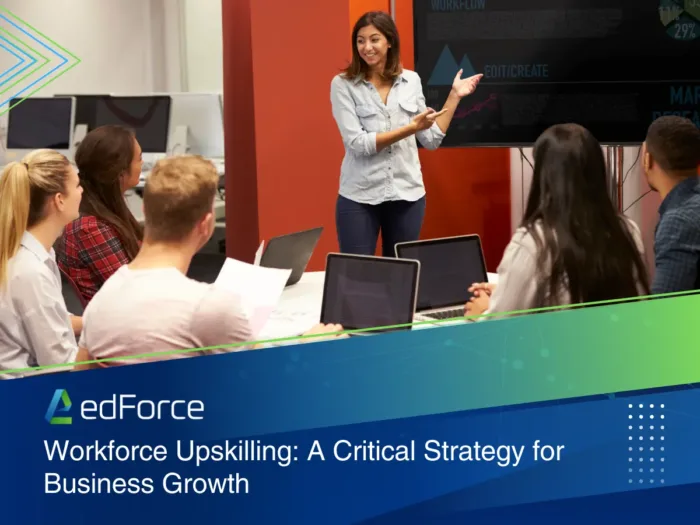
Workforce Upskilling: A Critical Strategy for Business Growth
In today’s fast-paced and rapidly evolving business landscape, workforce upskilling has emerged as a central strategy for companies committed to remaining competitive and driving sustainable growth. As technological advancements, shifting market demands, and the need for specialized skills continue to reshape industries, the importance of investing in employee development has never been more apparent. Businesses are realizing that without continuous skill enhancement, their teams may struggle to meet new challenges or adapt to change, leading to diminished productivity and a weaker competitive edge. Upskilling goes beyond mere skill-building; it fosters a culture of learning, empowers employees, and aligns their growth with organizational goals. Companies that prioritize upskilling not only improve job satisfaction and retention but also gain the agility needed to innovate and respond proactively to industry shifts. This article explores the critical role of workforce upskilling in today’s business environment, highlighting its far-reaching benefits for both employees and organizations. Additionally, we’ll discuss how leading upskilling partners like edForce are enabling businesses to implement effective, tailored training programs that equip their workforce with the skills needed to drive continuous growth and transformation in an increasingly complex world. The Importance of Workforce Upskilling Workforce upskilling refers to the process of equipping employees with new skills or enhancing their existing skills to meet the ever-changing demands of their roles. This approach is not just about training for the sake of it; it’s about strategically aligning employee development with the organization’s goals and the industry’s future needs. In a world where digital transformation is accelerating at an unprecedented pace, companies that fail to upskill their workforce risk falling behind. According to a study by the World Economic Forum, over 50% of all employees will need reskilling by 2025, as the adoption of technology increases and the nature of jobs changes. This highlights the urgency for businesses to proactively invest in upskilling to remain competitive. Benefits of Workforce Upskilling 1. Increased Employee Productivity Upskilling leads to a more competent and confident workforce. Employees who are well-equipped with the latest skills and knowledge are more likely to perform their tasks efficiently and effectively. This, in turn, leads to higher productivity levels, which is crucial for any organization’s success. 2. Enhanced Employee Retention Investing in the professional development of employees not only boosts their skills but also their loyalty to the company. Employees are more likely to stay with an organization that values their growth and provides opportunities for career advancement. This reduces turnover rates and saves the company from the high costs associated with recruiting and training new employees. 3. Improved Innovation A workforce that is continually learning and evolving is better positioned to drive innovation within the organization. Upskilled employees bring fresh ideas and perspectives, enabling the company to innovate and stay ahead of the competition. 4. Better Adaptability to Change In today’s dynamic business environment, the ability to adapt to change is critical. A workforce that is regularly upskilled is more agile and capable of adapting to new technologies, processes, and market shifts. This adaptability is a key factor in maintaining a competitive edge. 5. Attracting Top Talent Organizations that prioritize workforce upskilling are more attractive to top talent. In a competitive job market, potential employees are drawn to companies that offer continuous learning and development opportunities. By building a reputation as a learning-focused organization, companies can attract and retain the best talent in the industry. How edForce is Leading the Workforce Upskilling Revolution As businesses recognize the need for workforce upskilling, many are turning to specialized organizations like edForce to help them achieve their goals. edForce is a leading provider of corporate training solutions, offering a wide range of upskilling programs tailored to the unique needs of businesses across various industries. edForce understands that each organization has its own set of challenges and requirements when it comes to upskilling its workforce. That’s why they offer customized training programs that align with the company’s strategic objectives. Whether it’s enhancing technical skills, developing leadership capabilities, or fostering a culture of continuous learning, edForce provides comprehensive solutions that drive measurable results. One of the key strengths of edForce is its ability to deliver training that is both relevant and engaging. Their programs are designed to be interactive and practical, ensuring that employees can immediately apply what they’ve learned in their day-to-day work. This approach not only enhances the learning experience but also maximizes the return on investment for the organization. Moreover, edForce leverages the latest technology to deliver training in a flexible and accessible manner. With options for online, in-person, and hybrid learning, employees can upskill at their own pace and in a way that fits their schedules. This flexibility is particularly important in today’s remote and hybrid work environments, where traditional training methods may no longer be effective. In addition to providing top-notch training, edForce also offers tools and resources for tracking and measuring the impact of upskilling initiatives. This data-driven approach enables organizations to monitor progress, identify areas for improvement, and ensure that their upskilling efforts are aligned with their business goals. Strategies for Effective Workforce Upskilling To maximize the benefits of workforce upskilling, companies must approach it strategically. Here are some key strategies to consider: 1. Identify Skill Gaps The first step in any upskilling initiative is to identify the skill gaps within the organization. This involves assessing the current skills of employees and comparing them with the skills required to meet future business needs. By identifying these gaps, companies can tailor their training programs to address the specific areas where development is needed. 2. Align Upskilling with Business Goals Upskilling should be aligned with the organization’s strategic objectives. This means that the skills being developed should directly contribute to the company’s goals, whether it’s driving innovation, improving customer service, or expanding into new markets. By aligning upskilling efforts with business goals, companies can ensure that their investment in training delivers tangible results. 3. Leverage Technology Technology plays a crucial role in effective upskilling. Online learning platforms, virtual classrooms, and AI-powered learning tools are
Accelerate Talent Growth with Hire Train Deploy Solutions

Companies must grow their talent to stay ahead in today’s fast-paced world. Hire Train Deploy solutions help by managing talent from start to finish. This is key for growing a strong workforce. Businesses with Hire Train Deploy expertise can change their workforce strategy for growth. They can improve their talent management. This leads to better workforce development and more competition in the market. edForce’s solutions aim to make hiring, training, and deployment smoother for business growth. Understanding the Power of Hire Train Deploy Models Effective talent acquisition, training, and deployment are key in today’s workforce solutions. Adopting a Hire Train Deploy model helps streamline talent management. This leads to better productivity and efficiency. This approach focuses on finding, developing, and using talent for specific business needs. It helps companies stay competitive in a fast-changing market. The success of Hire Train Deploy models comes from their ability to adapt to changing business needs. As workforce solutions evolve, companies must focus on talent acquisition, training, and deployment. This ensures their workforce has the skills needed for growth and success. What Makes Hire Train Deploy Different Hire Train Deploy models offer a unique talent management approach. They emphasize continuous learning and development. Employees get ongoing training and deployment opportunities to learn new skills and stay current with industry trends. This approach boosts employee engagement and retention. It also contributes to the company’s overall growth and success. Key Components of Modern Talent Development Modern talent development includes talent acquisition, training, and deployment, and workforce solutions. Integrating these components helps create a complete talent management strategy. edForce’s Hire Train Deploy solutions focus on these key components of modern talent development. The Evolution of Workforce Solutions The evolution of workforce solutions has made talent acquisition, training, and deployment more important. Businesses must adapt to a rapidly changing market. Adopting a Hire Train Deploy approach ensures the workforce is ready to drive growth and success now and in the future. How edForce Transforms Your Talent Pipeline? edForce’s Hire Train Deploy solutions change the game for talent pipeline management. They help companies manage talent better, from hiring to deployment. This way, businesses can grow and improve a lot. The Hire Train Deploy model is a big win for companies wanting to boost their talent pipeline. It makes finding, training, and using talent faster and cheaper. This leads to better work and lower costs. Working with edForce means getting access to Hire Train Deploy solutions. This can greatly improve your talent pipeline. You’ll see better talent finding, quicker start times, and better workforce transformation. With edForce’s help, your business can reach new heights. Strategic Benefits of Hire Train Deploy Programs Using Hire Train Deploy programs can greatly benefit a company’s bottom line. It helps in finding talent at a lower cost. This way, companies can spend more on other important areas, leading to growth and new ideas. One big plus of Hire Train Deploy programs is how they speed up new employees’ start. They get all the training and support they need right away. This makes them happy and productive, helping the company reach its goals faster. Scalable Workforce Solutions Today’s fast-changing business world needs flexible workforce solutions. Hire Train Deploy programs offer this flexibility. They help companies quickly adapt to new market trends and business needs. This ensures the right people with the right skills are in place when needed. Hire Train Deploy programs are a powerful tool for growth and excellence. They help companies find talent affordably, get new employees up to speed quickly, and adapt to changes. This way, businesses can reach their full efficiency and stay competitive. Building Future-Ready Teams Through Systematic Training edForce’s Hire Train Deploy solutions focus on systematic training. This helps organizations build teams ready for the future. In today’s fast world, being adaptable and innovative is key to success. Systematic training prepares teams with the skills to grow and stay competitive. Systematic training is vital for workforce development. It helps spot skill gaps and create training to fill them. This way, teams can adapt to new needs and grow significantly. edForce’s solutions give organizations the tools to create and use effective training programs. Using edForce’s solutions, organizations can build teams ready to succeed. They focus on training and developing the workforce. This ensures teams are skilled and agile, ready to thrive in today’s fast business world. It helps organizations stay ahead, innovate, and achieve long-term success. Measuring Success in Hire Train Deploy Implementation edForce’s Hire Train Deploy solutions help organizations grow by tracking progress. It’s key to use key performance indicators to see how well the program works. These indicators help find areas to improve and make smart decisions for talent development. Tracking Progress with Key Metrics Return on investment metrics are also important. They show the financial benefits of talent development programs. Success stories highlight the positive effects of Hire Train Deploy on both organizations and individuals. Using Data to Drive Decision-Making Using data from key indicators and success stories helps understand program effectiveness. This approach leads to better decisions and growth. edForce offers tools and expertise for tracking progress and achieving success, making it a great partner for workforce strategy. Partner with edForce to Transform Your Workforce Strategy Working with edForce can unlock your team’s full power. Their Hire Train Deploy solutions make managing talent easier. This means you can hire, train, and deploy staff more efficiently. With edForce’s help, you can grow and stay ahead in the business world. Their approach is designed to meet today’s fast-paced needs. A strong workforce strategy is key to growth. edForce’s solutions help you build teams ready for the future. Your employees will have the skills needed to move your business forward. Implementing edForce’s Hire Train Deploy programs offers many benefits. You’ll save on talent costs and get your new hires up to speed faster. Start transforming your workforce strategy with edForce today. We’ll help you tackle talent management challenges and find new success paths. See your organization flourish with a
Workforce Upskilling: The Key to Sustained Business Growth
In today’s rapidly evolving business landscape, organizations face an ongoing challenge to remain competitive and relevant. The continuous advancement of technology and the shift towards digitalization are reshaping the skills needed to succeed in almost every industry. As a result, companies must adapt to these changes by ensuring that their employees have the up-to-date skills necessary to perform in an increasingly tech-driven world. Workforce upskilling has become one of the most effective ways to address this challenge, allowing organizations to keep their teams equipped with the skills and knowledge required to thrive. Upskilling isn’t just a response to technological changes; it’s a proactive strategy that helps businesses drive sustained growth, maintain a competitive edge, and enhance employee engagement. By investing in the development of their workforce, companies can boost productivity, foster innovation, and improve job satisfaction among employees who feel empowered to take on new challenges. This article explores why workforce upskilling is essential for long-term business success, offering insights into strategies for implementing effective upskilling programs and showcasing how organizations like edForce are at the forefront of helping companies achieve their upskilling objectives. Through these efforts, businesses can future-proof their workforce, positioning themselves for ongoing success in today’s dynamic market. The Importance of Workforce Upskilling The concept of upskilling refers to the process of teaching employees new skills or improving their existing ones to meet the demands of their current roles or prepare them for future responsibilities. Workforce upskilling is not just a buzzword; it’s a necessity in the modern workplace. Here’s why: 1. Adapting to Technological Advancements The pace of technological change has accelerated, with automation, artificial intelligence (AI), and digital tools transforming industries across the board. Employees need to be equipped with the latest skills to effectively use these technologies, ensuring they can contribute to the organization’s growth and success. 2. Closing Skill Gaps Many organizations face significant skill gaps within their workforce. These gaps can hinder productivity, innovation, and overall business performance. Upskilling programs help bridge these gaps, enabling employees to acquire the skills needed to perform their roles more effectively. 3. Enhancing Employee Retention Investing in employee development shows a commitment to their growth and well-being. This can lead to higher job satisfaction, increased loyalty, and reduced turnover rates. Employees are more likely to stay with an organization that values their development and offers opportunities for career advancement. 4. Driving Innovation A skilled workforce is more likely to contribute to innovation within the organization. When employees are equipped with the latest knowledge and skills, they can think creatively, solve problems more effectively, and contribute to the development of new products or services. 5. Improving Organizational Agility In a world where change is constant, organizations must be agile to stay ahead. Workforce upskilling enables employees to adapt quickly to new challenges, roles, or technologies, making the organization more resilient in the face of disruption. Strategies for Effective Workforce Upskilling To successfully implement a workforce upskilling program, organizations need to adopt a strategic approach. Here are some key strategies: 1. Conduct a Skills Assessment Before launching an upskilling initiative, it’s essential to understand the current skill levels within the organization. Conducting a skills assessment helps identify gaps and areas where upskilling is most needed. This assessment can be done through surveys, interviews, or performance evaluations. 2. Align Upskilling with Business Goals Upskilling efforts should be closely aligned with the organization’s strategic objectives. Identify the skills that are critical to achieving these goals and focus your upskilling programs accordingly. This ensures that the training provided is relevant and contributes directly to the organization’s success. 3. Leverage Technology for Learning The rise of digital learning platforms has made it easier than ever to deliver upskilling programs. These platforms offer a range of online courses, webinars, and interactive tools that can be accessed anytime, anywhere. edForce, for example, provides customized learning solutions that cater to the specific needs of businesses, ensuring that employees receive the most relevant and up-to-date training. 4. Create a Culture of Continuous Learning Upskilling should not be a one-time effort but an ongoing process. Encourage a culture of continuous learning within the organization by providing regular training opportunities, promoting knowledge sharing, and recognizing employees who actively pursue skill development. 5. Measure and Monitor Progress To ensure the effectiveness of your upskilling initiatives, it’s crucial to measure and monitor progress. Set clear goals and KPIs for your upskilling programs, and regularly evaluate their impact on employee performance and business outcomes. Adjust the programs as needed to address any gaps or challenges. The Role of edForce in Workforce Upskilling As organizations recognize the importance of upskilling, they are increasingly turning to specialized partners to help them design and implement effective programs. edForce is one such partner, offering a range of services that cater to the unique needs of businesses. edForce provides tailored learning solutions that align with an organization’s strategic objectives. Their approach is data-driven, using skills assessments and analytics to identify gaps and design targeted training programs. edForce’s platform also offers a blend of online and offline learning experiences, ensuring that employees can access training in a way that suits their preferences and schedules. By partnering with edForce, organizations can create a sustainable upskilling strategy that drives business growth and ensures their workforce remains competitive in a rapidly changing world. The Future of Workforce Upskilling As the world of work continues to evolve, the importance of upskilling will only increase. Here are some trends that are likely to shape the future of workforce upskilling: 1. Personalized Learning Experiences Advancements in AI and machine learning are enabling more personalized learning experiences. In the future, upskilling programs will be tailored to the individual needs of employees, taking into account their current skill levels, learning styles, and career goals. 2. Microlearning Microlearning involves breaking down training content into small, digestible modules that can be completed in a short amount of time. This approach is becoming increasingly popular, as it allows employees to fit learning into their busy schedules and retain information more
Workforce Upskilling: What it is and Why it Matters

What is Workforce Upskilling? Workforce upskilling refers to the process of improving the skills and knowledge of current employees in order to meet the changing needs of an organization or industry. This can include training in new technologies, processes, or management practices, as well as professional development opportunities such as leadership programs or advanced education. Upskilling can help employees to advance in their careers and increase their value to the organization, and can also help organizations to stay competitive and adapt to changing market conditions. Upskilling Is Important For Employee For Several Reasons Why is Workforce Upskilling Important For company? It is an essential strategy for companies to remain competitive and meet the ever-changing demands of the market. Upskilling the workforce can bring a wide range of benefits to companies, from increased productivity and quality to better adaptability and cost savings. Strategies that companies can use to Upskill Workforce: There are several ways to Upskill a Workforce in 2023: Traditional classroom training: This involves bringing employees together in a physical location for training sessions led by instructors. This method can be effective for hands-on skills training, but can be costly and time-consuming. Success Rate of Upskill Workforce Some studies have found that traditional classroom training can have a success rate of around 70-80%. Online learning and e-learning courses can have similar success rates, but the effectiveness may depend on the quality of the course design and the level of engagement of the learners. The success rate of upskilling a workforce can vary depending on a number of factors, such as the type of training, the quality of the training, the level of employee engagement, and the methods used to measure success. On-the-job training can be highly effective, as it allows employees to immediately apply new skills and knowledge in their work. Studies have found that on-the-job training can have success rates of 80-90%. Mentoring and coaching can also be highly effective, as it allows employees to learn from experienced and knowledgeable colleagues. The success rate of mentoring and coaching can be as high as 90%. Gamification and virtual reality have also been found to be effective in engaging employees in training and can have success rates of around 80-90%. Overall, the success rate of upskilling a workforce will depend on a variety of factors, including the quality of the training, the level of employee engagement, and the methods used to measure success. To ensure that upskilling efforts are successful, it is important to choose the right mode of training, design training programs that are engaging and interactive, and measure the effectiveness of the training. Cost of Upskill Workforce Program The cost of an upskilling program can vary widely depending on a number of factors, such as the type of training, the size of the workforce, and the resources available. Traditional classroom training can be costly, as it requires instructors, training materials, and a physical location. The cost can also increase if employees need to travel to a training site. Online learning and e-learning courses can be less expensive than traditional classroom training, but the cost can still add up if the company needs to purchase a large number of licenses for employees. On-the-job training can also be cost-effective, as it does not require a dedicated training location or materials. However, it may require additional resources, such as tools or equipment. Mentoring and coaching can also be cost-effective, as it does not require a dedicated training location or materials. Gamification and virtual reality can be relatively expensive as it requires specialized software, hardware and experts. Some companies may choose to invest in expensive, high-quality training programs, while others may opt for more cost-effective solutions. To ensure that an upskilling program is cost-effective, it is important to carefully consider the specific needs of the workforce and to choose training methods that align with the company’s budget and resources. IN general, the cost of an upskilling program will depend on the specific needs of the workforce and the resources available. Recommended Reads
7 Mistakes to Avoid When Hiring a Corporate Trainer

Corporate training plays a pivotal role in enhancing employee performance, fostering innovation, and driving organizational growth. However, finding the right corporate trainer can be a daunting task, fraught with challenges and potential pitfalls. From inadequate qualifications to poor communication skills, there are several mistakes that organizations must avoid to ensure they make the best hiring decisions. In this article, we’ll explore seven common mistakes to steer clear of when hiring a corporate trainer, ensuring that your training initiatives yield maximum benefits for your workforce and your business. 1. Overlooking Experience and Expertise When hiring a corporate trainer, one of the gravest mistakes organizations can make is overlooking the candidate’s experience and expertise in their field. While qualifications are essential, practical experience brings invaluable insights and real-world knowledge to the training process. Look for trainers who have a proven track record of delivering successful training programs relevant to your industry and organizational needs. At edForce, we understand the importance of expertise in corporate training, which is why our platform connects you with experienced trainers who can deliver impactful learning experiences tailored to your requirements. 2. Ignoring Alignment with Organizational Goals Another common mistake is hiring a corporate trainer without ensuring alignment with your organization’s goals and values. A trainer may possess excellent credentials, but if their approach and methodologies do not align with your company culture or strategic objectives, the training may fall short of expectations. Before making a hiring decision, clearly define your training goals and objectives, and seek out trainers who demonstrate a strong understanding of your organization’s mission and vision. At edForce, we facilitate this alignment by matching you with trainers who not only have the right skills but also share your organizational ethos. 3. Failing to Assess Communication Skills Effective communication is the cornerstone of successful training delivery. Unfortunately, many organizations make the mistake of overlooking the importance of assessing a trainer’s communication skills during the hiring process. A trainer may possess deep subject matter expertise, but if they struggle to convey information clearly and engage participants effectively, the training sessions may fail to resonate with learners. Prioritize candidates who demonstrate strong communication skills, including the ability to adapt their communication style to different audiences and facilitate interactive learning experiences. With edForce, you can find trainers who excel in communication, ensuring that your training programs are engaging and impactful. 4. Neglecting to Evaluate Feedback and Reviews In the age of online reviews and testimonials, neglecting to evaluate a trainer’s feedback and reputation can be a costly mistake. Before making a hiring decision, take the time to research the trainer’s past performance, read reviews from previous clients, and seek out references if possible. Pay attention to feedback related to the trainer’s professionalism, effectiveness, and ability to meet client expectations. By leveraging platforms like edForce, which curate feedback and ratings from verified users, you can make informed decisions based on the experiences of others, minimizing the risk of hiring the wrong trainer. 5. Underestimating the Importance of Customization Every organization is unique, with its own set of challenges, goals, and learning needs. Yet, one common mistake when hiring a corporate trainer is underestimating the importance of customization. Off-the-shelf training programs may offer convenience, but they often fail to address the specific requirements of your workforce or industry. Look for trainers who prioritize customization and are willing to tailor their programs to align with your organization’s specific objectives and challenges. At edForce, we believe in the power of customized learning solutions, which is why our platform connects you with trainers who can design bespoke training experiences tailored to your needs. 6. Rushing the Hiring Process In the quest to fill a training position quickly, many organizations make the mistake of rushing the hiring process. This often leads to subpar hiring decisions, as insufficient time is devoted to thoroughly evaluating candidates and assessing their fit for the role. Take the time to conduct thorough interviews, review portfolios or sample training materials, and assess candidates based on both their technical skills and cultural fit. By investing time and resources in the hiring process, you can avoid costly mistakes and ensure that you find the right trainer for your organization’s needs. edForce streamlines the hiring process by providing a curated marketplace of pre-vetted trainers, saving you time and effort in finding the perfect match for your training requirements. 7. Overlooking Continued Professional Development Finally, one of the most critical mistakes organizations can make is overlooking the importance of continued professional development for their trainers. The field of corporate training is constantly evolving, with new technologies, methodologies, and best practices emerging regularly. Ensure that your chosen trainer is committed to ongoing learning and professional development, staying abreast of industry trends and honing their skills to deliver the best possible training outcomes. Platforms like edForce prioritize the professional development of trainers, offering access to resources, networking opportunities, and training events to support their growth and development. By avoiding these common mistakes when hiring a corporate trainer, organizations can ensure that their training initiatives are effective, engaging, and aligned with their strategic objectives. With the right trainer in place, businesses can empower their employees to reach their full potential, driving productivity, innovation, and long-term success. FAQ’s
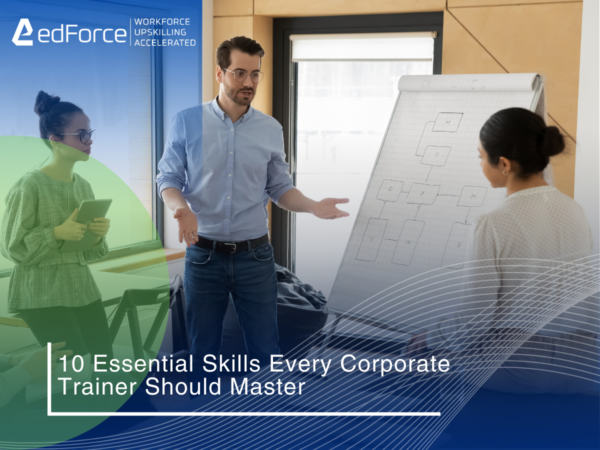
10 Essential Skills Every Corporate Trainer Should Master
The role of a corporate trainer has evolved significantly. Corporate trainers are no longer just facilitators of information; they are strategic partners in driving organizational growth and development. To excel in this pivotal role, professionals need to equip themselves with a diverse skill set that goes beyond just delivering presentations. Whether you’re a seasoned corporate trainer or aspiring to enter this field, mastering these essential skills is crucial for success. 1. Communication Skills Effective communication lies at the heart of corporate training. Trainers must articulate concepts clearly, engage participants, and adapt their communication style to diverse audiences. Strong verbal and non-verbal communication skills foster understanding and promote active participation in training sessions. 2. Instructional Design The ability to design engaging and impactful training materials is fundamental. Corporate trainers should possess expertise in instructional design principles, including needs analysis, content structuring, and evaluation methods. Crafting well-organized and learner-centric training materials enhances knowledge retention and transfer. 3. Technology Proficiency In today’s digital age, technology plays a pivotal role in corporate training. Trainers should be adept at leveraging various tools and platforms for delivering virtual or blended learning experiences. edForce, a cutting-edge learning management system, empowers trainers to create interactive modules, track learner progress, and foster collaboration seamlessly. 4. Adaptability Flexibility is key in the ever-evolving corporate environment. Trainers must adapt their approaches to meet the diverse needs and preferences of learners. Whether facilitating in-person workshops or virtual sessions, the ability to pivot and adjust to unexpected challenges ensures training effectiveness. 5. Subject Matter Expertise Corporate trainers should possess deep knowledge and expertise in the subject matter they’re teaching. A thorough understanding of industry trends, best practices, and relevant regulations instills credibility and fosters trust among learners. Continuous learning and staying updated with industry advancements are essential in maintaining subject matter proficiency. 6. Interpersonal Skills Building rapport and fostering relationships with participants are essential for creating a conducive learning environment. Trainers with strong interpersonal skills can establish trust, manage group dynamics effectively, and address individual learning needs with empathy and understanding. 7. Leadership Abilities Corporate trainers often take on leadership roles within their organizations, guiding teams toward achieving learning and development objectives. Leadership skills, including strategic thinking, decision-making, and conflict resolution, enable trainers to inspire and motivate learners to reach their full potential. 8. Critical Thinking The ability to analyze complex problems, evaluate information, and make informed decisions is vital for corporate trainers. Critical thinking skills empower trainers to identify learning gaps, tailor training content accordingly, and continuously improve the effectiveness of their programs. 9. Time Management Managing time effectively is crucial for delivering training programs on schedule and meeting organizational goals. Corporate trainers should prioritize tasks, allocate resources efficiently, and adhere to timelines while maintaining training quality and effectiveness. 10. Emotional Intelligence Emotional intelligence encompasses self-awareness, empathy, and interpersonal skills, which are invaluable for corporate trainers. Understanding and managing emotions, both in oneself and others, enables trainers to foster a supportive learning environment, handle conflicts constructively, and cultivate a culture of collaboration and growth. Mastering these essential skills equips corporate trainers with the tools and competencies needed to excel in their roles and drive organizational success. With edForce, trainers can harness the power of innovative technology to enhance their training delivery, engage learners, and achieve impactful learning outcomes. FAQ’s
10 Key Skills Every Workforce Upskilling Should Master

Upskilling has become essential for both individuals and organizations to stay competitive. With technology advancing at an unprecedented pace and industries constantly evolving, the demand for new skills is higher than ever before. Whether you’re a seasoned professional looking to stay relevant or an organization aiming to equip your workforce with the necessary tools for success, mastering these key skills is crucial. At edForce, we understand the importance of continuous learning and offer a comprehensive platform designed to empower individuals and businesses in their upskilling journey. Digital Literacy In an increasingly digital world, basic digital literacy is no longer sufficient. Workers need to be proficient in a wide range of digital tools and technologies, from basic office software to more advanced data analysis and programming languages. edForce provides courses and resources covering everything from basic computer skills to advanced programming languages like Python and Java. Critical Thinking Critical thinking is the ability to analyze information objectively and make reasoned judgments. In today’s complex and fast-paced business environment, critical thinking skills are invaluable. Whether it’s evaluating a new business opportunity or solving a complex problem, employees who can think critically are essential to success. Through edForce’s interactive courses and workshops, individuals can develop and hone their critical thinking skills. Communication Skills Effective communication is essential in every aspect of the modern workplace. Whether it’s presenting ideas to colleagues, communicating with clients, or collaborating with team members, strong communication skills are a must. edForce offers courses in communication skills, including public speaking, writing, and interpersonal communication, to help individuals become more confident and effective communicators. Adaptability In today’s rapidly changing world, the ability to adapt to new situations and environments is crucial. Workers need to be flexible and open to new ideas and ways of working. edForce provides training in adaptability, helping individuals develop resilience and the ability to thrive in any situation. Leadership Leadership skills are essential at all levels of an organization, from entry-level employees to top executives. Whether it’s leading a team, managing projects, or inspiring others, effective leadership is critical to success. edForce offers a range of leadership development programs, including courses on leadership theory, team building, and conflict resolution. Creativity Creativity is the ability to think outside the box and come up with innovative solutions to problems. In today’s competitive business environment, creativity is more important than ever before. Whether it’s developing new products, finding ways to improve processes, or solving complex problems, creative thinking is essential. edForce provides courses and workshops designed to unleash creativity and inspire innovation. Emotional Intelligence Emotional intelligence is the ability to recognize and manage emotions in oneself and others. It plays a crucial role in building strong relationships, resolving conflicts, and navigating the complexities of the modern workplace. edForce offers courses in emotional intelligence, helping individuals develop self-awareness, empathy, and interpersonal skills. Data Literacy In the age of big data, data literacy is becoming increasingly important. Workers need to be able to understand and interpret data to make informed decisions and drive business outcomes. edForce offers courses in data literacy, covering topics such as data analysis, data visualization, and data-driven decision-making. Time Management Effective time management is essential for maximizing productivity and achieving goals. In today’s fast-paced work environment, workers are often juggling multiple tasks and deadlines. edForce provides training in time management, helping individuals prioritize tasks, set goals, and manage their time more effectively. Resilience Resilience is the ability to bounce back from setbacks and adversity. In today’s uncertain world, resilience is a valuable asset. Whether it’s dealing with workplace challenges, navigating career transitions, or facing personal hardships, resilient individuals are better equipped to handle whatever life throws their way. edForce offers courses and resources to help individuals build resilience and thrive in the face of adversity. Conclusion In conclusion, mastering these key skills is essential for individuals and organizations alike to thrive in today’s fast-paced and constantly evolving workplace. At edForce, we are committed to empowering individuals and businesses in their upskilling journey by providing access to high-quality courses and resources designed to develop these critical skills. Whether you’re looking to advance your career or future-proof your workforce, edForce has the tools and support you need to succeed. FAQ’s
Top 10 Benefits of Team Training for Workplace Productivity

The work environment is changing. Employees are no longer staying at the same organization for years, as they used to. Now, people want jobs that develop their careers, not just pay the bills. If organizations want to retain good talent and get new people excited to join their company, they need more than just basic training; instead, organizations have to provide real upskilling, training that helps people do their jobs better, grow in their careers, and feel more connected to their teams. That’s exactly what we do at edForce. We’re not just another training company. We help businesses of all sizes, from startups to companies like Microsoft, Walmart, and Amazon, get the most out of their teams by offering smart, practical, and effective team training. Let’s take a look at the top benefits of team training and why it matters now more than ever. 1. Build a Stronger Workforce People today want more than a job. They want to grow their careers. When you offer your team training that helps them learn new skills and become better at what they do, they’re more likely to stay with you. At edForce, we help you design learning programs that matter. They’re not just advantageous for the business, but they’re also advantageous for the employee. And when they feel valued, workers are much more likely to bring their best efforts every day. For short-term workers or contractors, training helps them understand your goals from Day 1. A good onboarding program sets them up for success right away. 2. Get More Done with Better Teamwork When people are trained together, they work better together. They know what the goals are, how their work fits in, and how to support each other. Team training helps avoid confusion, reduces repeated work, and improves communication. With everyone on the same page, projects move faster and results are better. At edForce, we make sure our training encourages teamwork and cooperation, so your teams are always moving in the same direction. 3. Learn Technical and Soft Skills Together Even when your training is focused on technical topics like cloud computing, AI, or data analytics, your team is also learning very important soft skills, which include communication, critical thinking, and problem-solving. When teams work together in training, they also practice working together in real life. They will be able to work together, share ideas, ask questions, and support each other in the training course, thus building stronger working relationships and helping them get better results on the job. We include group activities, live discussions, and real-life scenarios in our training to make sure your team is learning how to work smarter, not just harder. 4. Improve Productivity as a Team Learning as a group helps your team understand and apply new ideas faster. According to research from Deloitte, teams that learn together are more productive than individuals learning on their own. When everyone learns the same concepts at the same time, your team develops a shared language and a common understanding. This makes it easier for them to work together, plan better, and finish tasks more efficiently. At edForce, we make sure training leads directly to better performance, so your investment pays off. 5. Create a Positive Work Culture Training is more than skill-building. It also shapes your company’s culture. A strong culture is one where people feel supported, valued, and excited to learn. When you offer regular training, you’re telling your team: “We believe in you, and we’re invested in your future.” That simple message can go a long way toward making employees happier and more committed to your company. edForce helps you build this kind of culture, where learning is a part of everyday work, and where people aren’t afraid to ask questions, try new things, and grow. 6. Connect Remote Teams Today, many teams work from different cities—or even different countries. That can make it harder for people to feel connected to each other. Team training (especially virtual training) brings remote employees together. They get a chance to meet, talk, learn, and work on things as a group. That builds trust, boosts morale, and helps everyone feel like they’re part of the same mission. With edForce, our virtual learning options make it easy for remote teams to feel like real teams. 7. Improve How Teams Work Across Departments Sometimes, teams from different departments don’t really understand what the others do. This can lead to poor communication or missed opportunities. Team training can help. By bringing different groups together, you help them see the big picture and understand how everyone’s role fits in. They start to appreciate each other’s work more and collaborate better. We often design cross-functional training sessions at edForce that focus on teamwork across departments. This helps your organization work better as a whole. Why edForce? Because we do more than teach. We help you transform your workforce. At edForce, we focus on practical training that makes a difference right away. We align learning programs with your actual business goals. That means your teams don’t just learn, but they learn what matters and how to apply it immediately. From onboarding new hires to getting senior teams certified in advanced tools, from soft skills to cloud labs, our programs are custom-fit to your needs. Ready to Train Smarter? If you’re committed to growing your team, increasing productivity, and building a great workplace, team training is the answer. And when you partner with edForce, you’re working with a “learning partner” who knows how to make learning meaningful. Let’s build great teams together. edForce – We don’t just train. We upskill. FAQ’s