

What Growing Companies Look for in Corporate Training Partners
As companies grow, learning requirements change quickly. Teams are created, new roles arise, expand, and the skills that worked in the past may not be sufficient. In a growing company, corporate training is no longer just about separate programs. It’s all about choosing the best trainer that can help support long-term expansion. Nowadays, businesses go beyond platform and catalogs. They are looking for partners who can understand their needs, work according to their needs and produce tangible outcomes. Strategic Alignment With Business Growth Training partners in the business are expected by companies that are growing to know where their business will go in the future, not only where they are today. They seek partners that: The training that’s not linked to business strategies quickly becomes obsolete and ineffective. Flexibility and Customization Growing roles bring diversity to roles, levels of skill and team structure. A one-size-fits all approach to training isn’t effective. Companies appreciate partners who: Flexibility allows training to remain relevant even as the company grows. Strong Trainer Expertise and Industry Experience Companies that are growing will seek out those who can provide competent trainers who have real-world knowledge. They are looking for: The quality of the trainer directly affects the level of engagement, confidence, as well as the performance results. Measurable Outcomes and ROI Focus Teams of leaders are increasingly asking: What impact is training having? Companies are looking for partners who: The success of training is measured by outcomes, not attendance. Ability to Scale Without Losing Quality As teams expand the training needs to be adapted without becoming generic or being diluted. The companies that are growing look for partners who are able to: Scalability is essential to maintain learning outcomes during the rapid growth. Ongoing Support, Not One-Time Programs The training process isn’t just a one-time annual event, but rather an ongoing process. Companies prefer partners who offer: Partner organizations like edforce.co are valued when they can combine organized programs with continuous support and flexibility. Cultural Fit and Learning Mindset Beyond their capabilities, companies search for partners that align with their values. This includes: A good fit with the culture ensures more efficient collaboration and better acceptance. Final Thoughts For companies that are growing, selecting a partner for corporate training is a wise choice. They seek out partners who can provide: A good partner doesn’t only offer training; they also help to build a workforce that is ready for the next phase of expansion. PiyushI’m Piyush Kotnala, a workforce upskilling advisor, analyst, and writer focused on helping professionals and enterprises build practical skills, adapt to changing technologies, and strengthen workforce capabilities through industry-focused training.
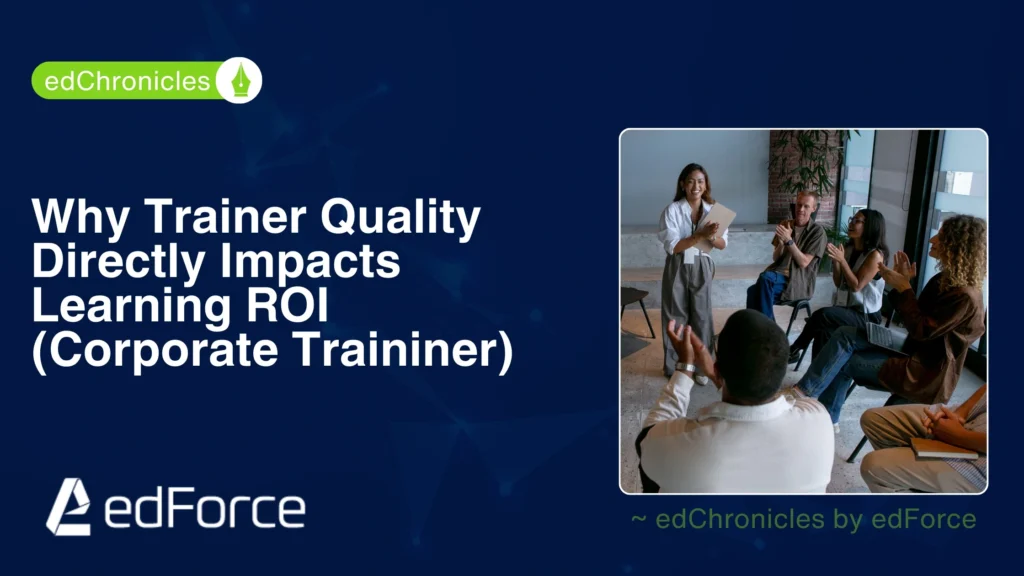
Why Trainer Quality Directly Impacts Learning ROI
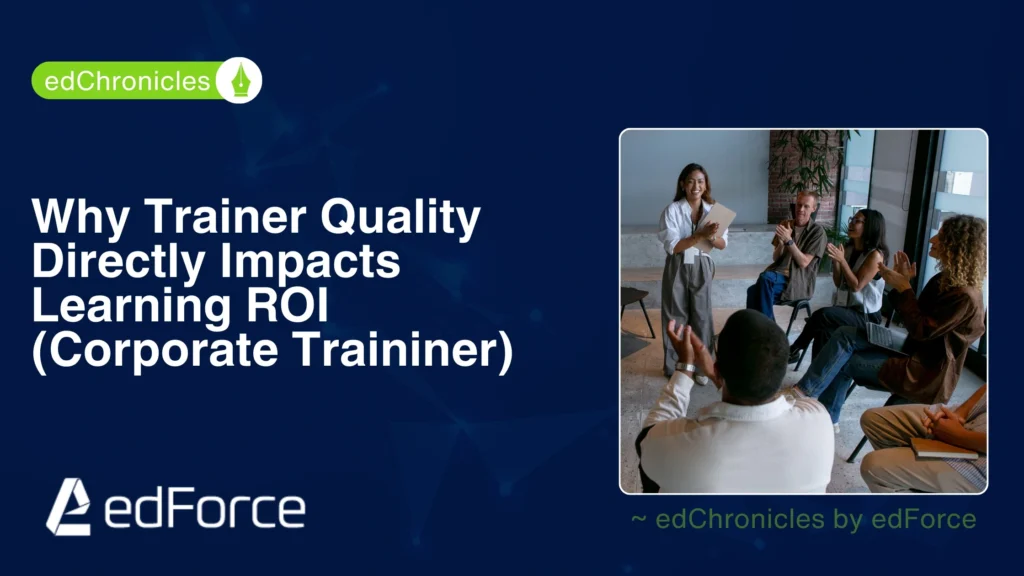
Enterprise learning programs often appear well-designed–robust platforms, structured curricula, and clear learning paths. But, many organizations are struggling to observe measurable improvements in terms of performance or knowledge. The cause is usually not the technology that is used for learning itself. It’s more often the lack of instant feedback. In the fast-paced corporate environment Learning without immediate guidance can be disengaged from actual work and actual outcomes. Learning Without Feedback Lacks Direction If learners aren’t given timely feedback, they’re not sure of: Learning becomes something that’s passive. Employees might complete their training yet without feedback it is impossible to find a way to improve. The real-time feedback system is clear, it helps learners understand what they can improve as they learn, while it is fresh and useful. Delayed Feedback Weakens Skill Application In many businesses Feedback is given months or even weeks later via the form of reports or reviews. In the end, The best way to develop skills is when feedback is In the absence of this, learning is only a theoretical concept and does not transform into real-world skills. Engagement Declines Without Feedback Loops Corporate learners are pragmatic and focused on outcomes. If feedback is not provided: Employees don’t stop learning because it is difficult, but rather because they feel disconnected from their progress. Continuous feedback helps keep learners interested by making their progress evident and relevant. Managers and L&D Lose Visibility Without continuous feedback, leaders are unable to grasp: Reports on completion provide hindsight, not real-time insight. In real-time, feedback allows managers and L&D team members to make adjustments earlier and direct performance in the moments that matter most. Learning Becomes a Compliance Exercise One of the greatest risk in enterprise-level learning is when it transforms into a checklist activity: This occurs when the success of learning is measured solely by percentages of completion. Real-time feedback shifts attention away towards the completion of training to making it more effective. Feedback Connects Learning to Business Impact Enterprise learning is only successful when it can drive: Real-time feedback is the link between performance and learning. Companies who invest in learning that is based on feedback, and supported by strategic learning partners such as edforce.co are better positioned to transform training programs into real-world workforce capabilities. What Effective Real-Time Feedback Looks Like Enterprise learning environments that are high-impact utilize feedback that: This method transforms learning into a continuous performance method instead of a single event. Final Thoughts Corporate training does not fail because of a lack of tools or content. It is a failure when learners don’t receive prompt signals to help them improve. With no real-time feedback Learning becomes adaptable, meaningful and quantifiable. This is exactly what modern businesses require to be successful. PiyushI’m Piyush Kotnala, a workforce upskilling advisor, analyst, and writer focused on helping professionals and enterprises build practical skills, adapt to changing technologies, and strengthen workforce capabilities through industry-focused training.
The One Thing AI Can’t Fix in Your Career
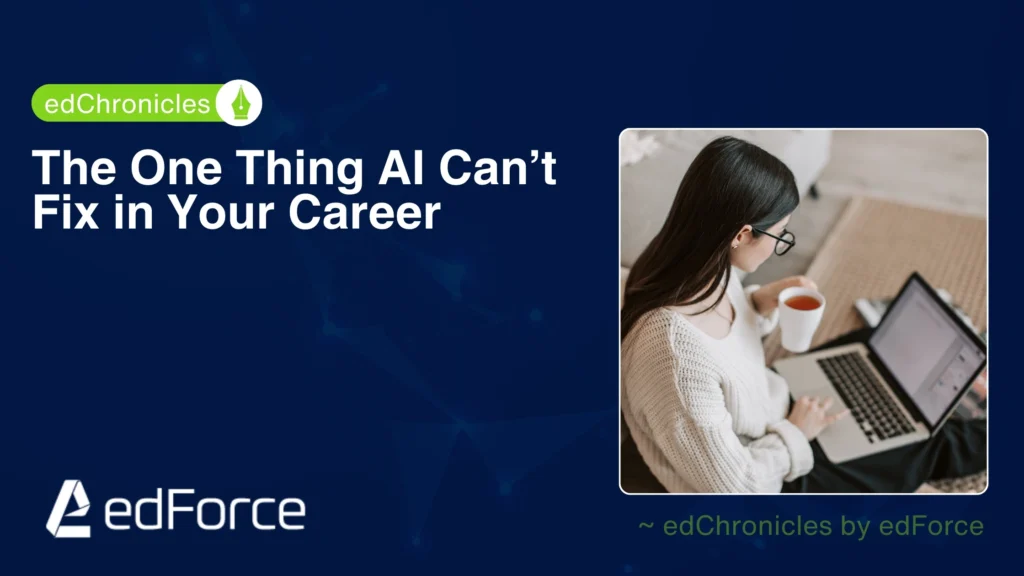
Artificial intelligence is revolutionizing the way work is completed. It is able to write code analyze data, produce content, create reports and even aid in decision-making. Many professionals find that AI has already proven to be an incredible career boost. But there’s one important thing that AI can’t help you for you in your professional life. This gap is more important than any other gap in technical skills in the corporate world, particularly where roles, expectations and technologies evolve more quickly than job titles. AI Can Improve Performance, Not Direction AI tools are great for helping you accomplish tasks faster and more efficiently. They can help with research, make repetitive work easier and provide suggestions based on patterns in data. What AI can’t do is to decide the direction your career should take. It is unable to comprehend: Many professionals mistake efficiency for advancement. AI Training could make you more effective in your current job however, efficiency without direction is often the cause of stagnation in your career. The Real Career Risk Is Passive Growth In many companies career paths are created by default. People change roles due to: AI is able to support the operational aspects of all these changes. AI is not able to ensure that those changes are in line to your personal growth. Passive growth is the process of taking only the skills that is required by the job in the present. As time passes, it creates individuals who are skilled in their specific jobs, but struggle to change when the job itself is no longer needed. It is also where careers slowly slow down. Skills Are Not the Same as Capability AI driven learning platforms usually concentrate on the specific skills. They are easily measured and simple to recommend. The scope of capability is greater. Capability refers to: AI can recommend courses. AI cannot inform you of which capabilities are important to your organization in the next within the next two years or how you can combine capabilities into real-world leverage for your career. This is the reason that many professionals earn certifications but aren’t sure where to go. Career Ownership Is a Human Responsibility Career ownership is the act of taking active decisions about: AI will assist with execution after these decisions have been taken. AI can’t make these decisions for you. In the corporate world the responsibility of this is often under-appreciated. Employees are expected to have systems, managers or other tools to facilitate development. Organizations expect their employees to be active. This gap is the point at which the disengagement starts. Why AI Cannot Replace Career Judgement Career choices aren’t always rational. They require: AI analyzes patterns that are derived from the past. Careers are shaped through choices made in the face of uncertain conditions. For instance: These decisions are based on judgement and not recommendations. The Most Valuable Skill Is Still Learning Intent Learning intent is the reason you’re learning something and not only what you’re learning. Intentionally or not: With intention: AI can help in the process of the process of learning but is not able to identify the intent. This must come from the individual, backed by clearness in the organisationsuch as those often explored through platforms like edforce.co. What This Means for Professionals Professionals, for instance. The issue isn’t whether AI can replace your job. The most important thing is whether you’re active in shaping your role to ensure it is still valuable. This is why: AI can be powerful when it is employed in conjunction with the direction of. What This Means for Organisations For organizations, AI adoption without career clarity can result in short-term effectiveness and risk in the long run. The employees may be performing better today, but are unsure about the future. This causes attrition, disengagement and weak skill development. The most effective upskilling strategies are those that are structured when they assist employees: This is the point where intentional learning ecosystems can be more efficient than tools that are isolated. The One Thing That Still Matters Most AI can’t help clarify career ownership. It is not able to substitute for reflection, intention or judgment. It is not able to define what success means for a person or for an organization. The experts who are successful with AI won’t be those who employ the most software. They will be those who know where they are heading and why. Technology can help grow. Ownership drives it. This is the only thing that AI cannot automate. PiyushI’m Piyush Kotnala, a workforce upskilling advisor, analyst, and writer focused on helping professionals and enterprises build practical skills, adapt to changing technologies, and strengthen workforce capabilities through industry-focused training.
How Large Companies Standardize Training Across Multiple Locations
As larger organizations grow the training process becomes more difficult to manage. Teams work from various countries, cities in addition to time zones. Priorities for business remain the same, however the learning experiences can change. This presents a challenge for corporations. How can you ensure that everyone receives the same education, no matter the location they work from? The standardisation of corporate training across different locations isn’t about strict control. It’s about creating a sense of uniformity, clarity, and fairness, while providing flexibility for local significance. What is the importance of consistency in training at the Scale When the training of employees differs between locations results begin to vary as well. Employees could be taught the same job through different methods, which leads to a gap regarding performance as well as expectations. Inconsistent training can lead to: For companies with large budgets this issue can become a risk to the business, and not just a problem of learning. The real Challenge isn’t distance The Real Challenge is Alignment Technology has made learning remotely possible. The distance is not a major issue. The main issue is alignment. Large companies struggle to find a common ground: If training isn’t aligned, it can become disjointed. Each school adapts learning to their own manner, usually with good intentions however, with poor long-term outcomes. Start with clear, role Based Learning Standards The standardisation process begins with defining what good-looking looks look like for each job. This includes clearly stating: These standards must be standardized across every location. Local teams may adapt instances or the context, but the objectives of learning should be the same. If expectations for roles are not clear Training programs aren’t able to be effectively standardised. Create the Central Learning Framework Large companies that are successful in establishing a standardised corporate training system employ an underlying structure. This framework serves as an unifying source of truth. It includes: A central framework guarantees that each location is working from the same base. It also makes it easier to update as business requirements evolve. Use Modular Content in lieu of one large program A common error is to create huge, complicated education programs which are difficult to coordinate across different regions. Modular content works better. Modular training can help organizations: This method allows standardisation to be more feasible and sustainable. Balance Standardisation with Local Relevance Standardised training is not the same as that you should ignore local needs. The language, rules customer behaviour, regulations and the work culture vary by region. Training must be able to accommodate these differences without altering the message. The most important thing is to make it standard: Also, allow for flexibility when it comes to: This balance helps keep training pertinent without sacrificing the quality of. Examine Learning Outcomes and Measure Results not just completion Many companies track the people who attended the training. They do not track if the training actually helped. The value of standardisation comes when results are measured in a consistent manner across all locations. This includes: If the outcomes are evaluated in identically across the board leaders gain an understanding of the effectiveness of training. Align training with business priorities Corporate training needs to grow with the company. If the training process is standardised but not connected to the actual business objectives the training quickly loses value. Large companies should be reviewing their processes regularly: Frameworks for training should be adapted to changing needs with structural consistency maintained. The Function of Structured Learning Partners As training grows and organizations seek organized support to handle complex training. Partners and platforms like edforce.co are often considered in companies looking to keep uniformity in training and align learning with business goals. The key to success is not in the tools themselves however, it is in the way that learning is organized, monitored and linked to workplace requirements. What Standardised Training can do? If it is done properly when done properly, standardised corporate training can help big businesses: In addition, it ensures that growth doesn’t diminish capabilities. Consistency creates confidence The standardisation of training across different sites is not about controlling. It’s about trust. The confidence that each employee is learning the right skills. The confidence that teams are in alignment. A sense of confidence that the organization is able to grow without sacrificing quality. For larger companies the clarity of this approach transforms training from an operational chore into a competitive advantage. PiyushI’m Piyush Kotnala, a workforce upskilling advisor, analyst, and writer focused on helping professionals and enterprises build practical skills, adapt to changing technologies, and strengthen workforce capabilities through industry-focused training.
Why Live Online Training Works Better Than Recorded Courses for Teams

As teams are becoming more bigger and organizations are relying more on the digital world of learning. The recorded courses are easy to scale up and swift to roll out. But many companies are surprised to discover that the outcomes of learning aren’t always consistent. Live online training is often better in teams, not simply because it’s more complicated however, it is because it reflects how adults learn in their work. Learning is more efficient when It’s Interactive The majority of recorded courses are only one way. Participants watch, listen, and then move along. Interaction is minimal or absent. Live online training is a two-way learning. Teams may: This type of interaction keeps learners engaged and enhances their understanding. When there is a sense of participation in learning, it becomes more easy to remember and implement. Teams learn better when they Learn Together Training isn’t just about building skills for individuals. In teams, it’s also about sharing understanding. If teams participate in live sessions in conjunction: Recorded classes often result in differing interpretations. Live sessions bridge the gap in understanding by providing an experience that is common to all learners. Live Sessions Help Create Natural Accountability One of the biggest issues when it comes to recorded courses is the completion. Many employees delay learning due to the fact that there is no set timetable. Classes are commenced, stopped and, sometimes, never completed. Online live training embraces the structure. There are: This type of structure improves the amount of time spent and also focus. The likelihood of teams to finish learning if it feels like a commitment shared instead of an ongoing task. Trainers are able to adapt to team needs in real Time Each team faces its own problems. Recorded content is not able to react to this. In live online training, facilitators can: This makes learning more relevant and less general. Learning feels more human and More Natural The recorded courses can be a bit like a transactional. Complete, watch, then go on. Live training is a human experience. It is like having a person in charge of the training. This results in: When it comes to corporate training the human connection is crucial. The employees are likely be engaged when they feel valued and heard. More Effective Knowledge retention and application Teams often have difficulty applying the knowledge they learned from recorded classes. The concepts remain purely in the realm of theory. Training delivered live online improves retention because of: This narrows the distance between learning and executing. Recorded Content Has an Impact The recorded courses are not ineffective. They can be useful to: But, for team-level behavior change and learning recordings alone are typically not enough. Live sessions give the depth teams require to transform information into capabilities. Why do many companies prefer live Online Training Larger organizations are increasingly opting for live formats due to the following reasons: This is the reason live online formats are increasingly becoming a part of contemporary Corporate training plans. Live Training at Size In order for live online learning to be successful it has to be properly planned. This includes: Learning partners and platforms like edforce.co are frequently looked at by companies looking to offer live training in a consistent manner across their teams while maintaining the their quality and structure. Learning is most effective when people Participate Teams are most effective when learning is relevant, active, and shared. The recorded courses offer details. Live online training builds understanding. For companies that are looking for real-time application of their skills and team alignment Live online training continues to yield better outcomes. PiyushI’m Piyush Kotnala, a workforce upskilling advisor, analyst, and writer focused on helping professionals and enterprises build practical skills, adapt to changing technologies, and strengthen workforce capabilities through industry-focused training.
From Campus to Corporate: How edForce.co prepares the next generation talent

The workplace is changing more quickly than ever before. The mere possession of a degree is no longer sufficient. Employers are looking for graduates with the ability to think, adapt and perform right from the start. Students are looking for jobs that provide growth, stability and purpose. edForce.co meets these needs by preparing the next generation of talent for corporate success. The future demands more than academic knowledge Technology will affect every type of job in the future. Cloud platforms, data-driven decision making, cybersecurity and automation are now essentials in all industries. The World Economic Forum estimates that more than 60% of students today will be working in roles which do not yet exist. It is important to focus on adaptability and not memorization when learning. edForce helps students prepare for the future by developing skills that will grow with them. How edForce Prepares Students for the Workplace From Day 1 edForce is a program that has been designed to meet the needs of today’s workplace. They practice them. Students practice concepts. Professionals face real tools, environments, and challenges every day. This practical exposure eliminates fear, builds confidence and clarifies workplace roles. Students should be prepared to participate in the workplace, and not just watch. Confused Career Pathways? Clear Career Direction is the Answer After graduation, many students feel lost. They are aware that they studied technology but they don’t know where they belong. edForce offers structured career paths based not only on subjects, but also roles. Clarity helps students to make better career decisions earlier. Learn to Grow with the Future The technology will continue to develop. edForce is a program that supports continuous learning. The students build a solid foundation which allows them to quickly learn new tools in the future. This mentality prepares them for not only their first job but also for their long-term career growth. LinkedIn says that professionals who continue to learn are three times more likely than others to progress in their career. Building Confidence along with Skills Confidence is a key factor in achieving career success. edForce focuses primarily on developing confidence through practice feedback and mentoring. Students are taught how to communicate effectively, present ideas in groups, and work as a team. They can perform better at interviews and on the job. Confidence is the key to turning knowledge into action. Creating Stronger Placement Outcomes for Institutions Colleges and Universities want to improve their placement results. edForce is a service that helps educational institutions to improve their employability by aligning the learning with industry demands. Institutions can benefit from: The institution’s reputation and the future of students are strengthened. Why Businesses prefer edForce-trained talent Professionals who can quickly deliver value are in high demand by businesses. The edForce-trained talent requires less training and can adapt faster to project needs. It reduces the training costs and increases productivity. Candidates who are familiar with the real world of work will be trusted by employers. Real Success Stories with a Future-Focused Focus Final Year Engineering StudentBecause I had worked on real scenarios, I felt confident when I walked into interviews. It was a natural transition to move from college into corporate. HR Manager Technology FirmThe candidates trained by edForce demonstrated a better level of understanding and preparedness. They required less time to adapt. College Placement HeadWe help our students become more confident and focused. Prepare Talent for Careers and Not Just Jobs Careers can change. Careers continue. edForce equips students with skills relevant to all roles and industries. These skills help students to grow, change roles and become leaders in the future. The future belongs to confident and skilled talent Those who prepare for the future will be rewarded. Students who invest today in the right skills will be leaders tomorrow. The institutions that provide industry-aligned learning will be distinguished. Those who hire talent that is ready to work will be able to move more quickly. edForce combines all three. Next Gen Talent: Are you ready? Whether you’re a student seeking a solid start, a school aiming to improve placements or a company looking for future-ready professionals, edForce can be your learning partner. Begin your campus-to-corporate journey today with edForce.co and create a better future. PiyushI’m Piyush Kotnala, a workforce upskilling advisor, analyst, and writer focused on helping professionals and enterprises build practical skills, adapt to changing technologies, and strengthen workforce capabilities through industry-focused training.
How edForce.co Uses AI and Data for Personalized Corporate Learning

Corporate learning has undergone a dramatic transformation. Modern enterprises no longer benefit from training that is one size fits all. By 2026, companies will need to adapt their learning programs to the needs of employees, business objectives, and technological changes. Artificial intelligence and data-driven learning can make a big difference. edForce.co personalizes corporate learning using AI and data, helping businesses build skills faster and smarter with measurable impacts. Why Personalized Learning is Important for Enterprises Each employee has a unique role, skill set, and pace of learning. The results of training everyone the same way are not as good. Deloitte reports that personalized learning improves employee performance over 30% compared to generic models of training. The personalization of the learning process ensures that each employee learns what is most important for their job and applies it directly to work. AI enables smarter learning experiences AI allows for learning platforms to go beyond static content. edForce analyzes learner behavior, skill gaps, and progress using artificial intelligence. The platform can then recommend content, labs and learning paths that are relevant to individual needs. Employees receive guided learning that is aligned to their roles and goals, rather than guessing. Role-Based Learning with Data Insights Different roles require different skills. Cloud engineers, data professionals, and security analysts should not all follow the same training. edForce uses data to create role-based learning paths aligned with enterprise job roles. These learning paths are designed to help you develop the skills needed to excel in specific roles. Gartner states that role-based learning can improve training relevance and cut learning time up to 40%. Analyse to Identify Skill Gaps Understanding skills gaps is crucial for workforce planning. edForce’s learning analytics helps identify areas where employees need to improve and those where they are strong. Organizations can see the real skills readiness by assessing lab performance and engagement data. This data-driven visibility allows leaders make informed decisions regarding training investments. Adaptive learning that evolves with the learner The needs of learning change with time. edForce AI algorithms continuously adjust learning recommendations based upon progress and performance. Additional resources may be suggested if a student struggles to understand a particular concept. When they progress quickly, the learning path changes to match their speed. This adaptive approach motivates and engages learners. IBM claims that adaptive learning can increase course completion rates up to 25 percent. Use of Data to Measure Training Effect Businesses need to prove that their learning investments are paying off. edForce tracks outcomes, such as improvement in skills, assessment scores and the application of learning to work, using data. It allows companies to link their learning efforts with performance. Leaders can demonstrate the value of corporate learning programs using data-backed insights. Improve Employee Engagement with Personalized Learning Corporate training faces a significant challenge: engagement. AI-driven personalization makes learning relevant and interactive. When training is aligned with the employee’s role and career goal, they are more likely complete their programs. LinkedIn Research shows that employees who engage in personalized learning are twice as likely to remain with their company. How edForce supports enterprise learning leaders edForce works with business, HR and L&D leaders to provide scalable, personalized learning solutions. The key benefits are: Role-aligned learning programs, hands-on labs with real scenarios and AI driven recommendations, skill analytics and reporting and enterprise level scalability It is important to ensure that learning has a real impact on business, and not just course completions. Real Enterprise Results with edForce Head of Learning Global Technology CompanyPersonalized learning paths helped us to close skill gaps quicker. Within months, we saw an improvement in the team’s performance. CTO Mid Size EnterpriseData transparency into skill readiness allowed us to plan better and reduce reliance on external hires. HR DirectorThe engagement of employees increased dramatically once the learning was relevant to their roles and specific. Corporate Learning: The Future of Corporate Learning AI and data will continue influencing how organizations develop skills. Learning will be adaptive, predictive and deeply integrated in the daily work of the future. edForce helps enterprises achieve this future through the combination of technology, data and human expertise. You can now personalize learning for your workforce Learning solutions for modern enterprises must be flexible and adaptable to the needs of both people and businesses. If you want to improve your training, increase engagement and achieve measurable results in your organization, then personalized learning will be the best option. Learn how edForce.co leverages AI and data analytics to transform corporate training and create future-ready teams. Smarter learning creates stronger organizations. Start your transformation now. PiyushI’m Piyush Kotnala, a workforce upskilling advisor, analyst, and writer focused on helping professionals and enterprises build practical skills, adapt to changing technologies, and strengthen workforce capabilities through industry-focused training.
Guide to Building High-Performance Tech Teams in 2026

The technology teams are not just a support function. By 2026, technology teams will be the foundation of growth, innovation and competitiveness. Many organizations still struggle to create high-performance tech teams. It’s harder than ever to build high-performance tech teams. This guide will explain how to build strong tech teams that are future-ready in 2026, and how the correct upskilling strategies play a crucial role. Why high performance tech teams matter in 2026 The digital transformation is increasing in every industry. Cloud platforms, cybersecurity and data analytics, as well as artificial intelligence and automation, are now essential business tools. McKinsey says that organizations with high-performing tech teams are more than 1.8 times likely to experience above-average revenue growth. It’s not just the technology that makes a difference. The difference is in how the teams use it. What is a high performance tech team? High-performance tech teams have common traits. They align their technology efforts with the business goals. Performance will be measured in 2026 by results, not activities. Aligning Skills with Business Objectives: Step 1 Many companies invest in training, but do not link it to their business needs. It is a way to learn without impact. Building high-performance teams requires mapping skills requirements directly to business objectives. For example: Gartner states that companies who align their workforce skills to business strategy will see a 25 percent increase in productivity. Step Two: Role-based Upskilling Generic training is no longer effective. Role-specific workforce upskilling will be critical in 2026. Cloud engineers do not require the same training as security analysts or data engineers. Role-based learning is more relevant, easier to apply, and increases engagement. edForce is a tool that helps companies create structured learning paths tailored for specific roles and technologies. Step Three: Build hands-on capability, not just knowledge Knowledge alone does not create performance. Practical capability is the foundation of high performance tech teams. Teams can apply their skills to real-world situations by using simulations, hands-on labs and scenarios. PwC reports that employees who receive training in the workplace are 40% more likely to apply new skills. Practical exposure improves confidence and speeds up project delivery. Step Four: Create a culture of continuous learning Learning is a continuous process in 2026 it will not stop. The technology is evolving every quarter. The teams must also evolve and upskill their skills. Organizations that excel in their work embed learning and development into the daily routine. The following is included: LinkedIn’s research indicates that companies with a strong learning culture retain talent for 30 percent more time. Step Five: Strengthen collaboration and soft skills The technical excellence is not sufficient. Tech teams need to communicate with product teams, business stakeholders and leaders. Soft skills such as communication, problem-solving, and ownership, are essential. Google’s research on team performance found that psychological safety and collaboration mattered more than pure technical abilities. Teams that excel work together and not in silos. Step Six: Use data to measure team performance Measurement is the key to improvement. By 2026, companies will use data on skills to make decisions. Learning analytics, such as performance metrics and skill assessments, can help to identify progress and gaps. It allows leaders to invest the right amount of money in the correct training at the right moment. The use of data-driven upskilling results in better results and less training waste. How edForce supports high performance tech teams edForce.co works with companies to develop future-ready tech talent. Its approach is based on Enterprise-aligned learning programs Role-based skill development Hands-on labs and real situations Industry recognized certifications Measurable Learning Outcomes It is important to ensure that training is translated into actual workplace performance. Real Enterprise Impact Stories IT Director Global EnterpriseOur cloud migration timelines have improved and our dependency on external vendors has reduced after implementing structured upskilling programmes. Head of Learning and DevelopmentWe gained clarity and confidence for our teams. We experienced faster project completion and improved collaboration across departments. Common mistakes to avoid when building tech teams By avoiding these mistakes, you can save time, money, and effort. The Future of Tech Teams 2026 and Beyond The biggest teams will not necessarily be the most successful. These companies will have the best-motivated, most adaptable and capable teams. High-performance tech teams are created through strategy, continuous learning and improvement. You are ready to build your high performance tech team The right partner and the correct approach are essential to building future-ready tech teams. Now is the perfect time to take action if you want to improve your business results, close skills gaps and increase productivity. Explore enterprise upskilling with edForce to empower your team and help them perform at their peak in 2026. Strong teams make strong businesses. Build yours Tech Team now. PiyushI’m Piyush Kotnala, a workforce upskilling advisor, analyst, and writer focused on helping professionals and enterprises build practical skills, adapt to changing technologies, and strengthen workforce capabilities through industry-focused training.
What to Expect After Completing an edForce.co Training Program Real Results

It is a major decision to complete a professional program. The real question for many IT professionals, and even enterprises, is not whether they complete the course. What happens next? This guide will help you understand what to expect from edForce.co’s training programs in terms of career development, confidence and skills. Immediate Confidence in Skill After Training Confidence is one of the first things professionals notice when they complete an edForce program. Practical exposure is the only way to gain confidence, not theory. The learners work with real scenarios, labs and use cases that are aligned to business. They understand why they are doing things, not just what to do. A PwC study on the workforce found that employees who received hands-on skill training felt 40 percent more confident in applying new skills to their jobs. Confidence directly affects performance. IT Job Readyness: A Better Fit for IT Roles edForce.co is designed to meet the needs of industry. The learners are not only certified, but also job-ready. The course prepares professionals for roles like Cloud engineer DevOps professional Data and AI specialist Enterprise I consultant Many students report that they are better prepared for interviews because they are able to clearly describe real-world problem solving. This practical clarity is highly valued by hiring managers. Faster career growth and role transitions Career advancement is one of the most important outcomes following an edForce program. It could be a change in role, a promotion or a shift to a technology field that is in high demand. LinkedIn’s workplace report shows professionals who consistently upskill are promoted 25 percent faster than their peers who don’t. Structured learning paths in edForce help professionals transition from junior or support roles to specialist and leadership roles. Salary Impact Measurable It is more than just knowledge. It directly impacts earning potential. According to industry data, IT professionals who are certified and have received training earn between 20 and 45 percent more in average, depending on their skill level. After completing the edForce program, many learners qualify for higher-paying roles in cloud, advanced engineering, and security domains. Training is a long-term investment, not a one-time expense. Employers Value Experienced Employees with Practical Skills The emphasis on hands-on experience is a key feature of edForce. This practical learning bridges the gap between workplace expectations and training. Employers prefer professionals with skills that can be demonstrated, rather than certificates. Improvement in Performance of Current Roles Not everyone switches jobs right after training. Professionals often apply their newly acquired skills in their current organizations. It leads to faster project completion, better teamwork, and improved problem-solving. According to McKinsey, employees who have updated their digital skills increase productivity by more than 20 percent. This impact is quickly noticed by organizations. Experiences from edForce learners Ravi Mehta Senior System EngineerI completed my cloud training and began contributing to migration projects in the workplace. In a few months, I received more responsibility from my leadership. Sneha, a Cybersecurity AnalystExplains how hands-on labs have helped her to understand threats and real responses. Now I can handle security tasks with confidence. Kunal Verma DevOps engineerThe edForce course helped me to move from manual processes into automated workflows. My role became strategic and not repetitive. Long Term Career Clarity edForce provides more than immediate results. It also gives direction. The learner understands which skills to develop next, how technology connects, and where they can take their career in the coming years. Clarity reduces confusion, which can lead to career stagnation. Professionals who have a clear plan for growth are more motivated and successful in the long run. What makes edForce outcomes different? edForce.co is focused on This ensures learning is translated into real outcomes and not just course completion. Get Ready for Real Career Results The journey does not end when you complete a training program at edForce.co. This is just the beginning. The right training is essential if you want to improve your skills, increase your opportunities and grow professionally. Discover edForce’s training programs and start your journey to a rewarding career today. The skills you develop now will determine your future role. PiyushI’m Piyush Kotnala, a workforce upskilling advisor, analyst, and writer focused on helping professionals and enterprises build practical skills, adapt to changing technologies, and strengthen workforce capabilities through industry-focused training.
Career Growth Roadmap for IT Professionals in 2026

The IT industry changes faster than ever. Skills that were popular a few short years ago no longer benificial. In 2026, IT pros will need a clear roadmap for their career development to remain relevant, earn higher salaries, and advance into better roles. This guide is for IT professionals who are wondering what skills to develop next or how to advance their career by 2026. Why career planning is more important in 2026 Businesses cannot ignore technology. Businesses are heavily investing in digital transformation, cloud-based platforms, cybersecurity and artificial intelligence. World Economic Forum estimates that over 50% of employees will require reskilling to keep up with the technology changes by 2026. LinkedIn Workforce report shows that professionals who regularly upgrade their skills can see their salaries grow up to 30% faster than those who don’t. This is a sign. The IT career growth is not an accident. Career growth in IT must be planned. Step One: Build Core IT Skills Every IT professional should strengthen their foundation before moving on to advanced roles. Core skills still matter. Included are programming basics, database concepts, and system understanding. In 2026, the most popular foundational skills will include Python and Java programming SQL fundamentals and database concepts Linux and operating systems networking basics Git version control tools. You can adapt to new technologies quickly if you have these skills. Step 2: Choose the right career path in IT IT isn’t a single profession. There are multiple paths to success. Early selection of the best path can save time and effort. The top IT careers for 2026 Cloud Computing Careers Cloud adoption is increasing in all industries. These professionals are needed by companies to manage their cloud infrastructure and applications. Gartner predicts that by 2026, over 85 percent of companies will adopt cloud-first strategies. Cloud security, AWS, Azure and Google Cloud are among the skills to be learned. Cybersecurity Careers Cyber-threats are on the rise. Businesses invest heavily in security professionals. The most in-demand cybersecurity roles include ISC2’s report shows that there is a shortage of more than 3.4 million cybersecurity experts in the world. Cybersecurity is one of the highest-paying and most stable IT careers. Data and Artificial Intelligence Careers Every organization relies on data to make decisions. In 2026, the following roles will be in high demand: IBM says that companies who use data to make decisions are 23 times as likely to gain customers. Python, data visualization and machine learning basics are among the skills to be focused on. Software Development and Engineering Software development is a great career choice. But now, a full stack and scalable systems knowledge is expected. Developers who are able to understand business requirements and technology are highly valued by companies. Step 3: Earn Industry Recognized Certificates They also help to validate your skills. Certifications also help to build trust with employers. Employers will prefer to hire professionals who have practical certifications that are verified. Certified professionals earn up to 40% more than non-certified peers. Step Four focuses on hands-on experience It is not sufficient to learn theory. Employers are looking for professionals who have the ability to apply their knowledge in real-life situations. Career growth is largely influenced by hands-on labs, real-world projects, simulations and assessments. Platforms with practical learning environments can help bridge the learning gap and the working world. Step Five: Develop soft skills for leadership growth Soft skills can help you grow. Soft skills help you grow. By 2026, IT professionals will be expected to work in teams, communicate clearly and manage projects. Soft skills are important for problem solving, communication, time management and decision making. Google’s research shows that top-performing teams are characterized by their ability to communicate and collaborate, rather than just to be technically proficient. How edForce helps IT professionals grow faster edForce.co partners with businesses and professionals to develop future-ready skills. The course offers structured learning paths, hands-on cloud labs and industry aligned certificates. Professionals can benefit from real-world business examples, practical exposure and career guidance. Professionals’ Views on Career Development Rohit SharmaCloud Engineer I was stuck for years in a support position. After completing a structured learning path in the cloud and doing hands-on labs, I was able to transition into a cloud engineering role within six month. Ananya Verma, Cybersecurity AnalystI was able to confidently ace interviews with the help of practical training and certification. After switching roles, my salary increased by 35%. Amit Kapoor, Software DeveloperThe learning of system design and solving real-world problems has completely transformed the way I approach developing projects. Career Growth Tips for IT professionals in 2026 Learning everything is not the key to career growth. Learning the right things, at the right time is the key to career growth. You are ready to build your IT career roadmap IT professionals who are always on the cutting edge of technology will be rewarded. Moreover now is the time to take action if you are looking for a career roadmap that includes practical learning and skills aligned with industry. Get hands-on experience and learn how to prepare for IT jobs in 2026. Start today and reach your next career milestone. PiyushI’m Piyush Kotnala, a workforce upskilling advisor, analyst, and writer focused on helping professionals and enterprises build practical skills, adapt to changing technologies, and strengthen workforce capabilities through industry-focused training.