

How Enterprises Map Employee Skills to Business Goals in 2026
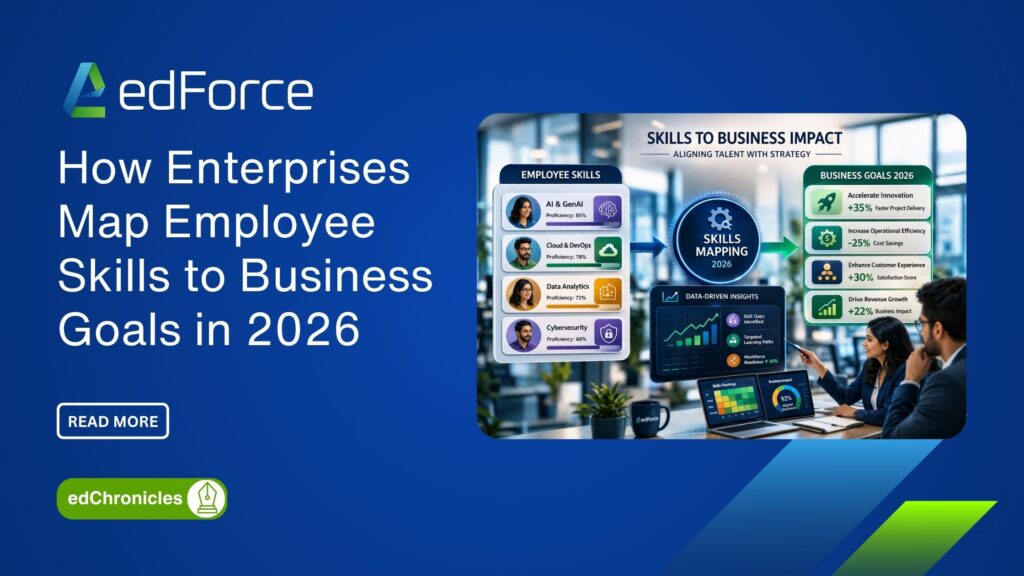
In 2026, planning for the workforce will no longer be focused on roles only. It’s about the ability to communicate, clarity, and align. Enterprises are moving away generic job descriptions, and instead asking more directly. Are we equipped with the capabilities to meet our business objectives? Since in the present world, strategy is not failing due to a lack of understanding however, it is due to a the lack of ability. It Starts With Clear Business Direction Skill mapping is not a process that begins with employees. It begins with the business goals. The first step is to define where the organizations intend to go. Expansion into new markets. Adoption of AI. Digital transformation. Efficiency in operations. Innovation in product design. Each of these objectives will require specific capabilities. In 2026, the most successful companies divide their business strategies into requirements for skills. Instead of stating “we need to grow,” they determine what skills are required to allow for that growth.. At the top, clarity provides direction throughout the workforce. From Job Roles to Skill Clusters Traditional models of work centered on the roles. However, roles are changing too rapidly. Today, companies are focusing upon the cluster of skills. A single job could require a range of capabilities in technologies, data, communication and problem-solving. For instance, a programmer might require coding cloud understanding, cloud comprehension, or AI awareness. A manager might require leadership, analytics, and digital fluency. This allows companies to better map their work and train employees to take on new tasks. Using Data to Understand Current Capability After the skill requirements have been defined then the next step is to determine what is already in place. Enterprises make use of assessments as well as performance data and management inputs to determine current levels of competence. This gives a clear understanding of the strengths and weaknesses. In lieu of guessing companies are relying on data to help solve key questions. Things that require urgent attention The ability to see clearly is the basis of a successful workforce planning. Identifying Skill Gaps That Impact Business The gaps in skills are not all equally significant. In 2026, companies will focus on gaps based on their business impact. Skills that directly impact the efficiency of their business, revenue or risk, are first addressed. The result is that the learning efforts are centered and relevant. Instead of educating anyone on everything, businesses develop specific plans for development that help solve business-related issues. Building Structured Upskilling Pathways When gaps are discovered and gaps are identified, the priority shifts to the development. Enterprises are implementing structured learning experiences that align with particular roles and future needs. These aren’t regular training sessions. They are mapped out ways to build capacity in a step-by-step manner. Many companies work with other organizations such as edforce.co to create skill-based programs that blend practical education and real-world application and quantifiable improvements. This method of structured learning ensures that learning is a catalyst for an improvement in the quality of life. Continuous Tracking and Adaptation Skill mapping isn’t just an event that happens only once. When priorities in business change the requirements for skilled workers also change. Companies continuously monitor developments, update skills frameworks and adjust their strategies for learning. This results in a dynamic system in which the capabilities of workforces change with the business requirements. Companies that view the skill mapping process as a continuous process stay more agile and ready for the future. Connecting Skills to Performance and Growth The most efficient companies take an extra step. They link their skills directly to performance goals. Employees are aware of how their skills impact their work. Managers can tie the development of skills to productivity, innovation and team performance. This increases the level of engagement as learning is perceived as valuable and relevant. Final Thoughts In 2026, the most successful businesses will not be just managing employees. They manage capabilities. When employees are able to align their skills to business objectives, companies achieve clarity, increase efficiency and create an employee workforce that is prepared to adapt. The benefits do not come in having a larger workforce. It’s about having the necessary skills in the proper location at the right time.
How Internal Mobility Reduces Hiring Costs in Large Organizations
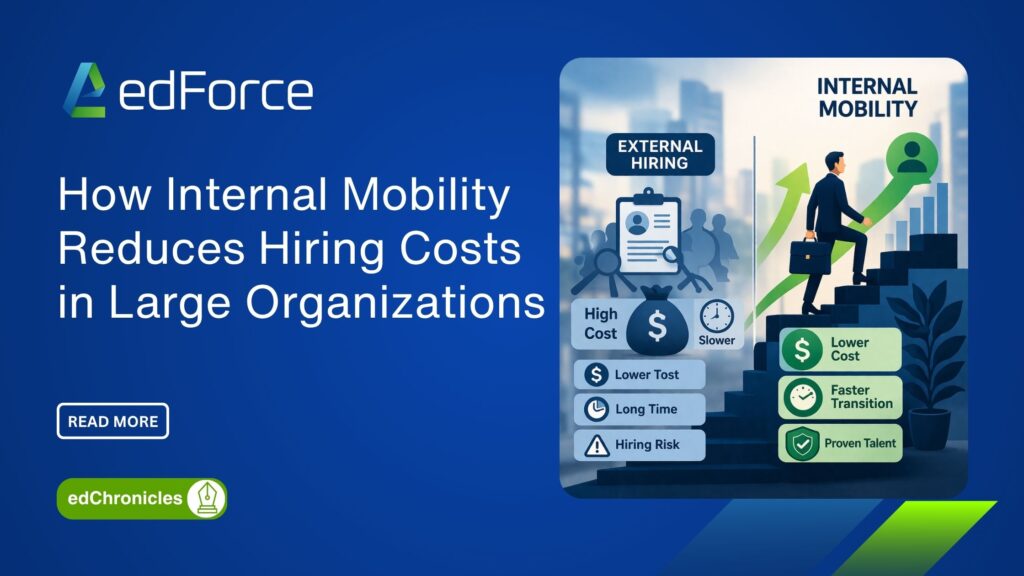
The cost of hiring today is high. Not only in terms of costs for recruitment but also in terms of time and effort as well as lost productivity. For larger organizations the cost of this increase is constant as roles change quicker and competition for talent becomes more intense. Many companies are shifting their focus away from recruiting externally, to constructing internally. The concept of internal mobility has evolved beyond a purely HR initiative. It’s becoming a sensible business plan. External Hiring Comes With Hidden Costs The majority of companies believe that hiring costs begins with recruiting. In reality, the biggest cost of hiring comes after the hiring process. New employees need time to learn about the systems, teams and the culture of the company. It is not an instantaneous process to increase productivity. There is always the risk of a mismatch that could cause early exits or frequent hiring. On the contrary, employees within the organization already know how the company operates. They are more flexible and begin contributing more quickly. This is a huge time saver and money. Internal Mobility Fills Roles Faster When a job is open and work is slow. Teams feel pressure and deadlines become more difficult. The process of hiring externally can last for weeks, or even months. Internal mobility accelerates this process. Organisations can place the best people into the roles they need more quickly, particularly when they already have similar capabilities. By enhancing their skills employees are able to transition seamlessly. This can reduce the time spent in downtime and keep operational processes running smoothly. Upskilling Costs Less Than Hiring Finding a new employee to hire involves several steps. Finding, interviews onboarding, training, and so on. All of it adds to. The process of retraining an employee in place is typically more affordable. They already know the business. They need only to understand what’s new in the position. A lot of companies now invest in structured learning programs that assist in this transition. Some collaborate with partners such as edforce.co to develop skill-based development plans to prepare employees to move internally. This method reduces the need to hire and creates long-term capabilities. Internal Growth Improves Retention Employees quit because they don’t experience the growth they would like to see. If organizations provide clear opportunities within the company, employees are more likely to remain. They feel appreciated and can see potential within the organization. Better retention means fewer resignations. Resignations that are less frequent mean less cost to hire. It’s a simple, but effective cycle. Better Use of Existing Talent Large companies typically have more talent than they think. The issue is gaining visibility. If companies can track their skills correctly they can match their employees to roles that are more effective. This means that they do not have to look for all the requirements. Internal mobility is most effective when is accompanied by clear mapping of skills and workforce plans. Stronger Teams and Faster Performance People who advance within the company bring knowledge and stability. They know what to expect. They are aware of how teams work. This helps them be more effective in their new positions than those hired from outside who are trying to adjust. As time passes, this creates stronger teams as well as a more coordinated workplace culture. Final Thoughts It is always important to hire but it shouldn’t be the sole solution. Internal mobility can be a more effective and more sustainable method of working. It lowers the cost of hiring and improves retention. It also assists organizations to move faster. In today’s competitive business world the most significant benefit is not in hiring new talent. It’s using existing talent more effectively and assisting it to develop.
How Large Companies Standardize Training Across Multiple Locations
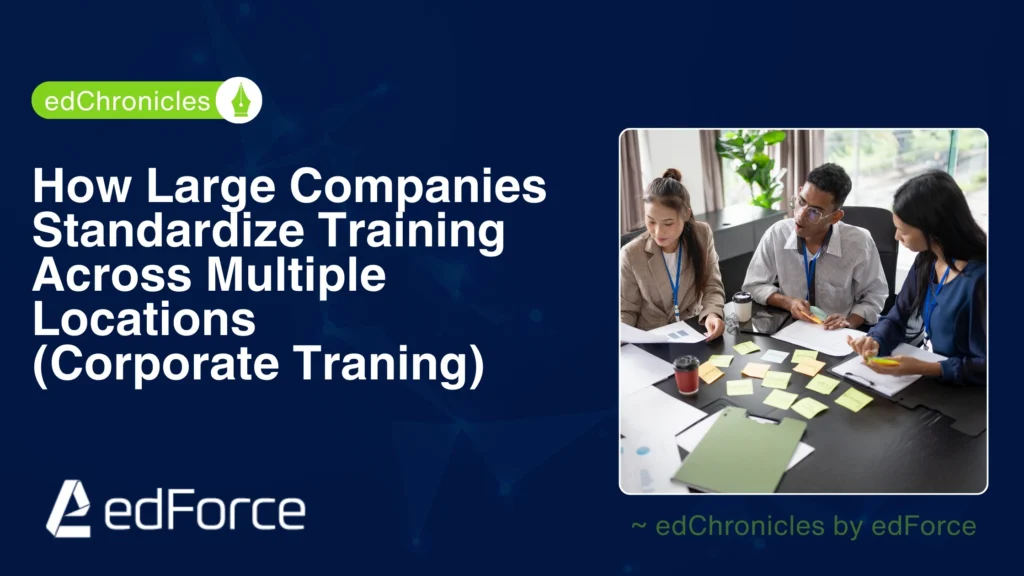
As larger organizations grow the training process becomes more difficult to manage. Teams work from various countries, cities in addition to time zones. Priorities for business remain the same, however the learning experiences can change. This presents a challenge for corporations. How can you ensure that everyone receives the same education, no matter the location they work from? The standardisation of corporate training across different locations isn’t about strict control. It’s about creating a sense of uniformity, clarity, and fairness, while providing flexibility for local significance. What is the importance of consistency in training at the Scale When the training of employees differs between locations results begin to vary as well. Employees could be taught the same job through different methods, which leads to a gap regarding performance as well as expectations. Inconsistent training can lead to: For companies with large budgets this issue can become a risk to the business, and not just a problem of learning. The real Challenge isn’t distance The Real Challenge is Alignment Technology has made learning remotely possible. The distance is not a major issue. The main issue is alignment. Large companies struggle to find a common ground: If training isn’t aligned, it can become disjointed. Each school adapts learning to their own manner, usually with good intentions however, with poor long-term outcomes. Start with clear, role Based Learning Standards The standardisation process begins with defining what good-looking looks look like for each job. This includes clearly stating: These standards must be standardized across every location. Local teams may adapt instances or the context, but the objectives of learning should be the same. If expectations for roles are not clear Training programs aren’t able to be effectively standardised. Create the Central Learning Framework Large companies that are successful in establishing a standardised corporate training system employ an underlying structure. This framework serves as an unifying source of truth. It includes: A central framework guarantees that each location is working from the same base. It also makes it easier to update as business requirements evolve. Use Modular Content in lieu of one large program A common error is to create huge, complicated education programs which are difficult to coordinate across different regions. Modular content works better. Modular training can help organizations: This method allows standardisation to be more feasible and sustainable. Balance Standardisation with Local Relevance Standardised training is not the same as that you should ignore local needs. The language, rules customer behaviour, regulations and the work culture vary by region. Training must be able to accommodate these differences without altering the message. The most important thing is to make it standard: Also, allow for flexibility when it comes to: This balance helps keep training pertinent without sacrificing the quality of. Examine Learning Outcomes and Measure Results not just completion Many companies track the people who attended the training. They do not track if the training actually helped. The value of standardisation comes when results are measured in a consistent manner across all locations. This includes: If the outcomes are evaluated in identically across the board leaders gain an understanding of the effectiveness of training. Align training with business priorities Corporate training needs to grow with the company. If the training process is standardised but not connected to the actual business objectives the training quickly loses value. Large companies should be reviewing their processes regularly: Frameworks for training should be adapted to changing needs with structural consistency maintained. The Function of Structured Learning Partners As training grows and organizations seek organized support to handle complex training. Partners and platforms like edforce.co are often considered in companies looking to keep uniformity in training and align learning with business goals. The key to success is not in the tools themselves however, it is in the way that learning is organized, monitored and linked to workplace requirements. What Standardised Training can do? If it is done properly when done properly, standardised corporate training can help big businesses: In addition, it ensures that growth doesn’t diminish capabilities. Consistency creates confidence The standardisation of training across different sites is not about controlling. It’s about trust. The confidence that each employee is learning the right skills. The confidence that teams are in alignment. A sense of confidence that the organization is able to grow without sacrificing quality. For larger companies the clarity of this approach transforms training from an operational chore into a competitive advantage.