

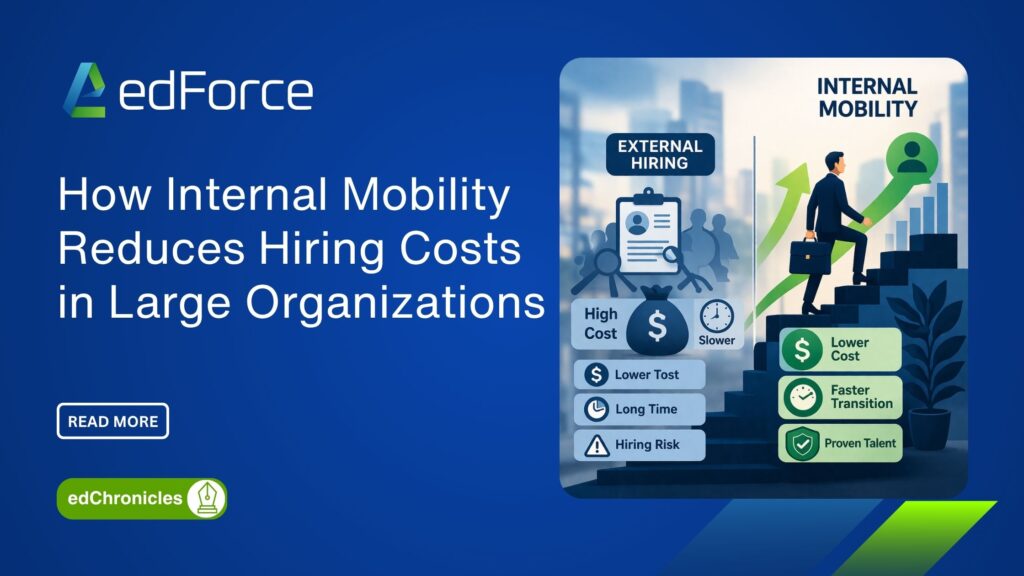
The cost of hiring today is high. Not only in terms of costs for recruitment but also in terms of time and effort as well as lost productivity. For larger organizations the cost of this increase is constant as roles change quicker and competition for talent becomes more intense.
Many companies are shifting their focus away from recruiting externally, to constructing internally. The concept of internal mobility has evolved beyond a purely HR initiative. It’s becoming a sensible business plan.
External Hiring Comes With Hidden Costs
The majority of companies believe that hiring costs begins with recruiting. In reality, the biggest cost of hiring comes after the hiring process.
New employees need time to learn about the systems, teams and the culture of the company. It is not an instantaneous process to increase productivity. There is always the risk of a mismatch that could cause early exits or frequent hiring.
On the contrary, employees within the organization already know how the company operates. They are more flexible and begin contributing more quickly. This is a huge time saver and money.
Internal Mobility Fills Roles Faster
When a job is open and work is slow. Teams feel pressure and deadlines become more difficult.
The process of hiring externally can last for weeks, or even months. Internal mobility accelerates this process. Organisations can place the best people into the roles they need more quickly, particularly when they already have similar capabilities.
By enhancing their skills employees are able to transition seamlessly. This can reduce the time spent in downtime and keep operational processes running smoothly.
Upskilling Costs Less Than Hiring
Finding a new employee to hire involves several steps. Finding, interviews onboarding, training, and so on. All of it adds to.
The process of retraining an employee in place is typically more affordable. They already know the business. They need only to understand what’s new in the position.
A lot of companies now invest in structured learning programs that assist in this transition. Some collaborate with partners such as edforce.co to develop skill-based development plans to prepare employees to move internally.
This method reduces the need to hire and creates long-term capabilities.
Internal Growth Improves Retention
Employees quit because they don’t experience the growth they would like to see.
If organizations provide clear opportunities within the company, employees are more likely to remain. They feel appreciated and can see potential within the organization.
Better retention means fewer resignations. Resignations that are less frequent mean less cost to hire. It’s a simple, but effective cycle.
Better Use of Existing Talent
Large companies typically have more talent than they think. The issue is gaining visibility.
If companies can track their skills correctly they can match their employees to roles that are more effective. This means that they do not have to look for all the requirements.
Internal mobility is most effective when is accompanied by clear mapping of skills and workforce plans.
Stronger Teams and Faster Performance
People who advance within the company bring knowledge and stability.
They know what to expect. They are aware of how teams work. This helps them be more effective in their new positions than those hired from outside who are trying to adjust.
As time passes, this creates stronger teams as well as a more coordinated workplace culture.
Final Thoughts
It is always important to hire but it shouldn’t be the sole solution.
Internal mobility can be a more effective and more sustainable method of working. It lowers the cost of hiring and improves retention. It also assists organizations to move faster.
In today’s competitive business world the most significant benefit is not in hiring new talent. It’s using existing talent more effectively and assisting it to develop.